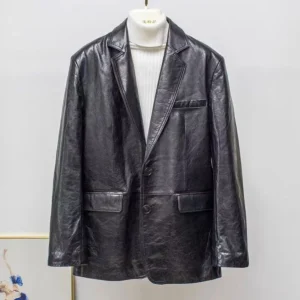
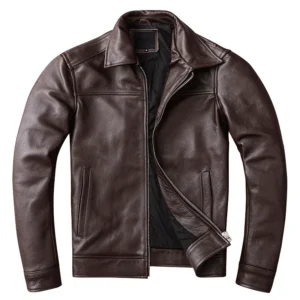
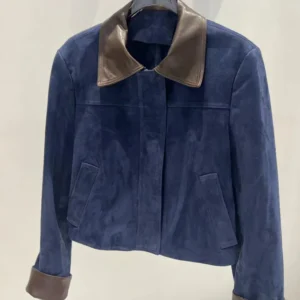
The lightweight vs heavyweight leather jacket choice is really a question about how you will wear it. A light jacket moves with you and disappears on your shoulders; a heavy one blocks wind, holds its shape, and shrugs off years of wear. Neither is better in the abstract — the right weight is the one that matches your weather and your day.
In short, pick light if your days are mild and you move a lot; pick heavy if your winters are cold and you want one jacket to last. Our leather jacket temperature guide sets out what each weight copes with across the seasons.
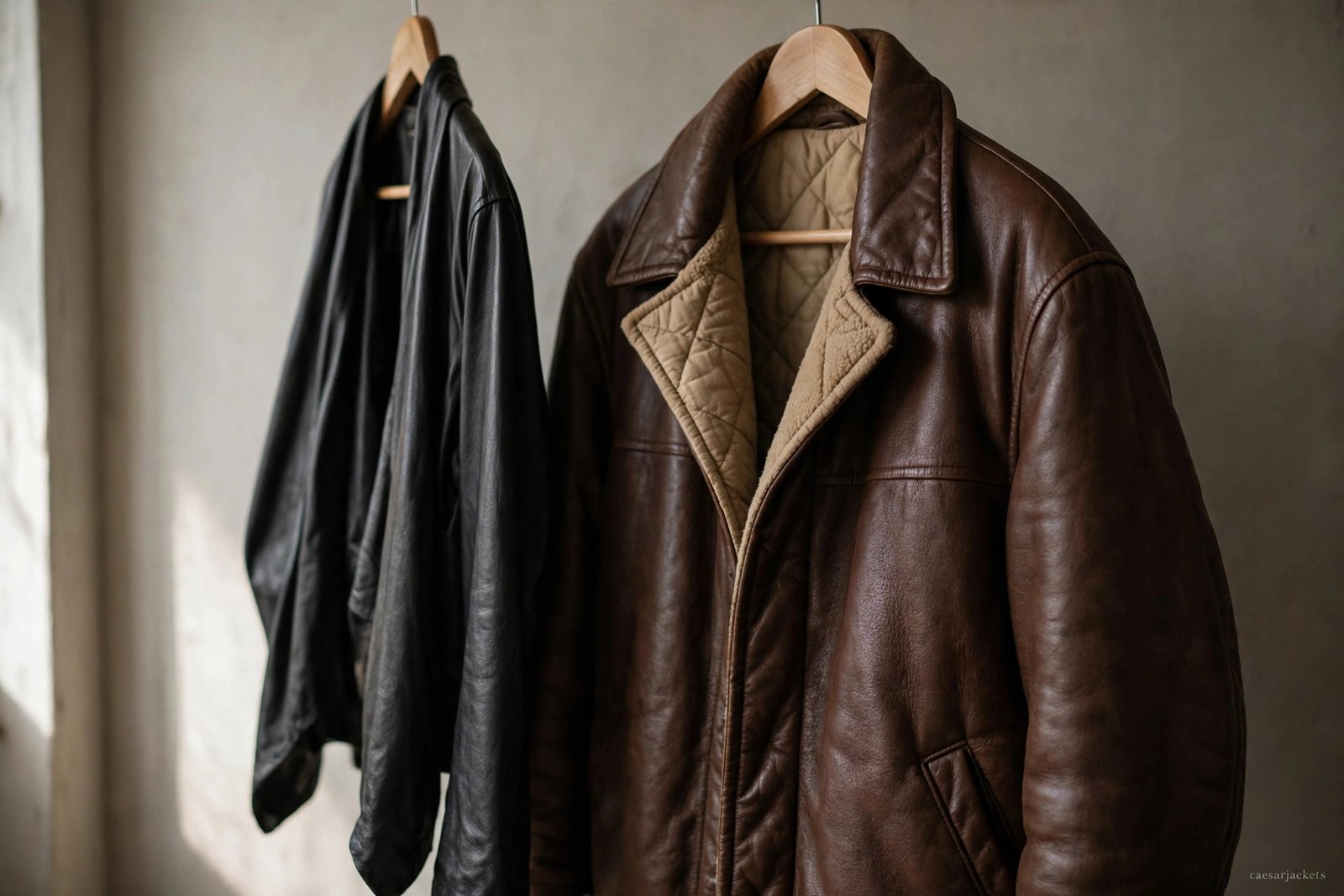
Lightweight vs Heavyweight: What the Weight Actually Comes From
A jacket’s weight comes from three places, and the hide is only the first. The hide sets the base: lambskin is typically thin (roughly 0.6–0.9 mm), soft and light; cowhide is typically thicker (roughly 1.0–1.4 mm), stiffer and heavier; goatskin sits between the two. The second source is the lining — an unlined shell adds almost nothing, while a quilted or shearling lining can add as much weight as the hide itself. The third is hardware: heavy zips, buckles, and reinforced seams all add up.
That is why two jackets in the same hide can feel different, and why “lightweight” on a label tells you little. A lambskin jacket with a quilted lining can outweigh an unlined cowhide one — judge the jacket in your hands, not the hide name. Our comparison of lamb leather vs cow leather explains how the two hides differ, and Wikipedia’s overview of leather sets out how hides are tanned and finished.
Lightweight Leather Jackets: Where They Win
A lightweight jacket earns its place on mild days and in motion. It drapes rather than stands away from the body, layers over a shirt without bulk, and packs down for travel. On a long day out, a light jacket is one you forget you are wearing; a heavy one is one you count the hours in.
- Comfort in motion. Less weight on the shoulders means less fatigue on a walk or a commute, and light leather softens within weeks rather than months.
- Layering. A thin shell leaves room for a sweater in cool weather and still works on its own when it warms up. Our guide to how to layer a leather jacket in winter shows the combinations that work.
- Travel. A light jacket folds smaller and weighs less in luggage; our guide to how to pack a leather jacket for travel covers folding and crease prevention.
The trade-off is protection: a light jacket will not block a hard wind or a cold snap, and thin leather shows scuffs sooner. If your winters are genuinely cold, it is a second jacket, not the only one. See our best leather jacket for everyday wear for styles that balance weight and daily use.
Heavyweight Leather Jackets: Where They Win
A heavyweight jacket is built for weather and time. The thicker hide blocks wind far better than a thin shell, and with a quilted or shearling lining it handles real cold — the combination is why heavy jackets are the default for winter riding and long stretches outdoors. The weight is also the reason they last: thicker leather resists abrasion and holds its shape for years, and the stiff break-in ends in a jacket moulded to its owner.
- Wind and cold. A heavy shell plus a warm lining keeps out wind that cuts straight through a thin jacket. Our leather jacket vs puffer for winter comparison puts the warmth question in context.
- Durability. Thicker hides take more abuse before they show it — a heavy jacket is the one you buy once and wear for a decade. Our guide to how long a leather jacket should last explains what actually determines lifespan.
- Structure and riding. A heavy jacket holds its silhouette — the shoulders sit where they should and the collar stands — and for riders the abrasion resistance of thicker leather matters more than the weight. Our best leather jackets for motorcycle riders covers what to look for beyond weight.
The cost is comfort on mild days: a heavy jacket is warm indoors, tiring on a long walk, and slow to break in. If you mostly move between a car, an office, and a café, it is more jacket than your day needs. Our best lining for a winter leather jacket explains how lining choice changes the warmth a heavy shell delivers.
The Trade-Offs, Side by Side
The table puts the two weights next to each other for the things that decide the purchase:
| Factor | Lightweight | Heavyweight |
|---|---|---|
| Typical hide | Lambskin, thin cowhide, goatskin | Thick cowhide, horsehide, heavy steerhide |
| Warmth | Mild days; needs layers in cold | Cold days; often too warm indoors |
| Break-in | Weeks; soft from the start | Months; stiff at first |
| Durability | Good, but shows wear sooner | Excellent; built for years |
| Best for | Spring, autumn, travel, layering | Winter, riding, harsh weather |
One honest note: weight is not the same as quality. A well-made lightweight jacket in good lambskin will outlast a badly made heavy one. Our guide to how to tell if a leather jacket is high quality covers the other checks that matter.
Which Weight Fits Your Weather and Your Life
Use your own days, not the label. Match your most common day to a row:
| Your most common day | Pick | Why |
|---|---|---|
| Daily commute, mild climate, mostly indoors | Lightweight | Comfort all day; a heavy jacket is warm indoors and tiring on foot |
| Motorcycle riding | Heavyweight | Abrasion resistance matters more than weight at speed |
| Long cold winters, much time outdoors | Heavyweight | Wind and cold protection; the jacket earns its weight |
| Frequent travel, changing weather | Lightweight | Packs smaller, layers over a sweater when it turns cold |
| First leather jacket, one jacket for everything | Mid-weight, leaning light | A mid-weight cowhide or goatskin covers the most days; add a sweater for cold snaps |
If two rows apply, ask which day you would rather be slightly wrong on: cold in a light jacket is fixed with a sweater; hot and tired in a heavy jacket has no fix except taking it off. When in doubt, go lighter — and check the fit, because weight feels worse in a jacket that does not fit. Our guide to how a leather jacket should fit and our guide to choosing a leather jacket cover the fit and buying checks that sit alongside weight.
The 10-Minute Try-On Test
Weight is hard to judge from a label and easy to judge on your body. Before you pay, run this test in the shop:
- Wear it zipped for five minutes. Walk the shop floor, not just the mirror, and notice the shoulders first: pressure there will only get worse over a full day.
- Raise both arms overhead. The jacket should lift with you, not fight you — a jacket that restricts your reach will do so every time you reach for something.
- Sit down in it. A jacket that is fine standing can dig in when seated — at a desk, in a car, on a bike. Sit for two minutes and feel the waist and collar.
- Try it with your usual layer underneath. Test the combination you will actually wear, not the shell over a T-shirt.
If the jacket passes all four, the weight is right for you — whatever the label says. If it fails the shoulder or the reach test, it is the wrong weight or the wrong cut; no amount of breaking in will fix a bad shoulder fit.
Compare the two weights in our men’s leather jackets and women’s leather jackets ranges, and the heavier end in men’s winter leather jackets and women’s winter leather jackets.
Frequently Asked Questions
How heavy is a leather jacket?
It varies widely: a light unlined lambskin jacket can feel almost weightless, while a heavy lined cowhide jacket can weigh two or three times as much. Hide, lining, and hardware all contribute, so there is no single number — judge it by wearing it.
Is a heavyweight leather jacket better than a lightweight one?
Not in general — it depends on your weather and your day. Heavyweight wins on wind, cold, and durability; lightweight wins on comfort, layering, and travel. The best jacket is the weight that matches your most common day.
Are lightweight leather jackets warm enough for winter?
On their own, usually not for a cold winter — a light shell needs a sweater underneath to cope with freezing days. Our guide on are leather jackets warm enough for winter explains how lining and layering change the answer.
Does a heavy leather jacket get lighter as it breaks in?
The leather softens and moulds to you, so it feels easier to move in — but it does not lose weight. If a jacket feels too heavy on day one, it will still feel heavy in a year.
Which hide is best for a lightweight leather jacket?
Lambskin is the usual pick: thin, soft, and light, with a smooth drape. Goatskin is a tougher alternative at a similar weight. Our lamb leather vs cow leather comparison covers the trade-offs, and our best leather jackets for winter rounds out the heavier end.
Related Guides
- Leather Jacket Temperature Guide: 5 Easy Ways to Stay Warm
- Best Lining for a Winter Leather Jacket: 5 Rules for 2026
- Lamb Leather vs Cow Leather: Material Comparison
The lightweight vs heavyweight leather jacket question has a practical answer: match the weight to your most common day, run the 10-minute try-on test, and buy the jacket you will actually reach for. The Leather Working Group publishes leather production standards, a useful reference when judging the leather itself.