There is no single temperature that works for every leather jacket. An unlined biker jacket and an insulated winter jacket can feel very different on the same day. This leather jacket temperature guide offers practical starting points for everyday wear. The right choice also depends on wind, sunlight, your activity, and how long you will be outside. Treat these temperature ranges as estimates, not guaranteed ratings.
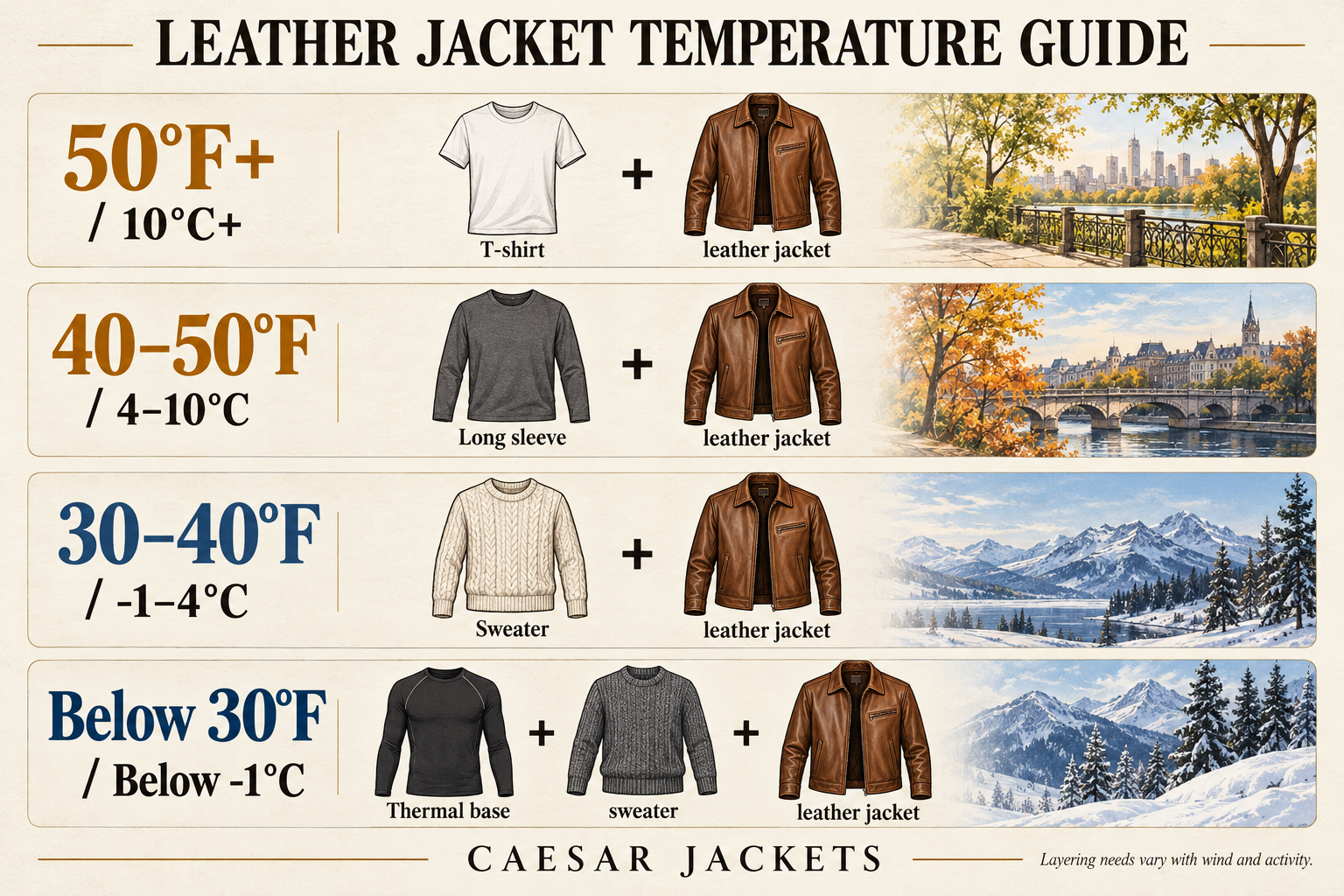
Leather Jacket Temperature Guide: Quick Comfort Ranges
Use this leather jacket temperature guide as a starting point for dry weather and ordinary daily activities. Direct sun, strong wind, rain, and personal cold tolerance can change how the same temperature feels. A short walk from a car to a building is also different from standing outdoors for an hour.
| Outdoor temperature | What may feel comfortable | What to consider |
|---|---|---|
| Above 70°F / 21°C | A leather jacket may feel too warm for extended wear. | Choose a lightweight style for a cool evening, or leave it off in direct sun. |
| 61–70°F / 16–21°C | A light or unlined jacket may work well. | Try it over a T-shirt or thin shirt. |
| 50–60°F / 10–15°C | Many everyday jackets are comfortable with a light layer underneath. | Add a long-sleeve shirt or thin sweater, depending on the jacket. |
| 32–49°F / 0–9°C | A standard jacket may need help from warmer layers. | Look for a substantial lining, room for a mid-layer, and enough coverage at the waist. |
| Below 32°F / 0°C | A lightweight fashion jacket may not provide enough warmth. | Consider insulated outerwear or a shearling-lined style, plus winter accessories. |
There is no universal temperature rating for leather jackets. If the maker provides a temperature or insulation rating, use it for that specific garment. For severe cold or prolonged outdoor exposure, choose clothing designed for those conditions instead of relying on a general chart.
Why the Lining and Fit Matter
The word “leather” does not tell you how warm a jacket will be. Lining, fit, length, closures, and overall construction all affect comfort. A thin jacket can be useful on a mild day, while a lined style may work in colder weather when paired with appropriate layers.
- Lining: A smooth, lightweight lining adds little insulation. Quilting, fleece, or shearling can add warmth, but the result varies by garment.
- Fit: Leave enough room for the layers you plan to wear. If the jacket pulls across your chest or shoulders when zipped, a thick sweater may make it uncomfortable.
- Length: A cropped jacket may leave more of your waist exposed. A longer cut can provide more coverage when standing or walking in wind.
- Cuffs and collar: Closures that sit close to the body can help reduce drafts. Gaps at the wrists or neck can make a jacket feel colder.
- Weather resistance: Leather types and finishes vary. Do not assume a fashion leather jacket is waterproof or designed to replace a rain shell.
When comparing jackets, check the product details for the lining, material, and intended season. A product category labeled “winter” can help narrow your search, but it is not a substitute for checking the construction of each jacket.
How to Layer Under a Leather Jacket
Layering makes a leather jacket more useful as temperatures change. A base layer sits next to your skin, a mid-layer provides extra warmth, and the jacket goes over both. This leather jacket temperature guide works best when you choose layers that keep you comfortable without making the jacket tight or limiting movement.
- Mild weather: Wear a T-shirt or lightweight shirt under an unlined jacket.
- Cool weather: Add a long-sleeve shirt or thin sweater.
- Cold weather: Try a thermal base layer and a warmer mid-layer under a jacket with enough room and a suitable lining.
- Windy weather: Close the jacket and protect areas it leaves exposed, such as your neck, hands, and ears.
The National Weather Service recommends dressing in layers and covering exposed skin in severe cold. REI’s layering guide explains how base, insulating, and outer layers serve different purposes. These principles can help you choose what to wear under a jacket, but they do not give a leather jacket a fixed temperature rating.
Test the fit with your planned layers before heading out. Zip the jacket, reach forward, and raise both arms. If the shoulders pull or the hem rides up sharply, it may not have enough room for that combination. A jacket that fits over a T-shirt may not fit comfortably over a sweater. For more outfit combinations, see our guide to layering a leather jacket.
Does a Leather Jacket Work in Winter?
It can, but the answer depends on the jacket and the conditions. An unlined jacket over a warm sweater may be comfortable for a short walk on a cool, dry day. The same outfit may feel inadequate while waiting outside in freezing wind. This is why the temperature alone cannot tell you whether a particular jacket will be warm enough.
Before wearing a leather jacket in winter, consider how long you will be outdoors, whether you can add layers comfortably, and whether the jacket covers your waist. Gloves, a hat, and a scarf also matter because the jacket does not cover your hands, head, or neck. When the forecast includes severe cold, strong winds, or wet snow, choose outerwear designed for that weather.
If you are comparing colder-weather options, review the lining and product details in our men’s winter leather jacket collection or women’s winter leather jacket collection. For help checking how a jacket should sit on your body, read our leather jacket fit guide.
Everyday Wear Is Different From Motorcycle Riding
This guide is about everyday clothing, not riding protection. Motorcycle use adds factors such as wind speed, road conditions, and protective equipment. A fashion jacket may not have the armor, reinforced seams, or other features needed for riding.
For motorcycle use, choose gear designed and rated for that activity, and follow the maker’s guidance on temperature and layering. Do not use the lining of a fashion jacket or the estimates in this article to judge riding safety.
A Practical Check Before You Leave
Check the forecast temperature and wind, then consider how long you will be outside and whether you will be walking or standing. Put on the layer you plan to wear underneath and try the jacket fully zipped. If it feels restrictive, the fit may not work with that layer. If you already feel too warm indoors, it may become uncomfortable once you start moving outside.
For a mild afternoon and a cool evening, a lightweight leather jacket can be a useful extra layer. For cold, windy weather, choose a properly insulated coat rather than expecting a thin jacket to work like winter outerwear. Use this leather jacket temperature guide as a starting point, and let the jacket’s construction and your time outdoors guide your choice.
Shopping for colder weather? Compare the lining and fit of our men’s winter leather jackets or women’s winter leather jackets before choosing a style.