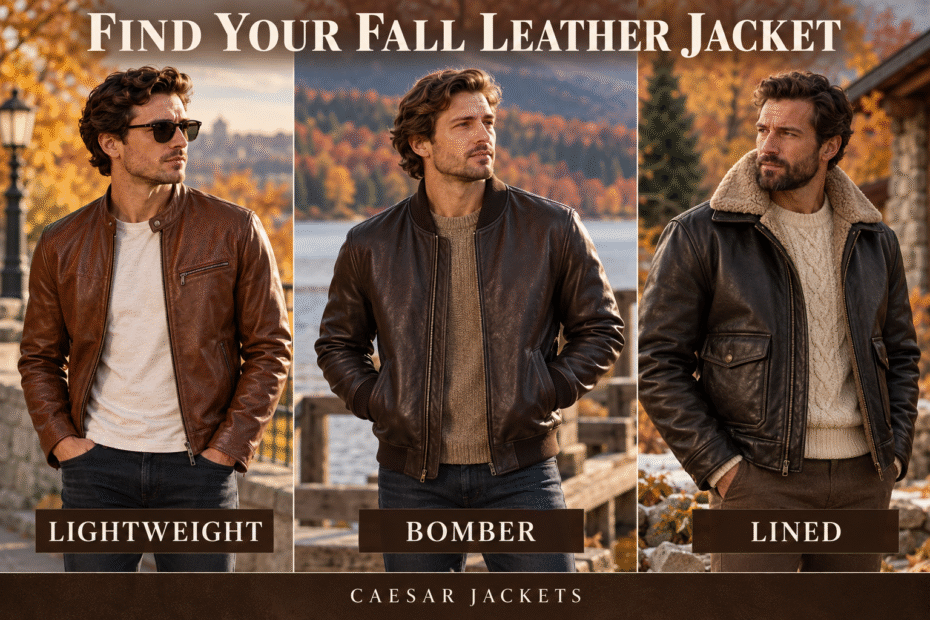
The best fall jacket depends on the weather you actually face: mild afternoons, cool evenings, or a sharp temperature drop after sunset. The best leather jacket for fall is usually one you can wear comfortably over a shirt and still layer under when the weather turns colder. Before choosing a style, compare its lining, fit, length, and how you plan to wear it.
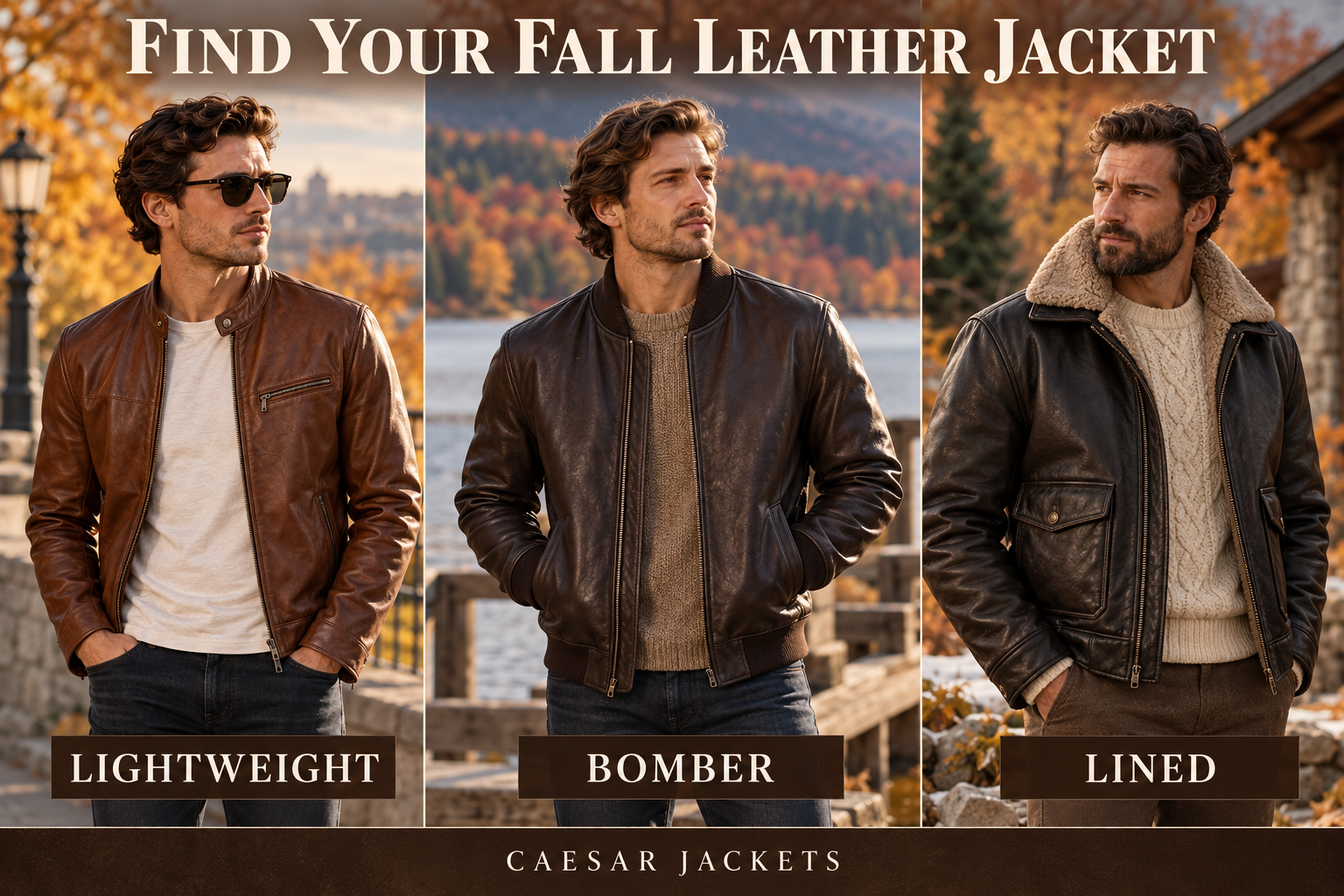
Best Leather Jacket for Fall: Choose by Weather
There is no single jacket that suits every fall climate. Use this guide to match a style to your routine, then check the product’s material and lining details. The temperature bands below are general comfort cues, not guaranteed ratings.
| Fall conditions | Style to consider | What to check |
|---|---|---|
| Mild afternoons, around 60–70°F / 16–21°C | Lightweight, unlined, or lightly lined jacket | Breathable-feeling lining and room for a thin shirt |
| Cool days, around 50–60°F / 10–15°C | Classic biker, racer, or bomber jacket | Space for a sweater without pulling at the shoulders |
| Cold mornings and evenings, around 32–50°F / 0–10°C | More substantial lining or a warmer mid-layer | Coverage at the waist, snug cuffs, and comfortable closure |
Wind, rain, activity, and time outdoors all change how a temperature feels. A jacket that works for a short walk from the car may not be comfortable for a long evening outside. For layering principles, REI’s guide to base, insulating, and outer layers is a useful reference.
1. Choose a Lightweight Jacket for Early Fall
When afternoons are still mild, a lightweight leather jacket is often the most useful choice. An unlined or lightly lined style can work over a T-shirt, button-down, or thin knit without feeling like heavy winter outerwear. This is a practical option if you expect to wear the jacket indoors, commute by car, or take it off as the day warms up.
Look for a clean, versatile cut such as a simple racer or minimal biker. Fewer bulky details make it easier to wear the jacket with casual and smart-casual outfits. If your fall weather stays warm through most of the day, avoid thick insulation or a heavy shearling collar; those features may limit how often you reach for it.
2. Pick a Bomber for Easy Everyday Layering
A leather bomber can be a strong all-around fall option. Its relaxed shape often leaves room for a light sweater, while ribbed cuffs and hem give the jacket a casual finish. It pairs naturally with jeans, chinos, plain T-shirts, and knitwear.
Check how the ribbed hem sits when you raise your arms or sit down. A very short or tight hem may ride up over thicker layers. If you like the bomber silhouette but expect colder mornings, prioritize a lining and fit that accommodate the layer you will actually wear underneath.
The best leather jacket for fall is not necessarily the warmest one on the rack. A jacket that works with your everyday clothes and changing temperatures will usually be more useful than a heavily insulated style you only wear on the coldest days.
3. Consider a Biker or Racer for a Sharper Look
Biker jackets have an unmistakable, more detailed look; racer jackets tend to be cleaner and more streamlined. Either can work well in fall. A racer is a flexible choice if you want a jacket that is easy to style with simple outfits. A biker may suit you better if you want visible hardware, lapels, or a stronger statement.
Both styles can be cropped, so check the length before buying. The hem should sit comfortably when you reach, bend, and sit. A short jacket may work over a T-shirt but feel restrictive over a sweater. Our guides to men’s leather jacket styles and women’s leather jacket styles offer more examples of how cuts differ.
4. Look at the Lining Before Choosing a Late-Fall Jacket
For late fall, the lining matters more than a style name. A thin lining adds little warmth; a quilted or heavier lining can make a jacket more comfortable on cooler days. Some jackets also have a shearling collar or warmer interior. Those features may help in cold weather, but the overall cut, coverage, and construction still matter.
Do not assume that every jacket labeled “winter” will suit your local climate or the amount of time you spend outside. Check the product description, then think about whether you can wear a sweater underneath without making the jacket tight. If the weather is consistently near freezing, a dedicated insulated coat may be more practical than a standard leather jacket.
For terminology, the Leather Working Group’s leather terms defines shearling as a tanned sheep skin that retains its wool. That describes the material; it does not give a particular jacket a universal warmth rating.
Fit and Layering: Make the Jacket Work for Your Wardrobe
When comparing candidates for the best leather jacket for fall, test the fit with the clothes you plan to wear. Zip the jacket over a thin sweater, reach forward, and raise both arms. If the shoulders pull, the sleeves twist, or the hem lifts sharply, the jacket may not have enough room for your usual layers.
- For mild days, wear a T-shirt or lightweight shirt underneath.
- For cool evenings, add a thin sweater or mid-weight knit.
- For colder mornings, use a warmer base layer and mid-layer only if the jacket still allows free movement.
- Keep a scarf or other weather-appropriate layer available if you will be outside after sunset.
Layering lets you adjust as conditions change. The National Weather Service advises dressing in layers and covering exposed skin in severe cold; see its cold-weather safety guidance. A leather jacket can be one layer in an outfit, but it should not be treated as protection for prolonged exposure to severe conditions.
For more detailed fit advice, see our leather jacket fit guide and leather jacket layering guide.
Color and Outfit Versatility
If you want one jacket for frequent wear, start with a color that works with clothes you already own. Black pairs easily with dark denim, gray, and monochrome outfits. Brown often works well with blue denim, cream, olive, and other earthy fall colors. A bolder color can be distinctive, but it may take more planning to wear regularly.
Think about the rest of the outfit before choosing a silhouette. A bomber can balance a casual outfit with straight-leg jeans and sneakers. A simple racer can sit neatly over a shirt and knitwear. A biker jacket naturally draws attention, so keeping the other pieces straightforward can make the outfit feel more balanced.
What to Check Before You Buy
Use this short checklist to decide whether a jacket suits your fall routine:
- Weather: Is your fall mostly mild, or do you regularly face cold mornings and wind?
- Lining: Does it match the season, or will you need a mid-layer?
- Fit: Can you zip it over your usual sweater and move comfortably?
- Length: Does it stay in place when you sit, reach, and walk?
- Versatility: Does the color and cut work with several outfits you already wear?
- Rain: Is a separate rain shell needed for wet days? Do not assume a fashion leather jacket is waterproof.
The best leather jacket for fall is the one that fits your actual weather and wardrobe: lightweight for mild days, easy to layer for cool evenings, and comfortable enough that you will reach for it often. Compare the lining and cut in our men’s leather jacket collection or women’s leather jacket collection before choosing a style.