When the deep freeze of winter settles over the landscape, choosing the correct outerwear becomes a daily compromise between individual aesthetic expression and physical survival. You want an outer layer that projects a sharp, confident, and sophisticated silhouette, but you also need to ensure you don’t spend your morning commute shivering on a freezing train platform. This seasonal conflict inevitably brings every stylish commuter to a classic fashion crossroads: the choice between a leather jacket vs puffer for winter.
Both options dominate modern cold-weather landscapes, yet they approach the problem of thermal defense from completely opposite directions. The puffer jacket relies on high-loft insulation to trap static air, creating a lightweight, voluminous cloud of warmth. The genuine leather coat relies on natural hide density to form an impenetrable barrier against bitter gales, using structured luxury to anchor your style.
Choosing between them isn’t as simple as checking the temperature gauge on your phone. To make a smart lifestyle investment that maximizes your cost-per-wear, you need to understand how these materials perform across wind resistance, moisture management, styling versatility, and long-term durability. This comprehensive 1500-word analysis breaks down the mechanics of the legendary leather jacket vs puffer for winter duel to help you secure the perfect cold-weather shield.
1. The Core Insulation Mechanics: How Heat is Trapped
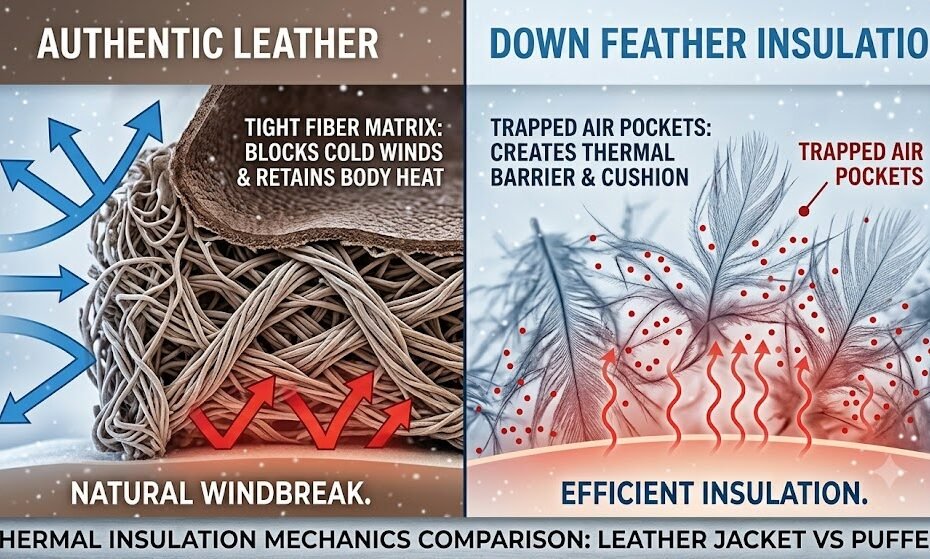
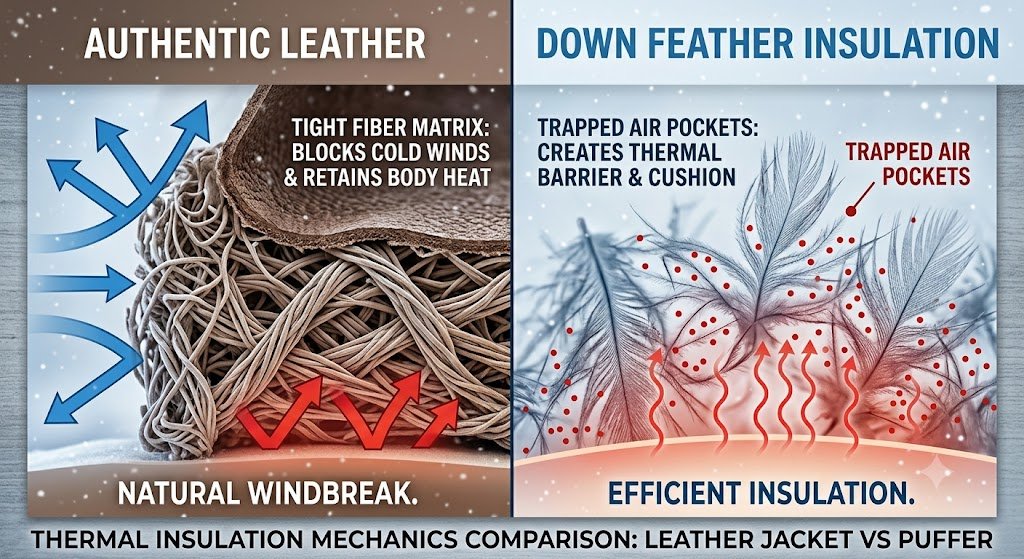
To accurately evaluate a leather jacket vs puffer for winter, you must look closely at how each garment interacts with your natural body temperature. Windproofing and insulation are two entirely different mechanical processes.
The Puffer Jacket Heat Matrix
A puffer jacket functions by creating space. Whether filled with natural goose down or synthetic polyester clusters, the interior baffling is designed to trap vast amounts of dead air. Your body heat warms this trapped air, creating an artificial microclimate around your torso. It is incredibly efficient at creating warmth in stagnant, freezing conditions, but its performance depends completely on remaining dry and uncompressed.
The Leather Jacket Armor Matrix
A standard fashion leather jacket with a paper-thin silk liner will not survive a blizzard. However, when evaluating a specialized, insulated leather jacket vs puffer for winter, real leather reveals its secret weapon: natural density. Genuine hide blocks wind better than almost any synthetic nylon shell on earth.
When lined with heavy-duty quilted cotton, down insulation, or plush wool, a real leather jacket traps your body heat while completely eliminating the wind-chill factor. For an in-depth breakdown of how real hides manipulate cold air currents, check out our master assessment on whether are leather jackets warm enough for winter.
2. Structural Aesthetics: Sleek Tailoring vs. Voluminous Utility
The most immediate visual contrast in the leather jacket vs puffer for winter debate lies in how each garment manipulates your body proportions.
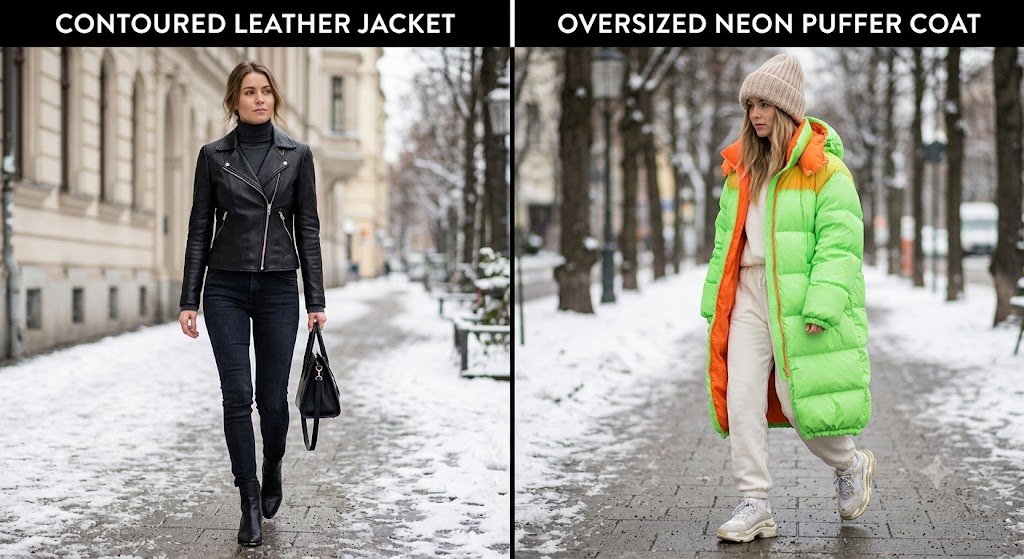
The Puffer Silhouette: By definition, puffers add visual mass to your frame. The horizontal or geometric baffling creates a sporty, highly casual, and voluminous look. While modern oversized trends embrace this puffy aesthetic, it remains incredibly difficult to dress up a puffer coat for high-end formal events or strict corporate environments.
The Leather Silhouette: Genuine leather provides an immediate vertical structure. It sculpts your shoulders, slims your torso, and maintains a clean, classic drape regardless of how many layers you have tucked underneath. It projects an aura of timeless, rugged sophistication that synthetic nylon simply cannot mimic.
If you struggle to find a winter coat that honors your natural proportions without drowning your frame in excess fabric, reviewing our tailored guide on the best leather jacket style for body type will give you the precise blueprint needed to master your cold-weather look.
3. Wardrobe Versatility: Moving From the Boardroom to the Bar
When investing in premium winter outerwear, versatility dictates your long-term value. You want a coat that moves seamlessly between different social scripts without making you look out of place.
| Feature Metric | Premium Insulated Leather Jacket | Synthetic Puffer Jacket |
| Primary Aesthetic | Luxury, rugged edge, timeless tailoring | Sporty, utilitarian, ultra-casual |
| Corporate Settings | Flawless (Easily replaces a blazer or formal coat) | Difficult (Often clashes with sharp tailoring) |
| Nightlife & Dates | Elite (Sleek, sharp, and highly striking) | Functional (Can look overly casual or bulky) |
| Wind Resistance | Impenetrable (Natural dense hide matrix blocks drafts) | Variable (Depends heavily on nylon shell quality) |
| Long-Term Lifespan | Heirloom status (Ages beautifully over decades) | Short-term (Nylon rips easily; baffling leaks down) |
For professional settings where looking polished is an everyday requirement, a bulky nylon sport coat is rarely appropriate. Stepping out in a refined leather piece ensures you stay warm without compromising your professional standards. To see how to bridge this gap cleanly, check out our industry companion piece on mastering leather jacket business casual styling.
4. Durability and Longevity: Heirloom vs. Disposable Fast-Fashion
The choice between a leather jacket vs puffer for winter should also factor in how many seasons you want the garment to survive. This is where the gap between real leather and synthetic textile engineering widens into a canyon.
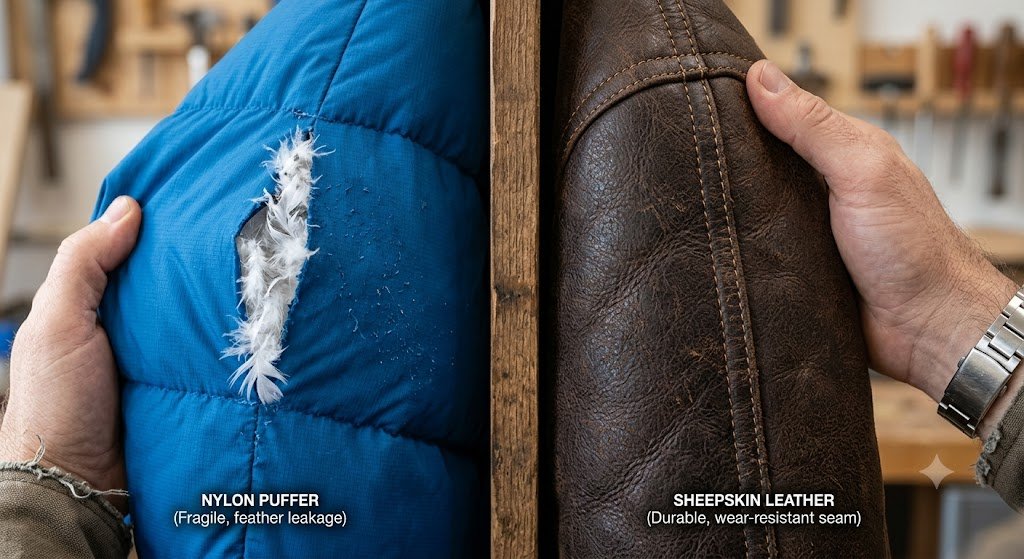
According to historical material longevity archives curated by the Britannica Encyclopedia, authentic animal skins possess a complex, interlocking protein network that naturally breathes, self-conditions, and becomes tougher as it flexes. A genuine leather jacket doesn’t wear out; it wears in. It develops a gorgeous, custom character sheen called a patina along the creases of your elbows and shoulders.
A puffer jacket relies on a thin, synthetic nylon or polyester face fabric to hold its insulation inside. This plastic-based fabric is highly vulnerable to snags, tears, and abrasive friction. One brush against a sharp brick wall or a stray car door latch can rip the shell open, causing the interior down feathers to leak out permanently. Once a puffer’s baffling is compromised, repairing it without leaving a visible, unappealing patch is nearly impossible.
5. Managing Severe Weather: Rain, Sleet, and Snow
When analyzing a leather jacket vs puffer for winter performance, you must account for your local precipitation patterns.
Faux leather and synthetic puffers handle heavy, freezing rain with ease because plastic surfaces naturally repel liquid. However, real leather and genuine goose down require specific care when facing wet blizzards. If a natural down puffer gets soaked, the wet feathers clump together completely, losing their loft and erasing their ability to retain heat.
Genuine leather is naturally water-resistant against standard snowfall, but it should not be subjected to torrential downpours without proper preparation. If you want to ensure your luxury hide remains supple after encountering winter precipitation, applying a hydrophobic barrier spray is essential. For complete step-by-step restoration and waterproofing protocols, consult our detailed suede jacket care guide and leather maintenance manuals.
Sizing and Proportions for Perfect Layering
No matter who wins your vote in the leather jacket vs puffer for winter debate, conquering sub-zero temperatures requires a smart layering strategy. Because a tailored leather coat sits closer to your natural frame than a boxy puffer, your sizing choice is paramount.
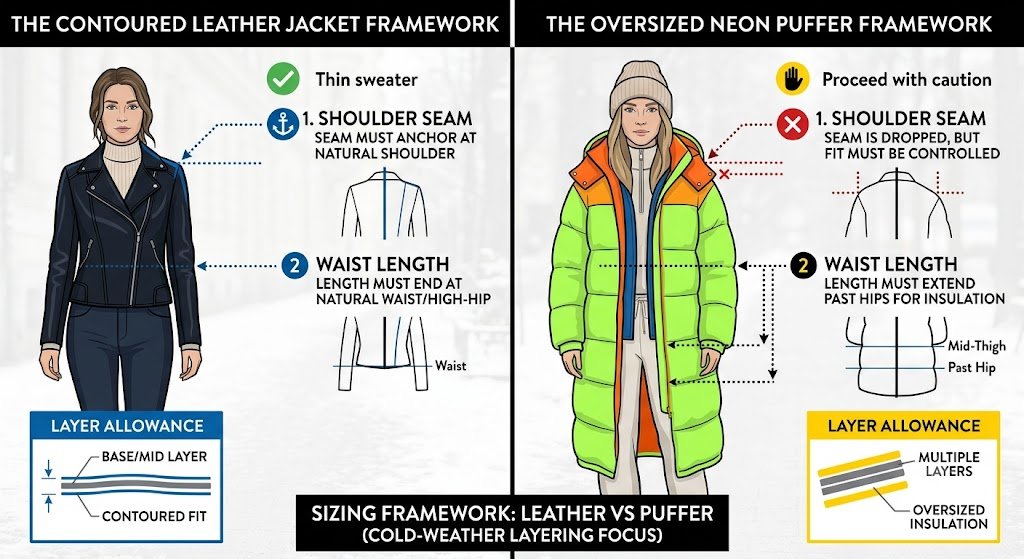
The Shoulder Rule: The shoulder seams must anchor perfectly on the outer edge of your natural shoulder bone. A drooping seam destroys your silhouette, while a tight seam cuts off circulation when wearing a sweater.
The Cuff Break: Ensure the sleeves terminate exactly at the base of your thumb when your arms rest at your sides. This accounts for the natural elbow creasing that shortens the sleeves over time.
The Layering Test: Always try your new coat on over a heavy knit sweater or a thick winter hoodie. You should be able to comfortably hug yourself tightly without feeling like the interior lining or the back seams are on the verge of tearing. For a complete sizing breakdown, see our master tutorial on how should a leather jacket fit.
Materials Matter: Why Real Leather Outperforms Synthetics
When investing in a winter shield, remember that the environmental footprint and performance density are dictated by the material source. Material standards tracked by the Leather Working Group emphasize that premium, ethically processed hides maintain natural microscopic pores. These pores allow internal body moisture to escape while preventing external drafts from cutting through to your skin, preventing that clammy, sweaty greenhouse effect common inside synthetic nylon puffer jackets.
If you are looking for an option tailored to deliver maximum insulation without the Michelin-Man bulk, a dense leather jacket equipped with a specialized lining is your ultimate weapon. Discover our expert analysis on choosing the best lining for a winter leather jacket to customize your warmth level perfectly.
Final Verdict: Balancing Style and Survival
Choose the Puffer Jacket if: Your winter consists of sub-zero outdoor sports, you prioritize featherweight compression over structural styling, and you strictly want an ultra-casual layer for running quick errands in heavy sleet.
Choose the Real Leather Jacket if: You value timeless elegance, versatile styling that transitions from corporate boardrooms to late-night bars, superior windproofing, and an investment piece built to last a lifetime.
Upgrade Your Winter Armor with Caesar Jackets
At the end of the day, there is no reason to let freezing winter temperatures force you into hiding your personal style behind a generic, shapeless synthetic nylon puffer. With the right hide density and premium insulation, a genuine leather jacket effortlessly answers the leather jacket vs puffer for winter debate with definitive, head-turning luxury.
At Caesar Jackets, we refuse to settle for the cheap, short-lived materials common in modern fast fashion. We engineer our entire winter line using 100% genuine, premium leather hides and heavy-duty thermal linings, tailored to deliver a spectacular silhouette right out of the box.
Whether you want to rule the city streets in one of our iconic best leather jackets for winter options or explore the tailored refinement of our best leather jacket styles for women selection, your next signature lifestyle piece is waiting. Browse our new arrivals today and invest in a masterpiece built to endure the freeze for a lifetime!