Purchasing a premium leather jacket is one of the most significant and rewarding wardrobe investments you will ever make. A high-quality coat does not just protect you from the elements; it acts as a second skin that develops character, tells a story, and molds perfectly to your physical frame over decades of wear. However, when you begin shopping, you are instantly confronted with a dizzying array of terminology. From full-grain and top-grain to lambskin, cowhide, goatskin, and sheepskin, the choices can quickly overwhelm even the most style-conscious consumer.
The truth is, there is no single, universally superior hide for every single individual. The answer to which leather is best for a leather jacket depends entirely on your lifestyle, your local climate, your budget, and how you intend to wear the garment. A motorcycle rider crashing down asphalt requires a completely different material engineering than a city commuter rushing to a business-casual corporate meeting.
Choosing the wrong hide can leave you with a jacket that feels uncomfortably heavy, stiff as cardboard, or too delicate to survive a light rain shower. To ensure you make an informed investment this year, this ultimate guide will break down the five essential rules of leather selection, analyzing the physical traits, durability metrics, and style aesthetics of the world’s finest hides.
1. The Raw Material Breakdown: Cowhide vs. Lambskin vs. Goatskin
To understand which leather is best for a leather jacket, we must first look at the unique cellular structures of the primary animal hides utilized in premium outerwear manufacturing. Each animal skin offers a completely distinct tactile experience and structural weight profile.
Cowhide: The Indestructible Classic
Cowhide is the traditional heavyweight champion of the outerwear world. It is exceptionally thick, dense, and possesses incredible naturally occurring tensile strength. Historically favored by military pilots and rugged pathfinders, cowhide provides unparalleled abrasion resistance and acts as an absolute fortress against biting winter winds.
Because of its heavy mass, a raw cowhide jacket requires a substantial “break-in” period. It will feel stiff and rigid at first, but over years of consistent wear, it softens up beautifully, creating creases that match your exact arm movements. For individuals prioritizing pure endurance, discovering lambskin vs cowhide leather jacket properties can help clarify this heavy-duty boundary.
Lambskin: The Peak of Supple Luxury
If your style dictates immediate, effortless comfort and an ultra-premium touch, lambskin is the undisputed victor. Lambs are smaller animals with incredibly fine skin grains, resulting in a textile that is buttery soft, lightweight, and smooth right out of the box.
Lambskin drapes along the contours of the body like liquid fabric, making it the premier choice for high-end fashion silhouettes, slim-fit blazers, and luxury streetwear. While it is more delicate than rugged steer hides, its sophisticated finish diffuses light elegantly, making it the best leather jacket styles for women or men looking for a sleek urban profile.
Goatskin: The Unsung Hero of Versatility
Goatskin offers a brilliant, balanced compromise between the extreme toughness of cowhide and the plush softness of lambskin. It is naturally supple and flexible, yet it contains a unique pebbled grain pattern that makes it remarkably resistant to scratches and scuffs.
Goatskin contains a high concentration of natural lanolin oils within the hide, which gives it excellent inherent water-repellent qualities. If you need a durable daily commuter coat that handles minor scratches without breaking a sweat, goatskin is an elite contender.
2. Understanding Leather Grades: Full-Grain vs. Top-Grain
Beyond the type of animal, the specific layer of the hide utilized during the tanning process dictates the ultimate lifespan of your outerwear. When analyzing which leather is best for a leather jacket, always look closely at the product grading descriptions.
Full-Grain Leather: The Eternal Frontier
Full-grain leather utilizes the absolute outermost layer of the animal hide, keeping the original surface entirely intact. The natural grain patterns, minor insect bites, and healed scrapes remain visible, giving each individual jacket a unique fingerprint.
Because this outer layer is never sanded down or altered, it contains the densest fiber structures, making it virtually indestructible. Full-grain skins are the only grade that will develop a rich, lustrous vintage patina over time. To avoid common industry marketing traps, learn how to identify full-grain leather before buying.
Top-Grain Leather: The Polished Standard
Top-grain leather is the most common tier found in high-end luxury goods. In this process, the top split of the hide is lightly sanded or buffed to remove natural imperfections and blemishes. A protective top coat is then applied over the surface.
This results in a uniform look and a highly stain-resistant barrier. While top-grain does not develop a dramatic vintage patina like full-grain, it remains highly durable, lightweight, and highly flexible for tailored patterns. For a deeper diagnostic look at these processing layers, read our technical overview of top-grain vs full-grain leather.
3. Matching Your Hide to Your Lifestyle and Climate
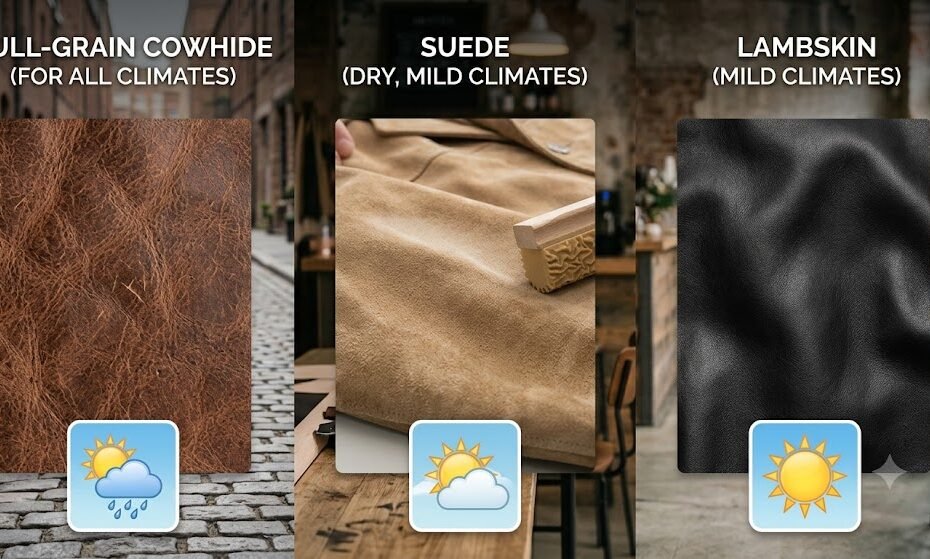
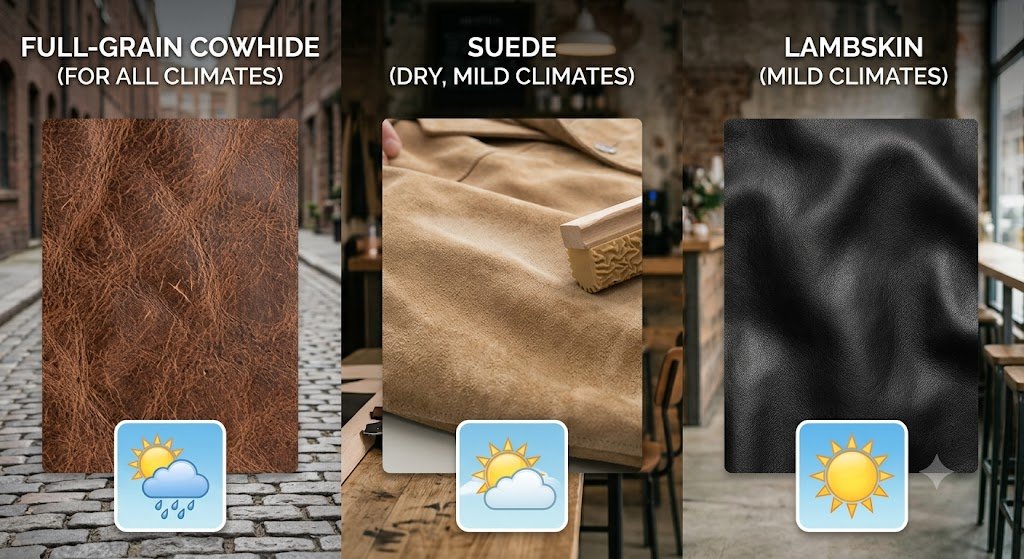
Your geographic location and daily routine should heavily dictate your hide selection. Buying an insulated, heavy-duty hide for a warm Mediterranean spring is just as impractical as wearing an ultra-thin fashion skin in a freezing blizzard.
Heavy-Duty Work and Riding Use Cases
For individuals who spend their time riding motorcycles or commuting in harsh winter climates, heavy cowhide, buffalo leather, or thick sheepskin are mandatory. These materials provide a thick layer of insulation and absolute windproofing. If you live in an environment plagued by freezing cold temperatures, ensuring you find the best leather jackets for winter equipped with high-performance linings is key to seasonal comfort.
Casual and Smart-Casual Environments
For mild autumn afternoons, crisp spring evenings, or indoor settings, lightweight lambskin or split-hide suede jackets excel. They allow for comfortable, breathable layering over hoodies or button-down shirts without causing you to overheat. If you are curious about transitioning this classic outerwear aesthetic into corporate offices or formal settings, look over our rules for rocking a leather jacket business casual outfit flawlessly.
4. Comparing the Options: The Definitive Material Selection Matrix
To help you instantly determine which leather is best for a leather jacket relative to your specific priorities, look over our performance comparison table below.
| Hide Variety Grade | Weight Profile | Scratch & Scuff Resistance | Break-In Period Required | Ideal Styling Profile |
| Full-Grain Cowhide | Ultra-Heavy / Dense | Maximum (Excellent) | High (Several months) | Rugged, Vintage, Heavy Biker |
| Premium Lambskin | Light / Featherweight | Low to Moderate | None (Instant Comfort) | Minimalist, Luxury, High Fashion |
| Top-Grain Goatskin | Medium / Flexible | High (Very Scuff-Resistant) | Very Low to None | Classic Flight Jackets, Casual |
| Split-Hide Suede | Light to Medium | Low (Water Sensitive) | None (Very Soft) | Smart-Casual, Autumn Layering |
As demonstrated by the data, if your primary goal is timeless, rugged durability that survives decades of rough handling, full-grain cowhide or goatskin wins. If your primary goal is effortless comfort, a flattering drape, and high-fashion aesthetics, lambskin stands out as the premium choice.
If you are a first-time buyer struggling to make the initial call on styles, save time by consulting our primer on what leather jacket should i buy first.
5. Maintenance Realities and Long-Term Ownership
Every premium hide demands a specific level of commitment regarding cleaning, conditioning, and long-term storage. Neglecting your leather can lead to fiber dehydration, surface cracking, or mold buildup.
Smooth Hides (Cowhide, Lambskin, Goatskin)
Smooth leather grades are exceptionally simple to preserve. Surface dust can be wiped away with a dry microfiber cloth, and a specialized leather conditioner applied once or twice a year will keep the fibers moisturized and pliable.
Lambskin requires a gentler touch during conditioning to avoid darkening the natural dyes, while cowhide can handle heavy-duty wax treatments easily. For a step-by-step masterclass on protecting your investment, read our official how to take care of leather jacket routine.
Napped Textures (Suede)
Suede requires a strict water-free preservation strategy. Because it lacks a smooth top-grain layer, liquids soak deep into the nap instantly. You must safeguard suede with a premium protective spray and rely entirely on a specialized dry brush to clear away stains. If you are choosing a soft textured skin, bookmark our suede jacket care guide to prevent unexpected stains from ruining your garment.
6. Sizing and Fit Dynamics Across Different Hides
Because different animal hides possess varying degrees of natural elasticity, the hide you select directly impacts how you should size the garment.
Lambskin Elasticity: Lambskin stretches naturally and conforms to your body contours relatively quickly. When buying a lambskin jacket, it should feel comfortably snug—like a glove—upon the first try, as it will give slightly over the first few weeks of wear.
Cowhide Rigidity: Cowhide has very little natural stretch. If a cowhide jacket is painfully tight around your armpits or shoulders on day one, it will remain uncomfortable. You must ensure you have adequate room for articulation from the start.
To guarantee you do not purchase an ill-fitting garment, study our expert guidelines on how should a leather jacket fit to lock down the perfect shoulder, sleeve, and torso alignments.
7. Industry Standards and Sustainable Sourcing
In 2026, the question of which leather is best for a leather jacket must be evaluated through the lens of ethical craftsmanship and sustainable manufacturing. Premium leather is a natural byproduct of the agricultural industry, and sourcing it responsibly ensures minimal environmental impact.
The Leather Working Group is the global authority on sustainable leather production, auditing tanneries on energy consumption, water treatment, and chemical safety protocols. When you purchase outerwear sourced from certified tanneries, you guarantee that the processing chemicals used to tan your lambskin or cowhide do not leave harmful structural residues or unpleasant artificial odors. This ensures your jacket remains safe, clean, and perfectly preserved for a lifetime of wear.
Conclusion: Crafting Your Personal Masterpiece
Ultimately, discovering which leather is best for a leather jacket comes down to identifying your individual lifestyle priorities:
Select Full-Grain Cowhide if you want an indestructible, heavy-duty shield with a rich vintage patina that can survive a motorcycle slide or harsh winter elements.
Select Premium Lambskin if you prioritize a lightweight profile, butter-soft luxury, and a beautiful silhouette tailored for modern city life.
Select Goatskin or Sheepskin if you desire a highly versatile daily jacket that balances scuff resistance with instant comfort.
At CaesarJackets, we carefully select each individual hide, pairing master-level tanning with precision tailoring to ensure your outerwear transcends passing trends.
Discover Your Perfect Match Today
Are you ready to experience the incomparable feeling of premium, hand-selected leather? Find your ultimate stylistic partner by browsing our legendary collection of mens leather jackets to find rugged cowhides and tailored sheepskins. Looking for an ultra-soft, luxury statement piece to elevate your wardrobe? Explore our exquisite womens leather jackets collection to claim your signature lifetime piece for 2026!