Staring at two seemingly identical premium jackets online while trying to justify a heavy investment is a classic menswear dilemma. One tag reads “Premium Lambskin,” while the other boasts “Genuine Heavyweight Cowhide.” They both look stunning on a hanger, but the moment you pull them over your shoulders, they tell completely different stories. Choosing between a lambskin vs cowhide leather jacket is not a matter of finding out which material is universally superior; it is about discovering which animal hide aligns with your specific climate, lifestyle, and physical comfort.
In 2026, the luxury outerwear market is undergoing a massive shift away from cheap, plastic-coated synthetic alternatives back toward raw, heritage textiles. Buyers want real material depth, structural longevity, and an organic patina that tells a personal story over time. To ensure you do not drop hundreds of dollars on the wrong type of second skin, you need to understand how these two iconic hides perform under pressure. This deep-dive comparison breaks down the raw physics, tactile comfort, and style profiles of a lambskin vs cowhide leather jacket so you can make a flawless choice.
The Tactile Touch: Silky Luxury vs Indestructible Armor
The most immediate difference you will notice when evaluating a lambskin vs cowhide leather jacket is the raw tactile sensation against your skin. The physical construction of the animal fibers dictates how the garment drapes and moves with your body.
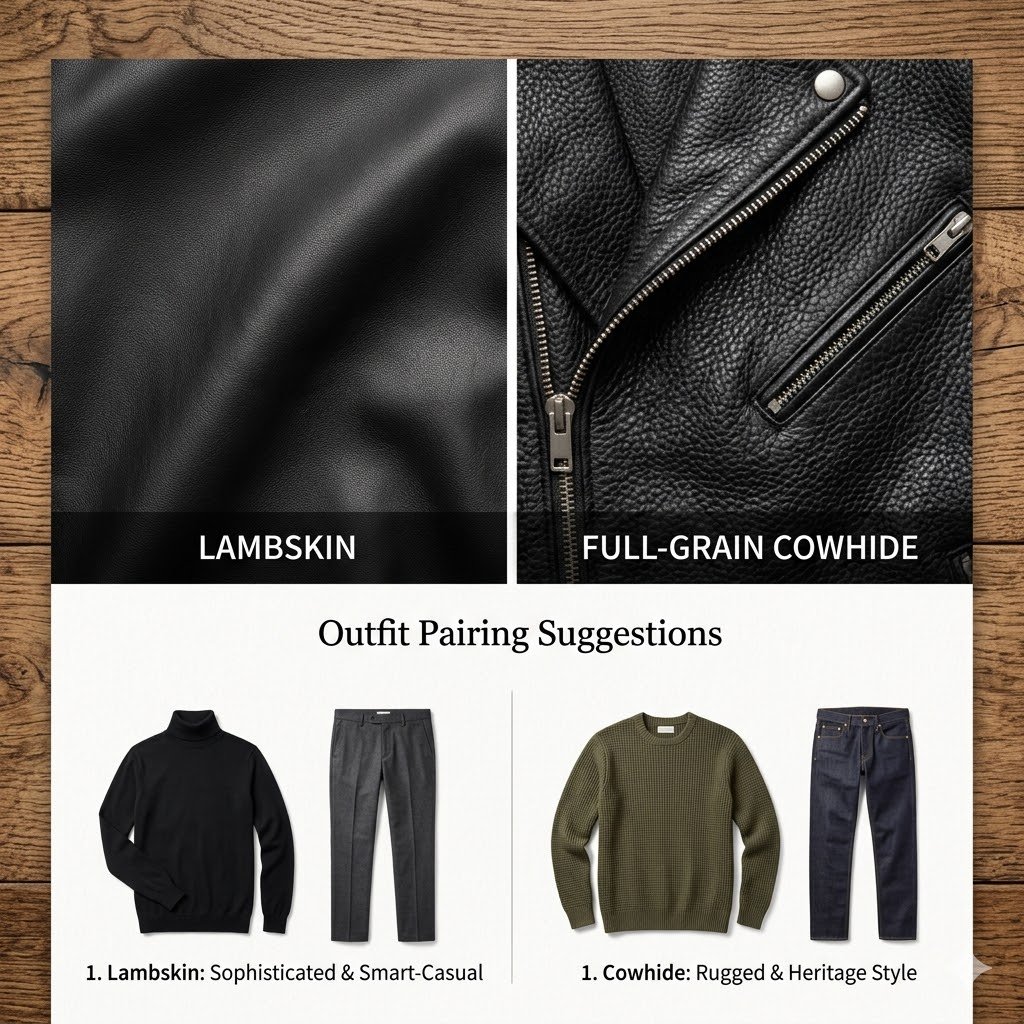
Lambskin is harvested from younger sheep, resulting in a grain that is incredibly fine, buttery soft, and velvety to the touch. It possesses an innate elasticity, allowing the jacket to contour tightly around your torso from day one without any stiff resistance.
Cowhide, on the other hand, is built for maximum environmental defense. It is thick, rigid, heavy, and structurally dense. When you unbox a new cowhide jacket, it will feel stiff—almost like a suit of armor—and require a serious break-in period before it relaxes. For a detailed guide on handling heavy-duty structures safely, refer to our expert blueprint on how to handle a rugged leather jacket fit profile.
Weight and Climate Adaptation: Lightweight Breezes vs Thermal Shields
Your regional weather patterns should play a massive role in dictating your final purchase decision. A heavy jacket is useless if it spends nine months of the year trapped in a dark closet.
The Lambskin Profile: Because sheepskin layers are naturally thin, a lambskin jacket is incredibly lightweight. It offers excellent breathability, making it the perfect choice for spring layering, indoor creative office wear, or even hot-weather styling. To see how lightweight jackets adapt to warmer climates, read our style guide on executing a proper june wear leather jacket look.
The Cowhide Profile: Cowhide is a natural thermal shield. The dense fibrous layers lock in body heat and form an absolute windproof barrier. It is designed to handle freezing commutes, heavy rain, and harsh winter snowstorms. If your primary goal is surviving a sub-zero climate, you need the dense mass of cattle hide. Combine it with heavy knits by exploring our curated lookbook on leather jacket outfits for winter.
Durability and Maintenance: Scratch Resilience vs Delicate Care
If you are a rugged individual who throws their outerwear onto truck seats, walks through dense brush, or rides a motorcycle, durability is your top metric. This is where the battle lines of a lambskin vs cowhide leather jacket are most clearly drawn.
| Technical Metric | Lambskin Hide Performance | Cowhide Hide Performance |
| Tensile Strength | Moderate; susceptible to sharp punctures. | Maximum; almost impossible to tear by hand. |
| Scratch Resistance | Delicate; easily scuffed by rough surfaces or keys. | High; resists abrasions and develops a rugged patina. |
| Water Performance | Porous; absorbs moisture easily and requires sealing. | Naturally water-resistant; handles heavy downpours well. |
| Lifespan | 10 to 15 years with careful maintenance. | 30 to 50+ years; a true multi-generational heirloom. |
Because lambskin features a more delicate, porous grain, it requires routine care to prevent drying or cracking under friction. If you accidentally scuff your fashion piece or expose it to rough materials, do not panic; recovery is entirely possible. Review our emergency handbook on executing a seamless repair leather jacket routine to save your investment.
Silhouette Matching: Sleek Minimalist vs Heritage Rebel
The structural rigidity of the hide directly determines what kind of fashion statement you can pull off. A jacket can only look as good as the silhouette it forces upon your frame.
If you prefer a sleek, high-end “quiet luxury” aesthetic, lambskin is the clear winner. Its thin nature allows designers to cut ultra-slim armholes, tailored waistlines, and minimal, collarless profiles. It is the core material behind high-fashion cafe racers and luxury apparel. For a masterclass in styling these clean, tailored lines for evening events or formal dinners, read our handbook on perfecting your black leather jacket style.
Conversely, if you love the heritage rebel look, cowhide is the undisputed king. The natural bulk and stiffness of cattle leather give asymmetric zippers, heavy belt buckles, and wide lapels a defined, masculine structure that never sags. It is the foundation for iconic mens motorcycle jackets that require visual weight to anchor an outfit.
Long-Term Maintenance Rules to Protect Your Hide
Regardless of where you land on the lambskin vs cowhide leather jacket spectrum, both materials require proper storage hygiene to prevent environmental degradation.
Avoid Wire Hangers: The heavy weight of cowhide will bend thin wire hangers, while sharp metal edges can permanently stretch out the delicate shoulder lines of a lambskin shell. Always use wide, padded wooden hangers.
Control Moisture Buildup: Never store real leather in airtight plastic bags. Hides need to breathe to maintain their natural oil balance. If your storage closet gets damp, you risk attracting destructive mold. Follow our essential guide on leather jacket storage tips to protect your lining and outer shell during the off-season.
Condition Periodically: Treat your jacket like a second skin. Apply a premium, wax-free leather conditioner once a year to restore lost moisture, paying extra attention to high-friction areas like the inner elbows and cuffs.
Internal and External Resources
To expand your technical knowledge of premium leather production and curation, utilize these authoritative links:
Internal: Unsure how to build an outfit around your new garment? Explore our global lookbook on outfits with leather jacket men love.
Internal: Learn the precise science of assessing hide quality before buying by studying our comprehensive leather jacket guide.
External: Visit the Leather Working Group to study international environmental compliance and ethical gold-rated tanning standards.
External: Consult the material science databases at Britannica to review the molecular durability differences between sheep and bovine structures.
The Verdict: How to Make Your Final Choice
When the dust settles on the lambskin vs cowhide leather jacket battle, the perfect choice boils down to an honest assessment of your daily lifestyle. If you are shopping for a luxurious, lightweight fashion statement that offers immediate comfort, blends seamlessly into business-casual settings, and feels like a second skin from day one, save your money for premium lambskin. It provides a level of elegance and refined drape that heavy cattle hides simply cannot replicate.
However, if you view your outerwear as a piece of functional, indestructible armor designed to withstand harsh weather, mechanical friction, and decades of rough daily use, embrace the heavy-duty heritage of cowhide. It requires patience to break in, but the reward is a completely customized, bulletproof layer that develops a breathtaking vintage patina unique to your body movements. Weigh your local climate, pick the silhouette that fits your frame, and invest in a piece of heritage craftsmanship that speaks volumes before you even say a word.