A premium leather jacket is one of the most significant and rewarding investments a man can make for his wardrobe. It is a rare piece of clothing that transcends seasonal trends, outlasts almost everything else in your closet, and actually looks better as it ages and develops a unique patina. However, because high-quality leather comes with a premium price tag, knowing how to choose a leather jacket that suits your body, climate, and lifestyle is crucial to avoiding expensive buyer’s remorse.
In 2026, the global marketplace is flooded with ultra-fast fashion synthetics and low-grade corrected hides masquerading as luxury items. To get an investment piece that truly lasts decades, you need to understand what happens beneath the surface of the leather. This comprehensive buying guide breaks down the technical elements of leather craftsmanship into six clear, actionable steps so you can shop with absolute confidence.
Select Your Core Jacket Style Based on Your Lifestyle
Before analyzing the stitching or grain, you must decide which silhouette aligns with your daily wardrobe. Your choice dictates how versatile the jacket will be across different social settings.
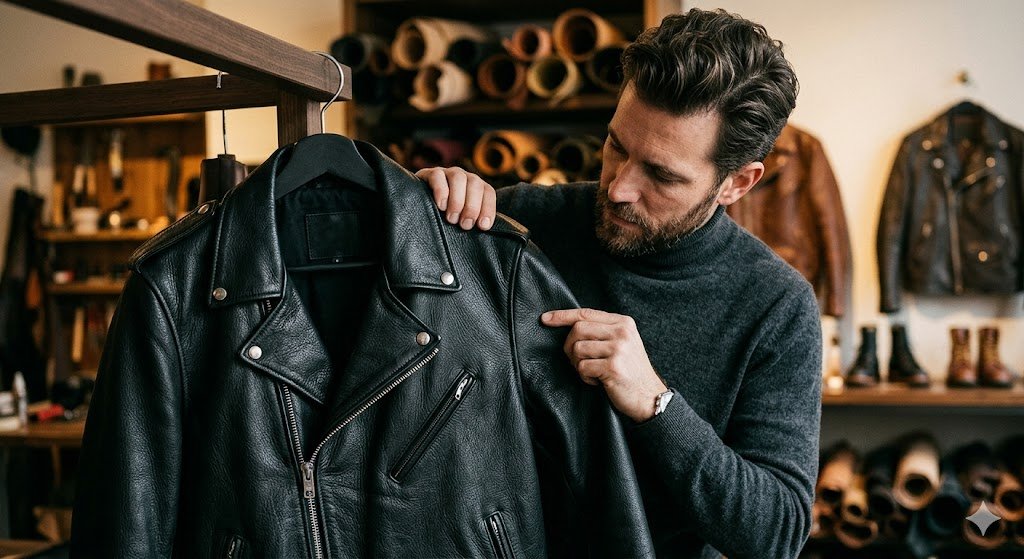
The Biker Jacket: Characterized by an asymmetrical front zipper, wide lapels, and heavy metallic hardware. This iconic silhouette offers a rugged edge that is a historical staple of mens motorcycle jackets.
The Bomber Jacket: Features a centered zipper, ribbed cuffs, and a ribbed waistband. It is an incredibly versatile, casual option that sits comfortably on almost any body type.
The Cafe Racer: A minimalist style boasting a small snap-button band collar and a straight front zipper. It is highly streamlined, making it the perfect entry-point for beginners. To explore how these cuts differ structurally on a model, check out our comprehensive index of mens leather jacket styles.
Decode the Leather Grades to Ensure Real Longevity
The term “Genuine Leather” is highly misunderstood by the average shopper. In the leather industry, it does not mean “authentic”—it actually refers to one of the lowest tiers of split, heavily processed real leather.
When studying how to choose a leather jacket, always look for full-grain or top-grain designations. Full-grain leather uses the complete, un-sanded top layer of the animal hide, retaining all natural marks and offering maximum durability. Top-grain leather is slightly sanded to remove surface imperfections, making it thinner, more pliable, and highly premium. If you want to understand the fiber density variations before making a purchase, read our breakdown on top grain vs full grain leather.
Pick the Perfect Animal Hide for Your Climate
Different animal hides possess vastly distinct weights, textures, and protective qualities. Matching the animal hide to your regional weather patterns is essential for daily comfort.
| Animal Hide Type | Physical Characteristics | Best Use Case |
| Cowhide / Steerhide | Extremely thick, rigid, heavy, and highly scratch-resistant. | Heavy-duty motorcycle riding or extreme wind protection. |
| Sheepskin / Lambskin | Ultra-soft, lightweight, supple, and silky to the touch. | Everyday fashion, light layering, and supreme comfort. |
| Goatskin | Soft like lambskin but features a distinct pebble grain that resists tearing. | Active daily wear and balanced mid-weight durability. |
If you are torn between a lightweight fashion piece and an indestructible heritage armor jacket, review our deep-dive comparison on sheepskin vs cowhide jackets to find your absolute sweet spot.
Inspect the Stitching and Metal Hardware Quality
A premium hide is useless if the jacket is held together by cheap thread and fragile hardware. Luxury manufacturers never cut corners on secondary construction details.
Examine the seams closely; the stitching should be dense, completely straight, and free of loose threads or double-stitching errors. Furthermore, feel the weight of the main zippers. World-class jackets rely on heavy-duty brass or steel teeth, typically sourced from premium global standard suppliers. To learn how high-end fasteners impact the overall lifespan of an outer shell, check out our analysis on ykk vs sbs zippers leather jacket performance metrics.
Nail the Fit Rules for a Flawless Silhouette
A leather jacket cannot be tailored easily or cheaply like a woolen suit jacket. Therefore, getting the correct fit off the rack is arguably the most critical phase of knowing how to choose a leather jacket.
The Shoulders: The shoulder seams of the jacket must sit exactly where your natural shoulder bones drop off. If they hang lower, the jacket will look sloppy.
The Sleeves: Your jacket sleeves should hit precisely at your wrist bone when your arms hang down at your sides. If they cover your knuckles, they are too long.
The Layer Test: Ensure you can zip the jacket completely over a mid-weight sweater without feeling restricted in your armpits. For a complete list of alignment rules, read our leather jacket fit guide.
Evaluate the Inner Lining Architecture
The fabric stitched inside the leather shell controls your body temperature and determines how easily the jacket slides over your clothing.
Avoid cheap, non-breathable polyester linings that cause excessive sweating during transitional spring months. Instead, seek out silk, viscose, or Bemberg linings for fashion jackets, and insulated quilted liners for winter wear. If you happen to buy a vintage jacket with an excellent outer hide but a shredded interior, a total overhaul is highly possible. Review our industrial cost analysis on leather jacket lining replacement cost to plan an upgrade.
Internal and External Resources
To ensure your luxury purchase remains immaculate for decades to come, utilize these authoritative resources:
Internal: Learn how to care for your new hide immediately after purchase by bookmarking our leather jacket care guide.
Internal: Budgeting your purchase? Read our expert review on the best affordable leather jackets of 2026.
External: Visit the Leather Working Group to study ethical sourcing and global tanning sustainability certifications.
External: Check out the textile standard breakdowns at Britannica to learn about the historical craftsmanship of leather curing.
Summary of Best Practices
Learning how to choose a leather jacket is an exercise in balancing timeless style with technical inspection. By focusing on full-grain or top-grain hide markings, checking the alignment of the shoulder seams, prioritizing lightweight lambskin or rugged cowhide based on your local climate, and insisting on robust metal hardware, you turn a complex purchase into an absolute triumph. Treat the search as a fun hunt, buy the absolute best quality your budget allows, and step out into the world with a second skin that speaks volumes.