Stepping into the world of premium leather outerwear is a significant lifestyle upgrade. A genuine leather jacket is one of the very few garments in modern fashion that refuses to succumb to the disposable cycle of fast fashion. It bridges generations, carrying deep cultural heritage while serving as an exceptional personal statement that completely elevates any wardrobe silhouette.
However, because a real leather coat requires a higher upfront financial commitment than a canvas jacket or a synthetic wool blend, first-time buyers always ask a crucial question before checking out: how long should a leather jacket last?
The definitive answer is simple: a high-quality, genuine leather jacket should last anywhere from 10 to 20 years, and it can easily endure for generations if crafted from premium hides and treated with proper maintenance.
Unlike cheap synthetic plastic layers that begin degrading the moment they leave the factory floor, real leather is built to survive. It undergoes a beautiful aging process, molding seamlessly to your body frame to become an heirloom piece that looks better a decade from now than it does today.
Let’s break down the definitive 1500-word blueprint evaluating hide grading, hardware engineering, and protection rules to discover exactly how to maximize the lifespan of your investment.
1. Hide Grading: The Ultimate Predictor of Outerwear Lifespan
When analyzing how long should a leather jacket last, the quality of the animal skin is the single most important factor. According to the structural guidelines maintained by the Britannica Encyclopedia, genuine leather possesses a complex, interlocking fiber network that naturally resists abrasions and tearing. However, how the manufacturer processes that hide alters its longevity completely.
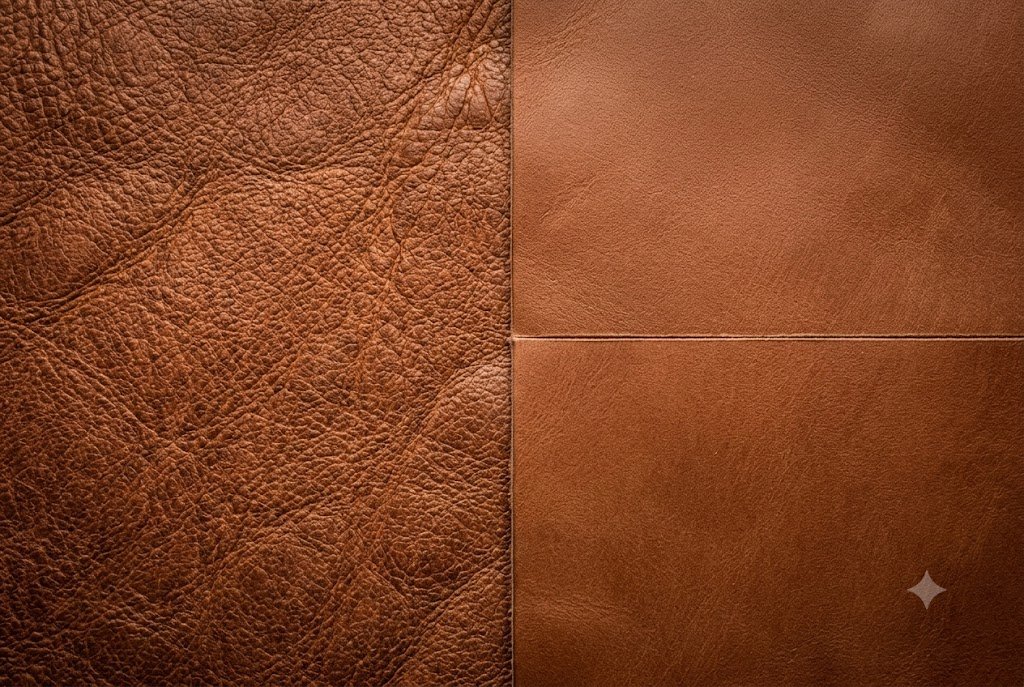
Full-Grain Leather (Lifespan: 20+ Years)
Full-grain leather utilizes the absolute top layer of the animal hide without removing the natural surface grain. It contains the densest, tightest fiber structure in the entire skin, making it virtually indestructible. If you want to master the art of choosing these lifetime pieces, read our professional tutorial on how to identify full-grain leather.
Top-Grain Leather (Lifespan: 10 to 15 Years)
Top-grain leather involves sanding down the very top layer of the skin to remove natural blemishes and scars. While this makes the jacket incredibly uniform and smooth, it reduces the overall fiber density slightly. Top-grain coats still offer spectacular, long-term durability but will require more frequent conditioning to maintain their structure over time.
Genuine/Split Leather (Lifespan: 2 to 5 Years)
Do not let the word “genuine” fool you. In the commercial textile market, this refers to the lower, powdery layers of the hide left over after the top layers are split away. The fibers are loose and weak, meaning these budget-friendly jackets scratch easily and can warp out of shape after just a few seasons of regular wear.
2. Biological Hide Source: Lambskin Elasticity vs. Cowhide Armor
The source animal completely dictates how your jacket handles daily friction and weather stress. Material standards tracked by the global certification body Leather Working Group show that different hides possess completely unique density indexes and moisture absorption thresholds.
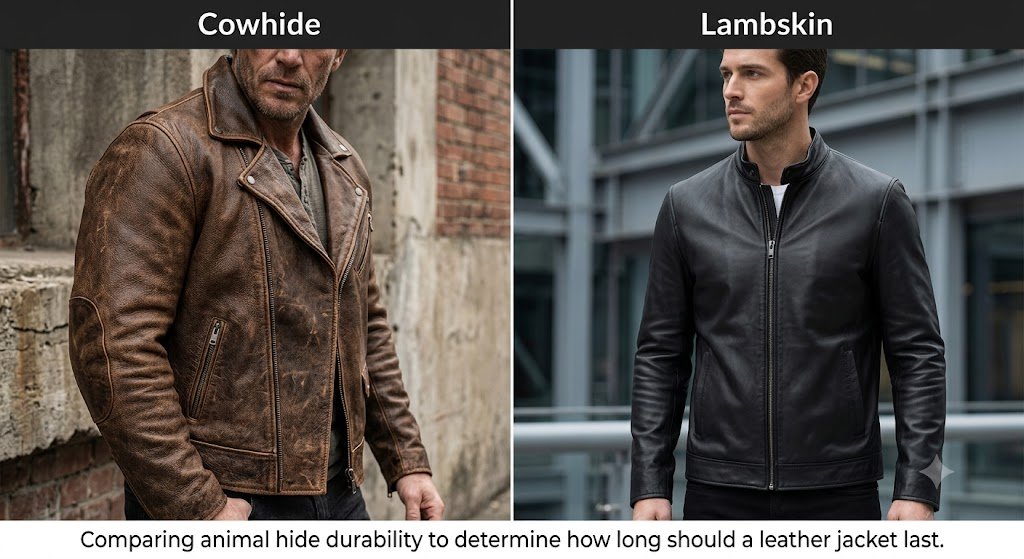
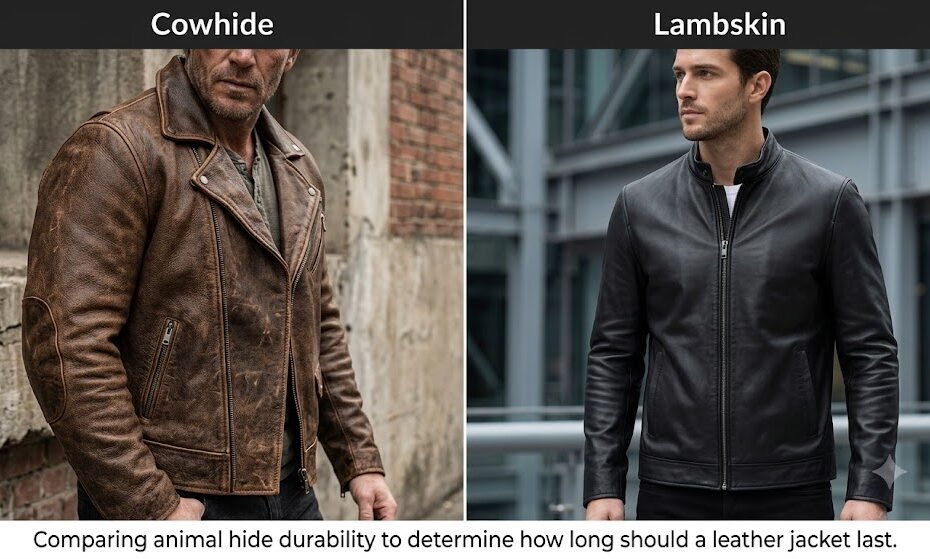
Premium Lambskin and Sheepskin: These hides are celebrated for being incredibly lightweight, supple, and buttery-soft from day one. Lambskin is highly elastic and contours beautifully to your body’s curves. While it is a luxury material that drapes flawlessly, it is thinner and more prone to punctures from sharp edges. A lambskin piece like our popular mens sheep leather jacket will easily last over 10 years if you avoid rough, abrasive settings.
Heavy-Duty Cowhide and Buffalo Leather: These are thick, heavy, and extremely rigid hides built for raw endurance. They offer ultimate protection against freezing winter winds and harsh road friction. A cowhide jacket requires a brief break-in period to soften up, but it is a multi-decade shield that can handle immense abuse without showing structural weakness. To see how these heavy hides conquer severe weather, read our winter analysis on whether are leather jackets warm enough for winter.
3. Real Leather vs. Faux Leather: The Truth About Peeling
A major mistake many first-time buyers make is settling for cheap, short-lived synthetic plastic replicas to save money upfront. However, evaluating a real leather coat vs a synthetic layer reveals why real leather is the smarter financial choice over time.
The structural performance of performance textiles evaluated by the American Society for Testing and Materials (ASTM International) shows that synthetic multi-layered plastics cannot handle repeated flexing cycles without cracking.
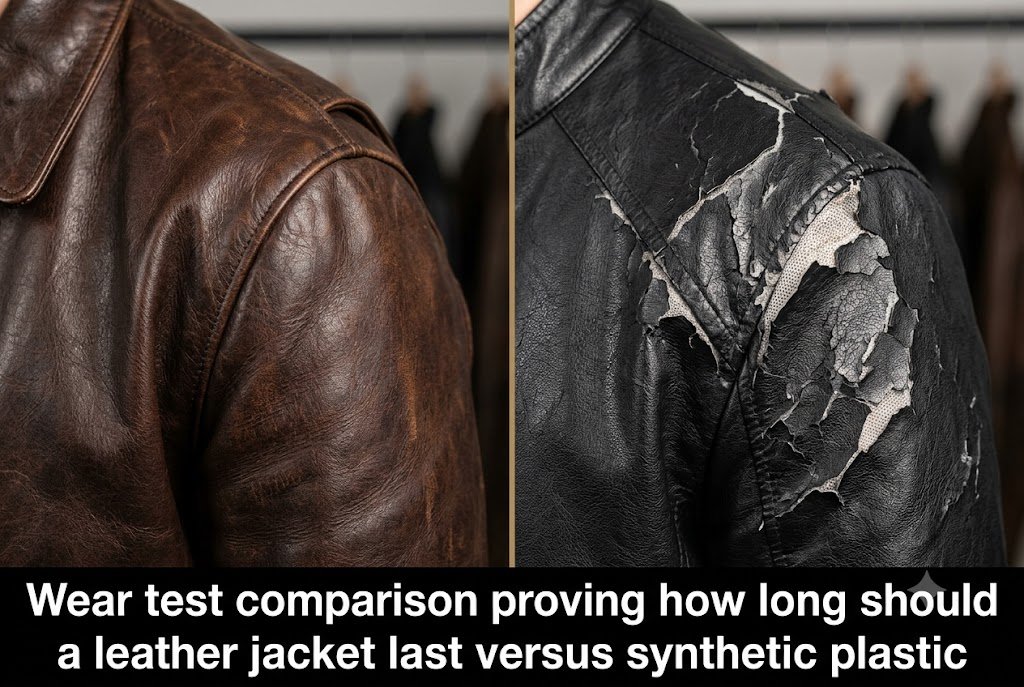
Faux leather (also known as PU, vegan, or polyurethane leather) is a piece of polyester fabric coated with a thin layer of plastic polymer. Plastic possesses zero natural elasticity and cannot self-condition. Within 2 to 3 years of regular use, exposure to sunlight, arm movement, and humidity will cause the plastic coating to dry out, stiffen, and permanently flake away along the creases. Once a synthetic coat starts peeling, it is destined for a landfill.
Real leather breathes and responds to your body. Instead of degrading, it undergoes a gorgeous material evolution. Over years of wear, it develops a deep character sheen called a patina. For a complete look at the financial and structural breakdown of this comparison, explore our longevity report on real leather vs vegan leather durability.
4. Hardware Engineering and Interior Construction
A premium leather shell can easily last 30 years, but your jacket will become unwearable if its secondary components fail. When assessing how long should a leather jacket last, you must evaluate the interior craftsmanship:
Zipper Quality: Look for heavy-duty metal closures from world-class manufacturers like YKK. Synthetic plastic zippers will snap or strip under the weight of heavy leather. To ensure your hardware is authentic, check out our guide on how to identify YKK zippers on leather.
Lining Composition: The interior lining faces constant friction from your clothing. Thin polyester or silk linings can shred within a few seasons. Look for high-density quilted cotton, insulated satin, or premium wool linings that can handle decades of sliding over jeans and heavy knit sweaters.
Thread Choice: High-end manufacturers utilize thick, heavy-duty nylon or polyester twist threads with double-stitching along the armpits, pockets, and shoulder panels to guarantee the seams never burst under tension.
5. Sizing Dynamics: How Proper Fit Prevents Premature Wear
A massive but frequently overlooked factor in determining how long should a leather jacket last is choosing the correct size on day one. Sizing a jacket incorrectly puts unnatural physical stress on the garment’s structure.
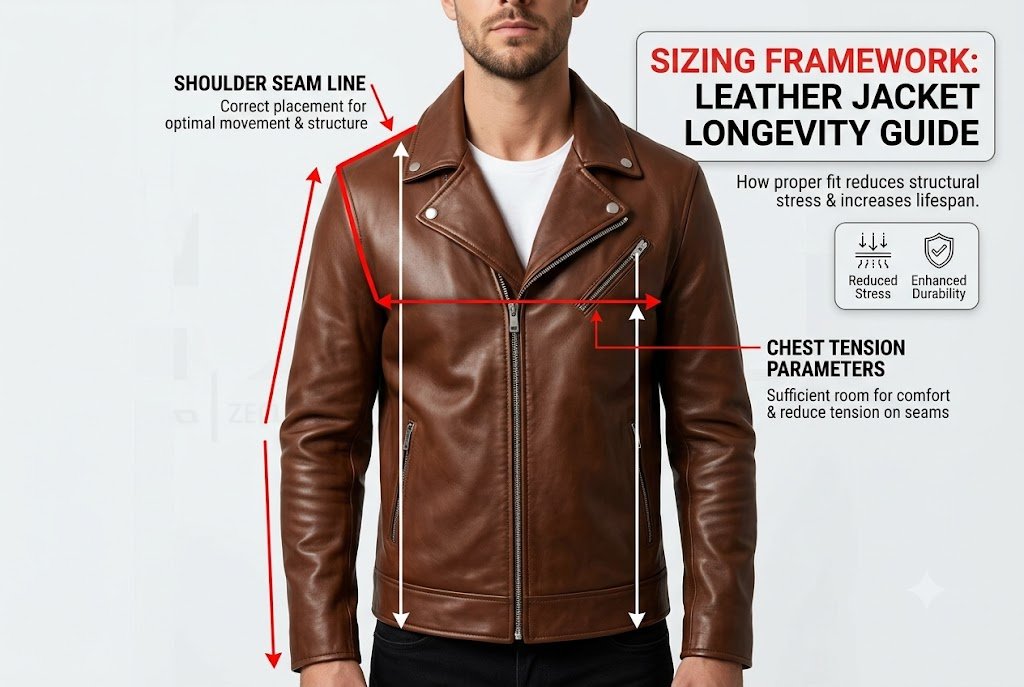
If you purchase a jacket that is excessively tight across your chest and upper back, every movement puts immense pressure on the shoulder seams and armhole stitching. Over time, this constant stretching can pull the seams apart or cause the leather lining to tear.
Your jacket should fit like a firm handshake—snug and secure against your torso, but still leaving enough breathing room to comfortably layer a thick winter hoodie underneath without restricting your circulation. To check your measurements against professional standards, read our master tutorial on how should a leather jacket fit.
6. The Golden Rules of Care to Ensure a Lifetime of Wear
You don’t need to baby your leather outerwear, but following these four non-negotiable preservation rules will double its lifespan:
| Care Directive | What to Do | What to Avoid |
| Hanger Selection | Use a wide, contoured wooden hanger to support the heavy shoulder panels. | Never use thin wire hangers, which cut into the leather hide and permanently warp its shape. |
| Moisture Recovery | If caught in a rainstorm, wipe it down and let it air-dry naturally at room temperature. | Never use a radiator, fireplace, or hair dryer, which will bake out the natural oils and cause cracking. |
| Conditioning Routine | Apply a premium leather conditioner once or twice a year to keep the hide supple and hydrated. | Avoid ignoring dry spots, especially after harsh winter exposures or long-term summer storage. |
| Storage Strategy | Store it in a cool, dark, dry closet inside a breathable cotton garment bag. | Never seal it in a plastic garment bag, which traps humidity and breeds mold. |
If your investment piece has been locked away in storage and has developed a stale or musky aroma, check out our quick fix on how to safely get rid of a stubborn leather smell.
Life Cycle Timeline: Your Leather Jacket Over 10+ Years
To give you an exact roadmap of what to expect from a high-quality purchase, here is how a premium hide evolves over a decade of continuous wear:
Month 1 (The Break-In): The leather feels slightly rigid, especially around the elbows and shoulders. As you move, the hide begins to soften and adapt to your specific body frame.
Year 2 to 5 (The Sweet Spot): The jacket is completely broken in. Tiny micro-creases develop along your movement paths, and the leather drapes with incredible comfort.
Year 10+ (The Heirloom Status): The jacket possesses a distinctive, gorgeous patina along the seams, cuffs, and collar. It has transformed into an irreplaceable piece of personal armor that fits you better than any garment in your wardrobe. To see how these lifetime investments look after a decade, view our full visual feature on a leather jacket after 10 years.
Invest in a Lifetime Companion with Caesar Jackets
When calculating the value of premium outerwear, don’t just look at the price tag—look at the cost-per-wear. A cheap synthetic jacket that costs $100 but peels and ends up in a landfill after two seasons is an expensive mistake. A genuine leather jacket that costs a fair price but serves you flawlessly for twenty years is an absolute steal.
At Caesar Jackets, we bypass retail middleman markups to bring you 100% genuine, ethically sourced leather coats built from the finest hides and heavy-duty metal hardware.
Whether you want to rule the city streets in one of our iconic mens leather jackets or discover the tailored refinement of our best leather jacket styles for women selection, we engineer our outerwear to survive the seasons. Browse our new arrivals today, use our detailed sizing tools, and invest in luxury leather built to last a lifetime!
Ready to invest in outerwear that grows more beautiful with every passing year? Don’t settle for short-lived synthetic garments that end up in landfills. Discover the unmatched luxury, durability, and tailored perfection of Caesar Jackets. Click below to explore our signature collections and claim your personal lifelong armor today! 👉 Shop the Caesar Jackets Heritage Collection Now