If you are wondering how to get rid of leather smell, first identify what the odor is like and whether there are signs of a spill, visible mold, or a strong chemical scent. A mild new-material odor is different from cigarette smoke, gasoline, or damp mildew—and the safest next step depends on the cause.
Do not try to cover an unknown odor with perfume or several household treatments in a row. This guide helps you decide what you may be dealing with, what low-risk steps to take, and when to stop and ask a qualified professional.
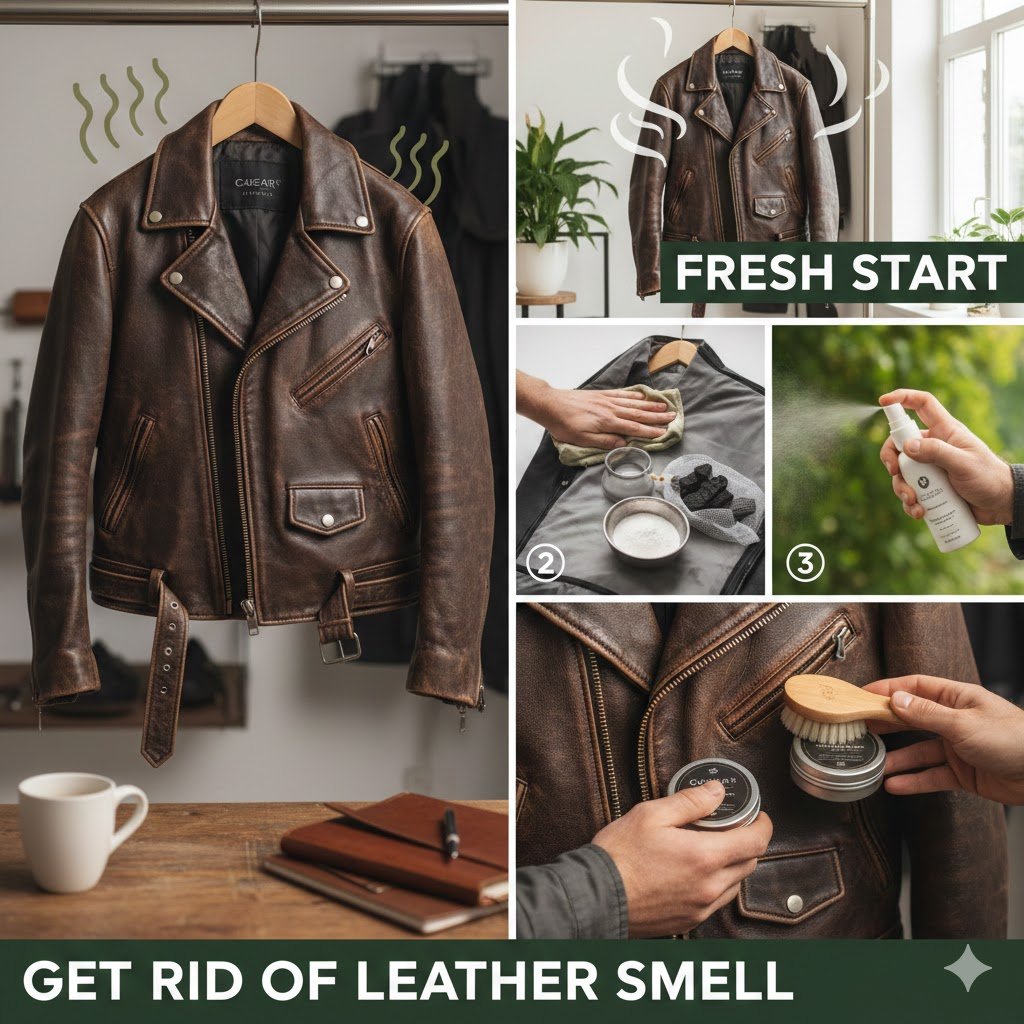
How to Get Rid of Leather Smell: Diagnose Before Deodorizing
The phrase “new leather smell” does not identify a specific chemical or establish whether an item is safe. Odor alone cannot tell you what substance is present or measure exposure. Check the garment’s care label and product information, and consider when the smell started: immediately after unpacking, after exposure to smoke or fuel, or after damp storage.
| What you notice | Possible situation | Safer next step |
|---|---|---|
| Mild, unfamiliar odor after unpacking | New material, finish, packaging, or storage odor | Remove packaging and air the item in a shaded, dry, ventilated place. If strong or persistent, contact the seller or a leather-care professional. |
| Sharp or solvent-like odor | Possible chemical, adhesive, coating, or packaging odor | Avoid wearing it if the smell is intense or causes irritation. See our guide to a leather jacket that smells like chemicals. |
| Smoke or tobacco odor | Exposure to cigarettes or a smoky environment | Keep the item away from other garments and use our cigarette-smell guide after its cleaning advice has been reviewed. |
| Gasoline or fuel odor, especially after a spill | Possible fuel contamination | Treat this as a safety issue, not an ordinary deodorizing task. Avoid flames, heaters, hair dryers, and other ignition sources; follow local safety guidance. See our gasoline-on-leather guidance after it has been safety-reviewed. |
| Musty odor, dampness, or visible growth | Possible mildew or mold related to storage or moisture | Avoid brushing or shaking the item indoors. See our mold-on-leather-jacket guidance and consider professional assessment. |
This is a starting point, not a way to diagnose a chemical or identify a mold species. If you cannot tell what caused the smell, choose the cautious route: stop using the item, check its product and care information, and ask the seller or a specialist before applying any cleaner.
Low-Risk First Steps for a Mild New-Leather Odor
If the item has a mild odor after unpacking and there is no spill, visible mold, or irritation, begin with simple steps rather than a deodorizing treatment:
- Remove packaging. Take off plastic wrapping and allow the garment to return to room conditions.
- Ventilate it gently. Hang it on a broad, supportive hanger in a dry, shaded area with good airflow. Keep it away from direct sunlight, radiators, hair dryers, and other heat sources.
- Check the lining and pockets. The odor may be stronger inside the garment or in packaging materials. Do not apply liquid to the lining unless the care label or a qualified cleaner recommends it.
- Give it time without promising a deadline. Odor may fade with ventilation, but the time varies by item and cause. If it remains strong, worsens, or causes irritation, stop wearing it and contact the seller or a professional.
For general preservation advice, consult the Canadian Conservation Institute’s leather-care guidance. It is not a jacket-specific odor-treatment recipe, so follow the garment maker’s care instructions for wearable leather.
What Not to Apply to an Unknown Leather Odor
Until you know the likely cause and the leather’s finish, avoid improvised treatments. Do not spray perfume, vinegar, alcohol, disinfectant, or fabric freshener directly on the leather. Do not apply baking soda, coffee grounds, citrus peel, camphor, or other powders or scented materials to the surface. These can leave residue, stains, or a second odor, and a treatment suitable for one finish may damage another.
Do not use steam, a hair dryer, a radiator, or a tumble dryer to force the smell out. Heat and excess moisture can affect the finish, lining, shape, or adhesives. If a cleaner is recommended for the specific item, follow its label and test only as directed in an inconspicuous area—or leave the work to a leather-care professional.
When to Treat the Odor as a Safety or Mold Issue
Gasoline and fuel odors
Gasoline is volatile and flammable. Its vapors can move toward an ignition source and flash back, so do not use a hair dryer, heater, flame, or smoking materials around a fuel-contaminated garment. Avoid experimenting with household powders, vinegar, coffee grounds, or sealed-bag methods. If there is a spill or strong vapor, move away from ignition sources and follow local emergency or hazardous-material guidance. The ATSDR gasoline safety guidance explains the vapor and fire hazards.
Visible mold or persistent mustiness
Visible growth is not just a deodorizing problem. Avoid brushing, shaking, or dry-scrubbing a moldy jacket indoors, since that can spread material into the surrounding area. Keep it away from other belongings and ask a leather specialist whether it can be cleaned safely. The CDC mold cleanup guidance notes that cleanup can present health risks; its guidance also identifies leather among porous items that may be difficult to clean thoroughly.
Frequently Asked Questions
How long does new leather smell last?
There is no reliable timeline that applies to every leather item. A mild odor may lessen with ventilation, while a strong, persistent, or changing odor needs a closer look at the product, packaging, storage conditions, or possible contamination.
Does a leather smell mean the jacket is unsafe?
Not necessarily, but smell alone cannot confirm that an item is safe or identify what caused the odor. If the smell is sharp, persistent, or causes discomfort, stop wearing the item and contact the seller or a qualified professional.
Can I spray perfume or vinegar on leather to remove the smell?
No. Avoid applying perfume, vinegar, alcohol, or household deodorizing sprays directly to leather. They may alter the finish or add another odor. Use only a product approved for that specific leather and follow its instructions.
What is the safest way to get rid of leather smell?
The safest way to get rid of leather smell is to identify the likely source first. For a mild new-item odor, begin with gentle ventilation. For smoke, chemical, gasoline, or mold odors, use the relevant specialist guidance rather than a one-size-fits-all home remedy.
Choose the Next Step by the Cause
Learning how to get rid of leather smell starts with distinguishing a mild new-item odor from smoke, chemicals, fuel, or possible mold. Use gentle ventilation only for a mild odor with no warning signs. Do not mask a strong or unexplained smell, and do not use household treatments on a leather finish without reliable, item-specific guidance.