This leather jacket care guide is a starting point for routine maintenance and common problems—not a one-size-fits-all treatment plan. Leather finishes vary, and suede, unfinished leather, coated leather, and imitation leather may need different care. Start with the garment label or the maker’s instructions before applying water or a care product.
For a quick answer, choose the issue you are dealing with: surface dirt, conditioning, storage, rain, mold, or cracking. This guide explains what to do first and when to use a dedicated guide or consult a leather-care professional.
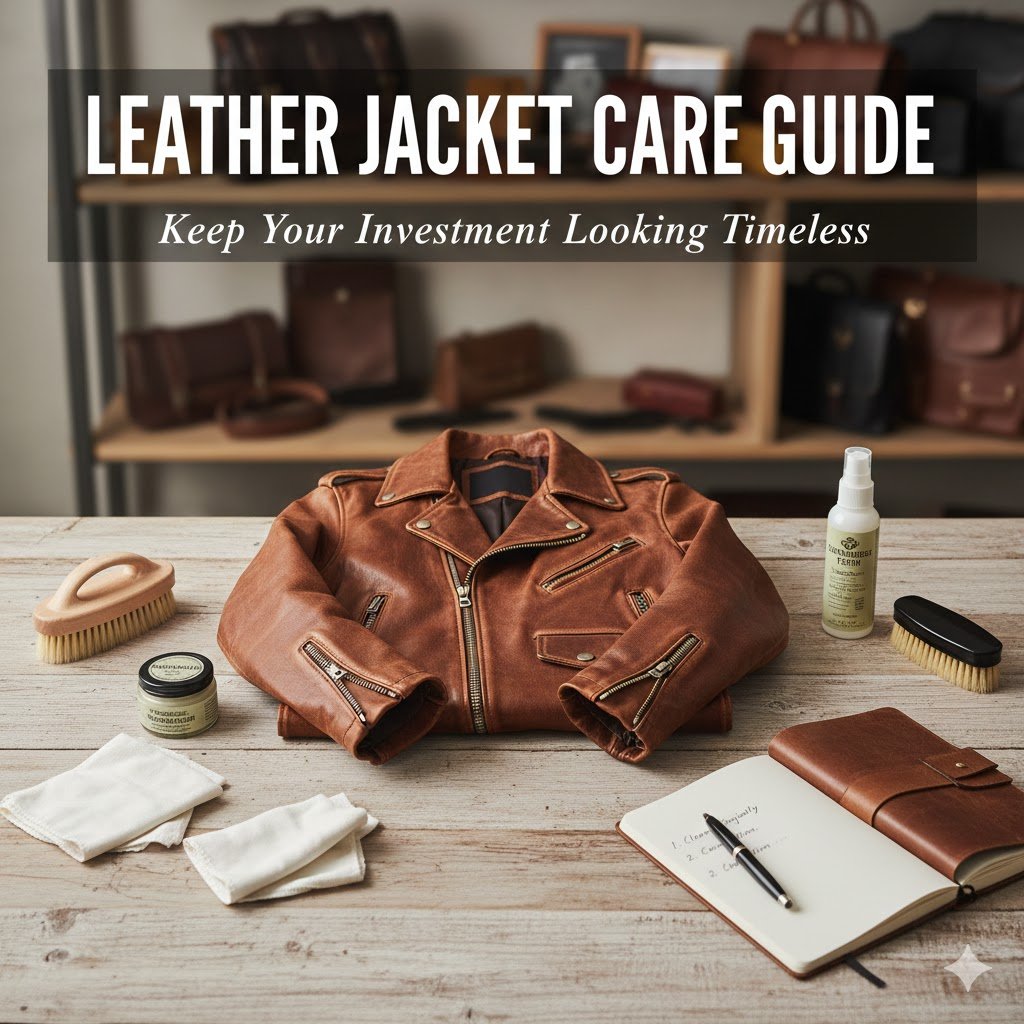
Leather Jacket Care Guide: Start with a Safe Routine
For routine wear, keep care simple. After wearing the jacket, let it air in a ventilated place before putting it away. If there is loose dust, remove it gently with a clean, soft cloth. Avoid leaving the jacket in direct sunlight, beside a heater, or compressed under heavy items for long periods.
Before using a cleaner, conditioner, or water-repellent treatment, check that it is intended for the garment’s material and finish. Leather Naturally’s leather-care guidance recommends testing products on a small, inconspicuous area first and letting wet leather dry naturally.
Care instructions can vary by product and leather finish. If the jacket did not come with care guidance, the Leather Working Group FAQ advises contacting the retailer or brand for instructions specific to that item.
These checks matter because a product suitable for one finished leather may discolor another surface. Suede and nubuck have a nap that can be changed by rubbing or applying products intended for smooth leather. Imitation leather also has different material and care needs from animal leather.
How to Clean a Leather Jacket
For light surface dust, begin with a dry, soft cloth. If the care label allows it and the mark is minor, use a clean cloth that is only slightly damp, work gently, and avoid soaking or scrubbing one small area. Let the garment dry naturally away from direct heat.
Do not assume household soap, alcohol wipes, or a general-purpose cleaner is safe for every finish. Avoid machine-washing a leather jacket unless its maker explicitly says that the specific garment is machine-washable. For stains, lining, or deeper cleaning, use a product made for the material or seek specialist advice.
For detailed cleaning steps, see our leather jacket cleaning guide. Confirm this URL returns 200 before publishing; if another cleaning page is the selected support page, use that page’s final URL instead.
Conditioning: How to Choose and Apply a Product
Conditioner is not automatically required on a fixed calendar. First check the care instructions and the leather’s condition. If the maker recommends conditioning, choose a product intended for that garment and finish, test it in an inconspicuous area, and follow the product directions. Use only the amount specified; adding more does not guarantee better protection.
There is no universal rule such as “every three to six months” that applies to every jacket. Wear, storage, climate, finish, and the maker’s instructions can differ. If the leather changes color, becomes tacky, or reacts unexpectedly during a patch test, stop and seek advice rather than applying the product to the whole garment.
This leather jacket care guide treats conditioning as one possible maintenance step, not a guaranteed repair for dryness, cracking, or peeling. For unusual stains or damage, Leather Naturally recommends seeking professional advice.
How to Store a Leather Jacket
Before storing the jacket for a longer period, make sure it is dry and free of loose surface dirt. Hang it on a broad, supportive hanger in a cool, dry, ventilated place. A breathable garment cover can reduce dust; avoid sealing the jacket in plastic, where moisture may become trapped.
Keep the jacket away from radiators, hot vents, and direct sunlight. Avoid long-term compression or sharp folds that could leave creases. For detailed off-season instructions, read our leather jacket storage guide.
What to Do if a Leather Jacket Gets Wet
If the jacket is caught in light rain, gently blot excess water with a clean, soft cloth. Let it dry at room temperature in a ventilated, shaded area. Do not use a hair dryer, radiator, or direct sunlight to speed up drying. Once dry, check the care label before applying any product.
Water-repellent sprays are not automatically suitable for every leather finish, so do not apply one on a fixed seasonal schedule without checking the garment and product instructions. This leather jacket care guide recommends following product-specific advice; for more detail, see how to wear and care for a leather jacket in the rain.
Mold, Cracks, and Other Damage
Mold, a dry-looking surface, a deep crack, and a peeling synthetic coating are not interchangeable issues. Avoid applying alcohol mixtures, oils, or conditioner as a universal fix: products can affect color and finish, and some damage cannot be reversed by home treatment.
- Mold: Avoid disturbing widespread growth or bringing a heavily affected garment into living areas. Get specialist advice, especially if the mold has reached the lining or the jacket is valuable. See our guide to mold on leather jackets.
- Dryness or early cracking: Do not assume conditioner will repair structural damage. Check whether the material is genuine leather or a coated imitation, and follow the product maker’s instructions. See ways to help prevent leather from cracking.
- Deep cracks, peeling, or color loss: Stop experimenting with cleaners or oils. A professional can assess whether the damage is in the leather itself, a surface finish, or an imitation-leather coating. For repair-specific information, see our cracked leather repair guide.
Use this leather jacket care guide to identify the problem before choosing a treatment. A surface crack, a deep split, and peeling on imitation leather may look similar at first but require different responses.
Common Leather Jacket Care Mistakes
- Applying a cleaner, conditioner, or water-repellent spray without checking whether it suits the garment.
- Skipping a patch test on an inconspicuous area.
- Using excessive product or repeatedly conditioning without checking the leather’s condition.
- Drying wet leather with direct heat or storing it while damp.
- Assuming suede, finished leather, and imitation leather can all be cleaned the same way.
- Trying a home repair on extensive mold, deep cracks, peeling, or major color loss.
Frequently Asked Questions
Can you machine-wash a leather jacket?
Do not machine-wash it unless the maker explicitly confirms that the specific jacket is machine-washable. Check the care label and use a method suitable for the garment instead.
How often should you condition a leather jacket?
There is no single interval that applies to every jacket. Follow the maker’s instructions, assess the material and finish, and test any recommended product in an inconspicuous spot before use.
Can you wear a leather jacket in the rain?
That depends on the leather finish and the amount of exposure. After it gets wet, blot excess water and let it dry naturally away from heat. Check the maker’s advice before applying a water-repellent product.
Can conditioner repair a cracked leather jacket?
Conditioner should not be treated as a guaranteed repair. Surface dryness, deep cracks, and peeling coatings are different problems; significant damage may need professional assessment.
Use This Leather Jacket Care Guide as Your Starting Point
Good leather jacket care starts with identifying the material, checking its care instructions, and choosing the least aggressive suitable method. Use this leather jacket care guide to find the right next step, then follow the linked specialist instructions for cleaning, storage, rain, mold, or damage. When a treatment could change the jacket’s color or finish, pause and ask the brand or a leather-care professional before proceeding.