If you want to know how to stop leather from cracking, focus on the conditions and handling that can dry, damage, or wear the surface. Keep the jacket away from prolonged heat and strong sunlight, clean it gently, follow care instructions for its specific finish, and store it so the material is not crushed or exposed to damp conditions.
These habits can reduce avoidable wear, but no routine can guarantee that leather will never crack. If a crack or peeling area is already visible, treat it as damage to assess—not simply as a sign that the jacket needs more conditioner.
How to Stop Leather from Cracking: 5 Practical Care Habits
1. Limit prolonged exposure to heat and direct sunlight
Do not leave a leather jacket on a radiator, beside a heater, in a hot car, or in strong direct sunlight for long periods. Heat and light can affect the surface and finish over time. When drying a jacket after light exposure to rain, let it air-dry naturally in a ventilated place, away from direct heat. Do not use a hair dryer or place it on a heater to speed up drying.
2. Clean dirt and spills gently
For routine dust, use a clean, soft cloth. If the jacket needs more than a light wipe, follow the maker’s care instructions and use a cleaner that is specifically suitable for that material and finish. Test it on a hidden area first.
Avoid soaking the jacket, aggressive scrubbing, household solvents, and unverified home mixtures. If a spill or stain does not lift with gentle cleaning, stop rather than rubbing the finish harder. Our leather jacket cleaning guide covers more cleaning considerations.
3. Use conditioner only when the care instructions call for it
Conditioner is not a universal preventive treatment, and more is not necessarily better. Different leathers and surface finishes respond differently to dressings and cleaners. Check the garment maker’s instructions, choose a product intended for that material, and test it discreetly before treating a visible area.
Do not apply conditioner on an automatic schedule just because a set number of months has passed. If the jacket feels dry or stiff, first check its material and care instructions. Conditioner cannot reconnect split fibers or restore a finish that is already peeling.
The Canadian Conservation Institute’s guidance concerns leather objects in collections rather than everyday jackets, but it emphasizes that treatments should depend on the leather and condition, and cautions against unnecessary dressings. Read its care note on different types of leather as a conservation reference, not as a universal jacket-care recipe.
4. Store the jacket in a suitable place
Hang the jacket on a broad, supportive hanger that fits its shoulders. Choose a dry, ventilated storage area away from heaters and prolonged sunlight. Avoid compressing it under heavy items or leaving it folded tightly for long periods.
For longer storage, follow the maker’s guidance on garment covers. Avoid sealing a jacket in plastic for extended periods; choose a storage method that protects it from dust without trapping dampness. These basic steps are practical ways to stop leather from cracking due to avoidable environmental exposure, though they cannot prevent all aging or wear.
5. Reduce repeated friction and check wear points
Areas such as elbows, cuffs, pocket edges, and places rubbed by straps may show wear sooner than the rest of the jacket. Avoid unnecessary friction and inspect these areas during routine cleaning. Do not bend or stretch a brittle area to “work it back into shape.”
If you notice a change, take a clear photo and note where it is, whether the surface is flaking, and whether the material underneath appears exposed. This makes it easier to decide whether the issue is surface wear, finish failure, or a deeper split.
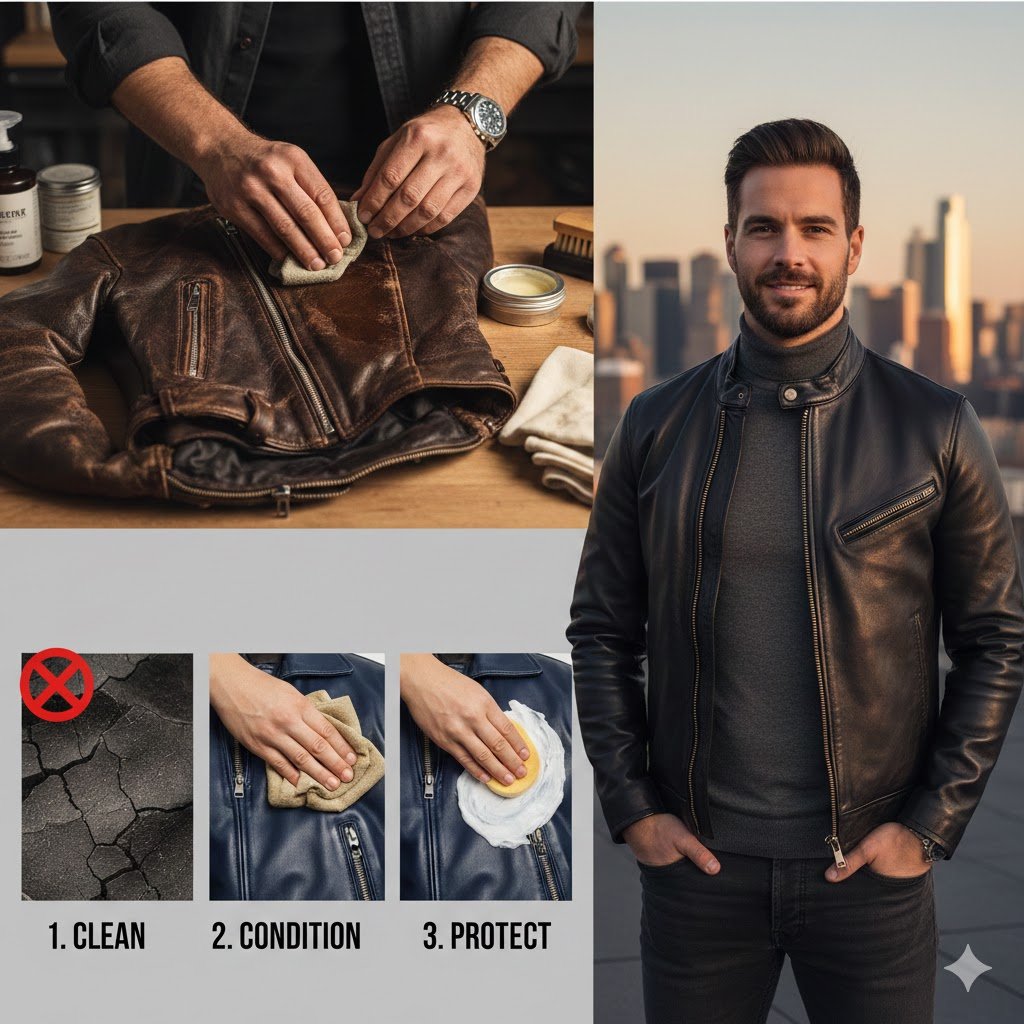
Cracking, Peeling, or a Tear: Know the Difference
“Cracking” can describe more than one kind of damage. Fine lines in a surface finish, a split through the leather, coating that flakes away, and a tear at a seam do not all have the same cause or repair method.
- Fine surface lines: The finish may be worn or cracked while the material underneath remains intact. More conditioner is not a reliable fix; check the finish and care instructions.
- Peeling or flaking: A surface layer may be separating from the material below. Appearance alone does not confirm whether the jacket is genuine leather, bonded material, or synthetic leather.
- Open cracks or seam damage: A split that exposes fibers, opens during normal movement, or follows a seam may be structural. Avoid home treatments that could make assessment or repair harder.
If the jacket is already cracked, our guide on how to repair cracked leather explains how to assess the damage and when to stop DIY work. If the surface appears to be synthetic coating, see our faux leather repair guide. For a cut or tear rather than surface cracking, read our guide to repairing a leather jacket tear.
Leather Naturally’s leather care guide also recommends following product guidance and consulting a leather specialist for unusual damage. For a valuable, unfamiliar, or fragile item, professional assessment is safer than experimenting with multiple products.
What Not to Use on Leather
- Food oils such as olive oil: They are not a substitute for a product designed for the jacket’s material and may leave residue or alter the surface.
- Egg white: It is not a tested leather repair system and should not be used to bind cracks or scratches.
- Heat to dry or soften the jacket: Direct heat can further affect the surface. Let a damp jacket dry naturally.
- Unverified chemicals or rough abrasion: Alcohol, household cleaners, and sanding can change color or damage a finish. Do not use them unless the product maker specifically directs it for that material and repair.
- Excess conditioner: Applying more product will not heal a crack and may leave the surface greasy, darkened, or difficult to refinish.
Frequently Asked Questions
How often should I condition a leather jacket?
There is no single interval that applies to every leather and finish. Follow the jacket maker’s care instructions and the conditioner label. If neither recommends routine conditioning, do not add it automatically.
Can olive oil stop leather from cracking?
No. Food oils are not a reliable leather-care product. Use only products that are suitable for the specific jacket, and test them in a hidden area first.
Can these habits fix leather that is already cracked?
No. Prevention and maintenance may help reduce avoidable future wear, but they do not repair a split, restore a failing coating, or reconnect damaged fibers. For existing damage, use our cracked leather repair guide to decide what to do next.
Does genuine leather never peel?
That is too broad a rule. Surface finishes can vary, and peeling alone does not reliably identify the material. Check the product information or ask the maker before choosing a repair method.
Build a Care Routine Around the Jacket
Learning how to stop leather from cracking is mainly about avoiding harsh conditions and using care products thoughtfully—not applying oil on a fixed schedule. Keep the jacket away from prolonged heat and strong sunlight, clean it gently, store it with support, and stop if the surface begins to split or peel.
For a broader routine covering cleaning, storage, and product-specific care, visit our leather jacket care guide. Prevention can reduce avoidable stress, but visible damage needs its own assessment.