The question of a leather jacket in the rain is not a simple yes or no. A brief shower may leave only surface moisture, while prolonged exposure can cause water marks, color changes, or stiffness—especially on more absorbent finishes. Check the jacket’s care label and surface before deciding how to protect or treat it.
If your jacket gets wet, blot the water, support its shape, and let it dry naturally. Avoid heat, vigorous rubbing, and applying conditioner while the leather is still damp. The steps below explain what to do and where material-specific care matters.

Leather Jacket in the Rain: What Determines the Risk?
A leather jacket in the rain is not automatically waterproof, even if its surface initially beads water. How it responds depends on the finish, previous treatments, seams, lining, and how much water reaches the garment. “Full grain,” “vegetable-tanned,” or a zipper brand alone does not establish that a jacket is rainproof.
Look at the care label and product information first. The Leather Naturally care guide notes that more absorbent leather is more likely to mark in heavy rain and recommends natural drying. Specialist guidance from Lederzentrum also distinguishes more protected, pigmented surfaces from open-pore leather that can absorb moisture.
| Surface or construction | What to watch for | Care boundary |
|---|---|---|
| Finished or pigmented smooth leather | Surface protection may vary; worn areas and seams can respond differently. | Follow the garment label; do not assume the finish makes it waterproof. |
| Aniline or other absorbent smooth leather | May show water marks or color changes more readily. | Avoid improvised water tests; ask the maker or a leather-care professional if unsure. |
| Suede or nubuck | Moisture can affect the nap and leave visible marks. | Use care advice specifically for the material; see our guide to whether a suede jacket can get wet. |
| Shearling or a jacket with a wool lining | The lining may also become damp and take longer to dry. | Check the garment instructions and seek professional help after heavy soaking. |
What to Do When a Leather Jacket in the Rain Gets Wet
Use this sequence after exposure. Drying time varies with the material, lining, amount of water, and room conditions, so do not rely on a fixed number of hours.
- As soon as you get indoors: Use a clean, light-colored, absorbent cloth to gently press away surface water. Blot rather than rub. Empty the pockets and fasten or arrange the jacket as you normally would so it can hang in shape.
- While it dries: Hang it on a broad, supportive hanger in a cool, shaded, well-ventilated place. Keep it away from radiators, hairdryers, direct sun, and other direct heat. Do not put a damp jacket in a closed closet or plastic garment bag.
- Once it is fully dry: Check for water marks, color transfer, stiffness, or changes in shape. Do not automatically condition after every shower; use only a product suitable for that leather and follow its instructions. Test any care product on a hidden area first.
- Before storing it: Make sure the shell and lining are dry. Then store it in a cool, dry place with room for air circulation. Our leather jacket storage guide covers hangers and breathable storage.
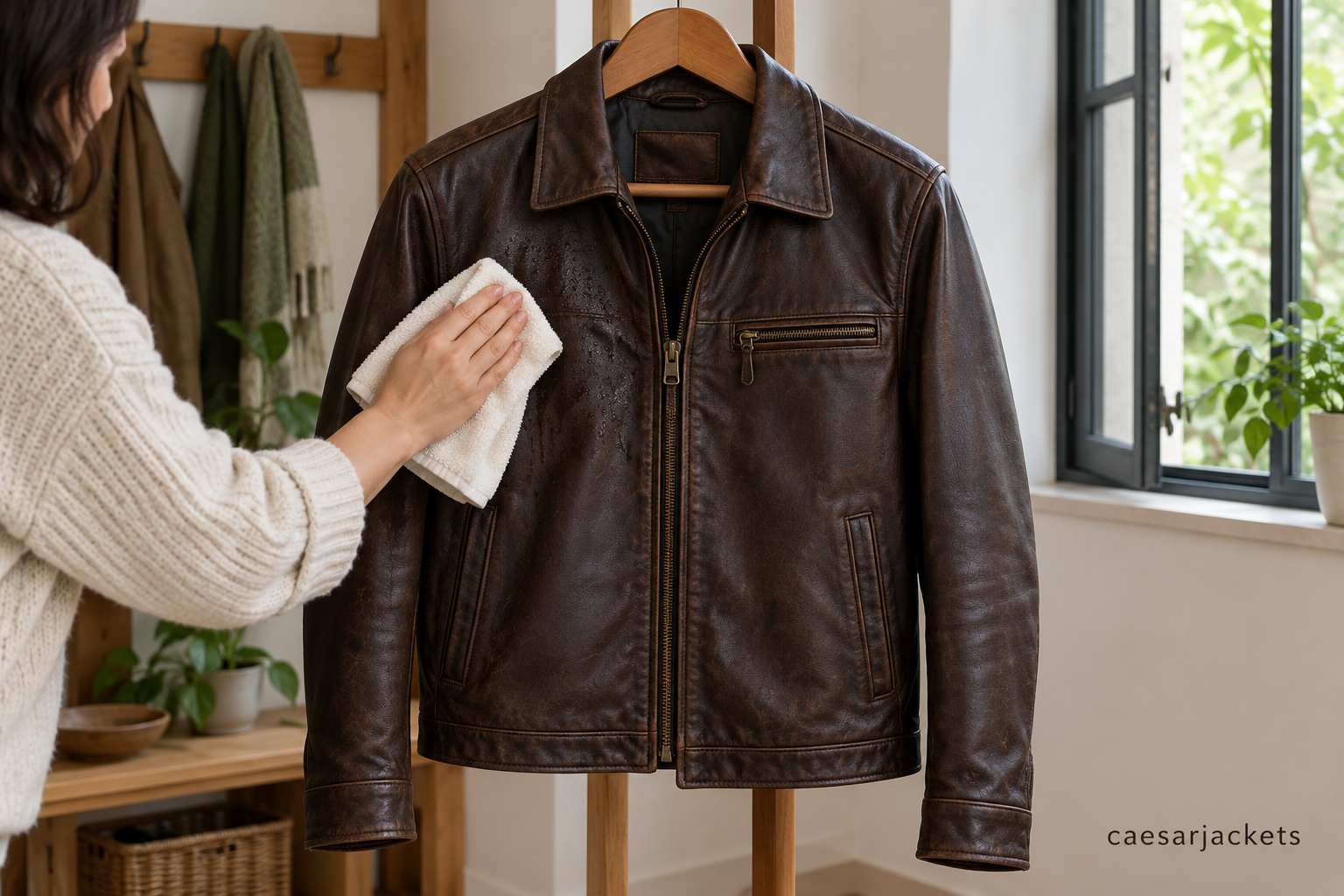
If the jacket is thoroughly soaked, has noticeable dye transfer, or remains distorted or stiff after drying, stop experimenting with household products and consult a leather-care professional. The general leather jacket care guide provides broader cleaning and maintenance advice.
How to Test a Water-Repellent Product Safely
A water-repellent product may help with light exposure if it is made for the jacket’s specific surface, but it does not turn every garment into waterproof outerwear. For a leather jacket in the rain, product compatibility matters more than claims such as “all leather” on a spray bottle.
- Read the label: Confirm that the product is intended for the exact material and finish. Do not use a smooth-leather product on suede or nubuck unless the manufacturer explicitly allows it.
- Patch-test first: Apply it to a small, inconspicuous area exactly as directed. Allow the full recommended drying or curing time.
- Inspect the test area: Check for darkening, color change, residue, stiffness, or a change in texture before treating more of the garment.
- Do not overstate the result: A patch test checks compatibility, not whole-jacket waterproof performance. Do not pour water over the jacket or test an unknown finish with water drops.
When the forecast calls for prolonged or heavy rain, the safer choice is to use appropriate rainwear rather than rely on a leather-care spray. A hoodie worn under the jacket may be a clothing layer, but it does not shield the jacket’s outer surface from rain.
Can You Wear a Leather Jacket in the Rain?
A leather jacket in the rain may be manageable during brief, light exposure, but the garment’s finish and care instructions matter. If rain is expected to be heavy or prolonged, choose rainwear designed for those conditions. If the jacket does get wet, blot it and let it dry naturally before deciding whether any further care is needed.
Keep Rain Care Separate from General Cleaning and Storage
This page covers rain exposure and the immediate response. For broader cleaning, conditioning, and routine maintenance, continue to the leather jacket care guide. For storing the garment after it has dried, use the storage guide. We do not recommend creating separate general “wet leather jacket” or “leather jacket in snow” articles that repeat this same recovery advice.