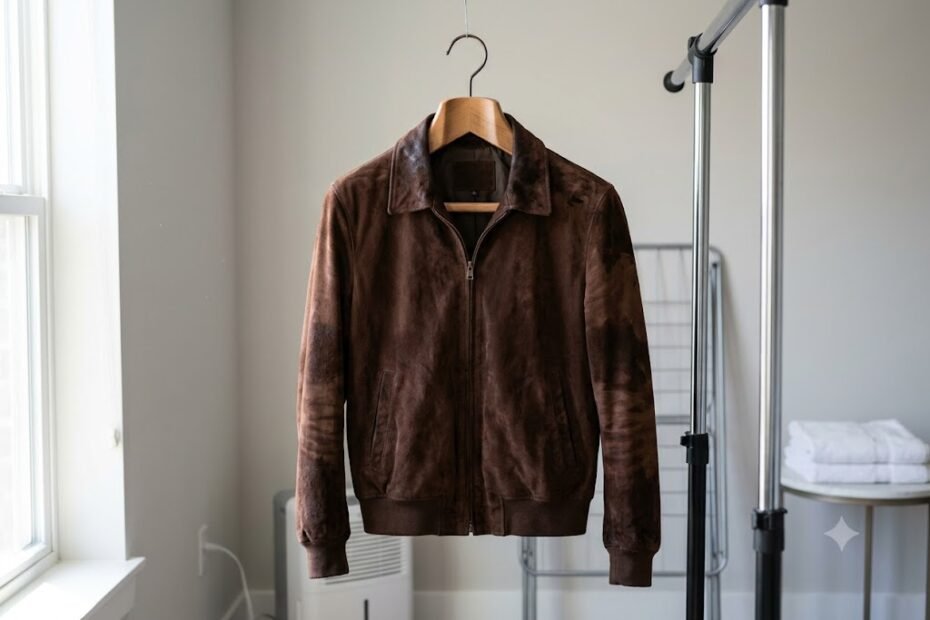
It is the ultimate nightmare for any menswear enthusiast: you step outside in a crisp, luxurious suede jacket, only to be caught in an unexpected cloudburst. Panic sets in immediately. Suede is universally renowned for its soft, velvety texture, but it also carries a terrifying reputation for being impossibly fragile when faced with atmospheric moisture.
If you are currently holding a damp garment or checking the weather forecast before heading out, your primary question is straightforward: can suede jacket get wet without causing permanent, irreversible damage?
The short answer is: yes, suede can get wet, but how it recovers depends entirely on how you treat it during the drying window. Suede is an organic, open-pored material derived from the underside of animal hide. While water itself does not instantly destroy the protein fibers, improper drying techniques and liquid contamination will ruin its luxurious finish. In this 1,500-word disaster-recovery masterclass, we will break down the physical mechanics of wet suede, step-by-step emergency restoration, and how to protect your investment piece leather jacket for decades to come.
I. The Material Science: What Happens When Suede Meets Water?
To understand why asking can suede jacket get wet causes such anxiety among leather owners, you must analyze the physical structure of split hides. Unlike smooth outer grain leather, suede is created by buffing the inner side of animal skin, creating a fibrous surface known as the “nap.”
According to the material performance standards established by the Leather Working Group (LWG), open-pored split hides interact with moisture through three specific physical phases:
Moisture Absorption: Because suede lacks the protective epidermal layer of smooth grain, the open fibers act like tiny sponges, absorbing water directly into the dermal matrix.
Oil Displacement: As water enters the hide, it binds with the natural tanning oils that keep the suede soft. As the water evaporates, it pulls these essential oils out to the surface, causing the interior collagen fibers to stiffen and lock together.
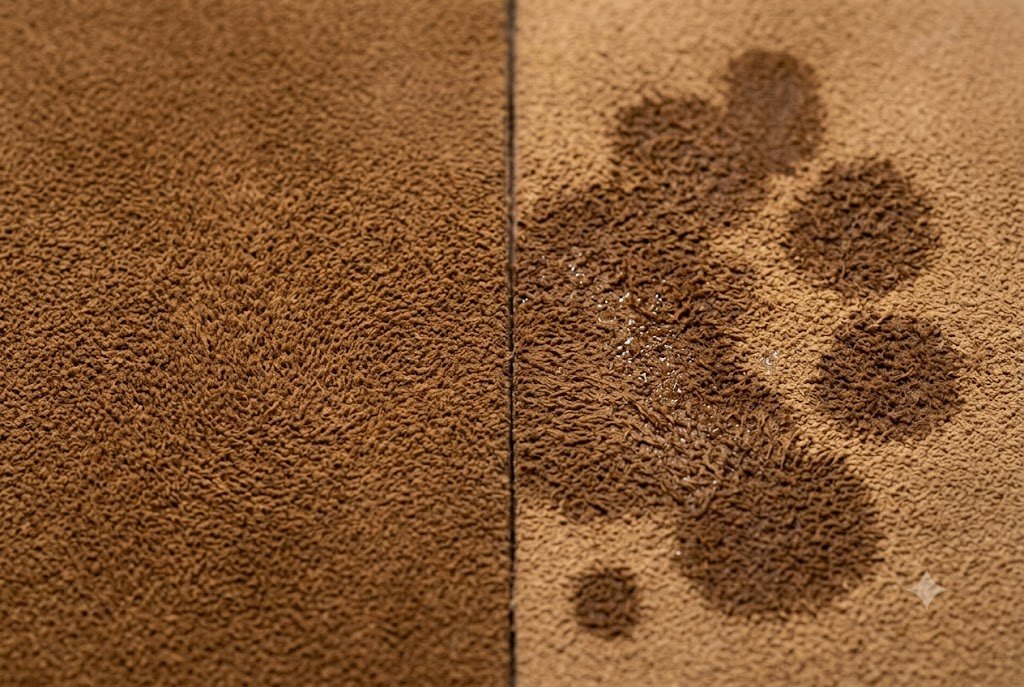
Nap Compression & Water Spotting: Droplets of water flatten the raised surface fibers. If left to dry unevenly or exposed to dirty rain, the minerals dissolved in the water leave dark, ring-like outlines known as water spots.
II. Emergency Protocol: 5 Steps to Save a Wet Suede Jacket
If your garment gets caught in a downpour, time is of the essence. Following a strict restoration protocol is the difference between a fully recovered jacket and a stiff, ruined piece of clothing.
Step 1: Blot, Never Rub
The moment you come indoors, your first instinct might be to grab a towel and vigorously rub the wet spots. Do not do this. Rubbing wet suede forces water, dirt, and atmospheric minerals deeper into the open pores while permanently crushing the delicate nap.
The Action: Take a dry, clean, un-dyed microfiber cloth or paper towel. Gently press and blot the damp areas to draw out surface moisture without applying abrasive friction.
Step 2: Reshape and Internal Support
Wet suede becomes pliable and heavy. If hung on a thin wire hanger while damp, the weight of the water will permanently stretch out the shoulders, ruining the jacket’s structural tailoring.
The Action: Hang the jacket on a wide, contoured wooden hanger. If the garment is thoroughly soaked, stuff the interior and sleeves with clean, white acid-free tissue paper or unprinted paper towels. This absorbs moisture from the inside while preserving the natural body shape. Avoid using newspapers, as the ink will bleed directly into the interior lining.
Step 3: Natural Air Drying (Zero Direct Heat)
This is where most people destroy their outerwear. Exposing a wet jacket to a hairdryer, a radiator, an electric heater, or direct sunlight will bake the remaining natural oils out of the hide, causing the leather to shrink, warp, and crack.
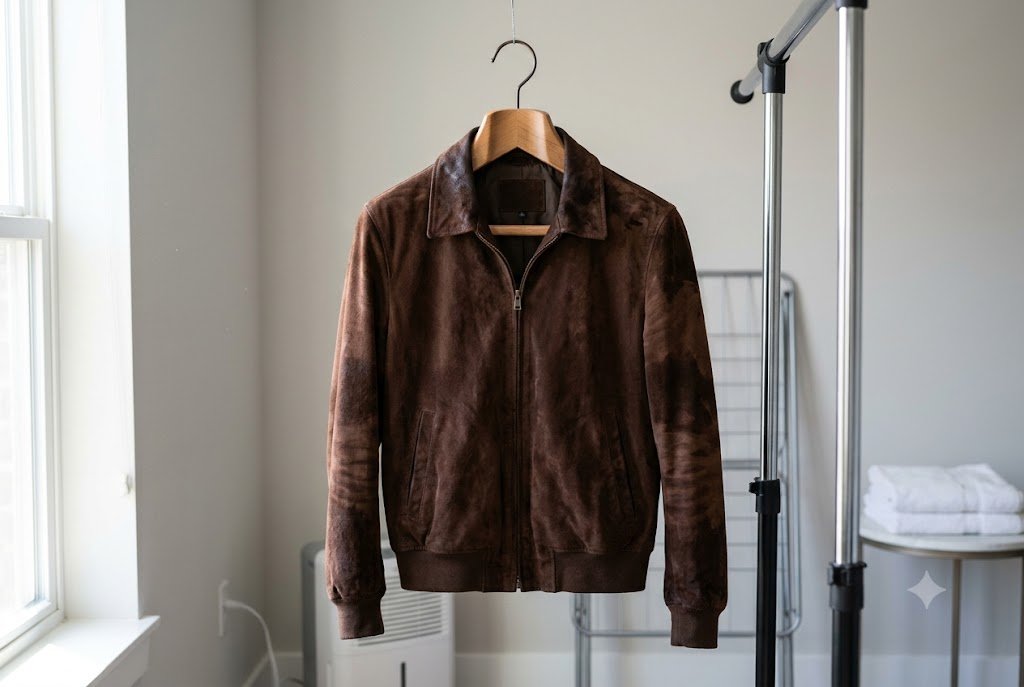
The Action: Place the jacket in a cool, dark, well-ventilated room away from direct heat sources and windows. Let it dry naturally for 24 to 48 hours.
Step 4: Re-Lifting the Nap (The Brush Restoration)
Once the jacket is completely dry to the touch, it will likely feel slightly stiff, and the surface may look flat or discolored. This is normal.
The Action: Take a specialized brass-wire or crepe-rubber suede brush. Gently brush the surface in small, circular motions, followed by long strokes in a single direction. This mechanical agitation separates the stuck fibers, lifts the nap, and restores the signature velvety texture.
Step 5: Evening Out Water Marks
If light rain has left dark, spotty rings across the shoulders, you must balance the moisture profile across the entire panel.
The Action: Lightly mist the entire exterior of the jacket with a fine spray of clean, distilled water so the whole surface is evenly, minimally damp. Blot it down, allow it to dry naturally, and brush the nap back up. This technique diffuses the mineral ring boundaries, making the surface uniform once again.
III. Preventative Shielding: Waterproofing and Maintenance
Rather than constantly worrying about whether a can suede jacket get wet situation will ruin your day, proactive environmental protection is the smartest strategy.
| Protection Level | Method / Product | Application Frequency | Primary Benefit |
| Basic Barrier | Fluoropolymer Suede Protector Spray | Every 4–6 Weeks | Creates a hydrophobic shield that repels rain droplets |
| Deep Storage Care | Breathable Cotton Garment Covers | Seasonal | Prevents ambient humidity and mold buildup during off-months |
| Tactile Maintenance | Crepe Rubber Suede Eraser & Brush | Weekly / As Needed | Removes dry dirt, water spots, and lifts crushed surface fibers |
According to testing parameters published by the American Leather Chemists Association (ALCA), applying a high-grade, silicone-free fluoropolymer protector spray creates an invisible hydrophobic barrier over the open fibers. When water hits treated suede, it cannot penetrate the pores; instead, it beads up on the surface and slides off cleanly.
IV. Sizing, Fit, and Structural Integrity Under Moisture
When evaluating how moisture affects your outerwear, jacket anatomy and structural engineering play a crucial role in long-term durability.
Shoulder Tension: Suede that gets wet while being worn under physical stress (such as reaching forward or driving) stretches more easily than dry leather. For an best leather jacket for broad shoulders build, ensure your jacket has sufficient shoulder mobility so that damp seams do not tear. If you experience tightness across your upper back, check our advice on managing leather jacket armholes too tight.
Sleeve Stretching: Damp suede sleeves that pull against your wrists can stretch permanently out of shape. Always ensure your leather jacket sleeve length guide alignment is accurate. If standard off-the-rack choices leave you with sleeves that are leather jacket sleeve length too long, exploring our precise made to measure leather jacket cost options eliminates excess fabric that sags when damp.
Proportions for Shorter Frames: Shorter builds should avoid heavy, unlined suede car coats that absorb massive amounts of water weight when caught in rain. A cropped silhouette, such as a mens casual jackets trucker or a mens bomber jackets cut, dries faster and maintains cleaner lines for best leather jackets for short men.
V. FAQ: Advanced Suede Moisture Concerns
What is the difference between rain damage on real suede vs. faux suede?
Real suede absorbs water, dry-stiffens, but can be fully restored through brushing and conditioning. Faux suede is made from synthetic polymers. While synthetic suede repels water initially, prolonged moisture degrades the adhesive glue bonding the plastic nap to the backing fabric, leading to irreversible leather jacket vs faux leather peeling. Check our detailed comparison on real leather vs vegan leather durability for more technical insights.
Can salt water or dirty rain permanently stain suede?
Yes. Road salt and city rainwater contain dissolved chemicals and oils. If dirty water dries inside the suede pores, it leaves hard mineral deposits. If this happens, use a suede eraser to break up the salt crystals, or refer to our specialized emergency steps on leather jacket in rain restoration.
How should I store my suede jacket after a rainy season?
Never store suede while it retains even a trace of moisture. Trapping damp suede inside a dark wardrobe creates an ideal environment for mold growth. Review our seasonal blueprint on how to store a leather jacket in summer using breathable cotton shields to keep your split hides pristine.
VI. Conclusion: Confidence Through Preparation
So, can suede jacket get wet without ruining your favorite layer? Absolutely. Suede is far tougher than fast-fashion myths suggest. Derived from authentic animal hide, it possesses natural structural resilience. As long as you avoid direct heat, blot away surface water, allow it to dry naturally, and lift the nap with a dedicated brush, your suede jacket will survive unexpected weather and develop a rich, authentic character over time.
At Caesar Jackets, we source high-grade, drum-dyed split hides and full-grain leathers engineered to withstand real-world wear. Whether you choose a classic mens classic jackets piece or explore our complete styling guides on what to wear with a suede jacket, we deliver artisan-cut outerwear direct to your door without luxury retail markups.
If you are currently evaluating legacy fashion brands against our direct-to-consumer model, examine our transparent schott nyc vs caesarjackets and allsaints vs caesarjackets reviews to see how we deliver identical leather specifications at half the cost. For complete guidance on material selection, pattern fits, and care, explore our master leather jacket guide.