Beyond the Label: A Material Scientist’s Guide to What Is Faux Leather
For decades, the term “leather” conjured a singular image: a rugged, biologically dense animal hide built to endure generations of wear. However, navigating the modern apparel market requires decoding a complex labyrinth of synthetic naming conventions. From high-end luxury boutiques to fast-fashion retailers, alternative materials dominate the shelves.
The most common question from contemporary consumers entering this space is fundamentally simple: what is faux leather? Is it a sustainable, high-tech evolution of outerwear, or is it a clever marketing euphemism for cheap, disposable plastic? To make an informed investment piece leather jacket purchase, you must understand the raw material science behind these synthetics. In this 1,500-word definitive masterclass, we will dissect the chemical anatomy, lifespan metrics, and lifestyle implications of fake leather so you can protect your wardrobe and your capital.
I. The Chemical Anatomy: What Is Faux Leather Made Of?
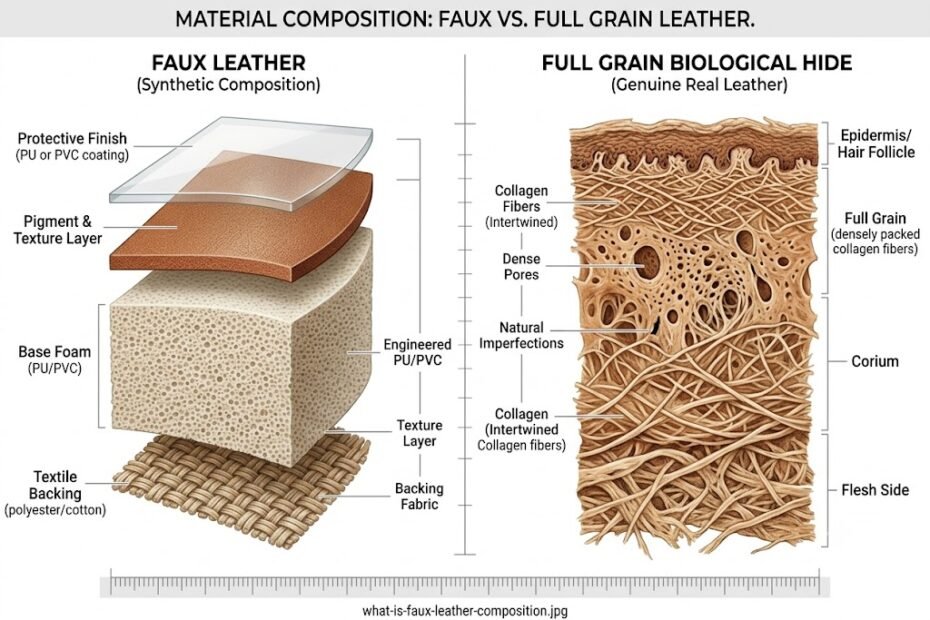
To answer what is faux leather accurately, we must look past the texture and analyze the polymers beneath the surface coating. Unlike organic skin, which consists of naturally intertwined biological collagen fibers, synthetic leather is a multi-layered construction combining textiles and petroleum derivatives.
According to the material performance standards tracked by the American Leather Chemists Association (ALCA), faux leather is manufactured through a three-step encapsulation process: a base substrate fabric (usually polyester, nylon, or cotton cotton mesh) is coated with a liquid plastic resin, which is then heat-embossed with a mechanical roller to mimic the grain of a real animal.
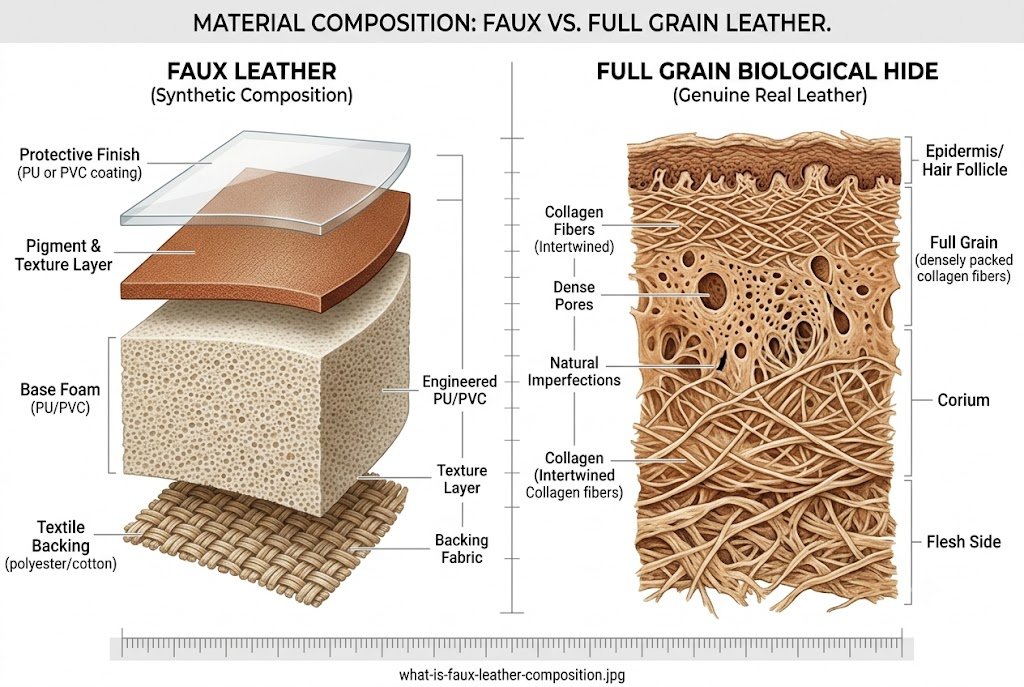
In the modern supply chain, there are two primary chemical formulations that dictate the quality and feel of these synthetic garments:
1. Polyurethane Leather (PU Leather)
PU leather represents the modern, more sophisticated branch of synthetic outerwear. It is created by coating a fabric base with a highly flexible, micro-porous polyurethane resin.
The Characteristics: PU leather is softer to the touch, drapes more naturally around human geometry, and can semi-breathe compared to older plastics. It is the material most frequently utilized in contemporary mid-tier mens casual jackets.
2. Polyvinyl Chloride Leather (PVC Leather / Vinyl)
PVC leather is the legacy alternative that dominated the late 20th century. It involves combining polyvinyl chloride plastic with chemical plasticizers and stabilizers to introduce artificial flexibility.
The Characteristics: PVC is entirely non-porous, highly rigid, and structurally cold. It is incredibly durable against direct scratches and water, but it is entirely incapable of breathing, leading to high heat retention and sweat buildup. It is exclusively found in low-end, ultra-budget fast-fashion chains.
II. The Material Matrix: Faux Leather vs. Real Hide
Understanding what is faux leather requires a direct, transparent side-by-side performance evaluation against authentic animal skins.
| Performance Metric | Premium Real Leather (Lambskin/Cowhide) | Synthetic Faux Leather (PU/PVC) |
| Primary Composition | Biological Collagen Fiber Matrix | Petroleum-Based Polymers (Plastic) |
| Thermal Adaptation | Adjusts to body heat; breathes naturally | Traps body heat; promotes sweating |
| Aging Character | Develops a rich vegetable tanned leather jacket patina | Suffers leather jacket vs faux leather peeling and flaking |
| Tactile Response | Supple, warm, and develops organic creasing | Rubbery, cold, and maintains rigid fold lines |
| Structural Hardware Fit | Anchored by heavy ykk vs sbs zippers | Frequently paired with lightweight pot metals |
| Average Lifespan | 20 to 50+ Years (Heirloom Quality) | 1 to 3 Years (Disposable Quality) |
III. The Lifespan Trap: The Biological Reality of Peeling
When evaluating what is faux leather capability long-term, you must understand the inevitability of chemical degradation. Fake leather is structurally engineered with an expiration date.
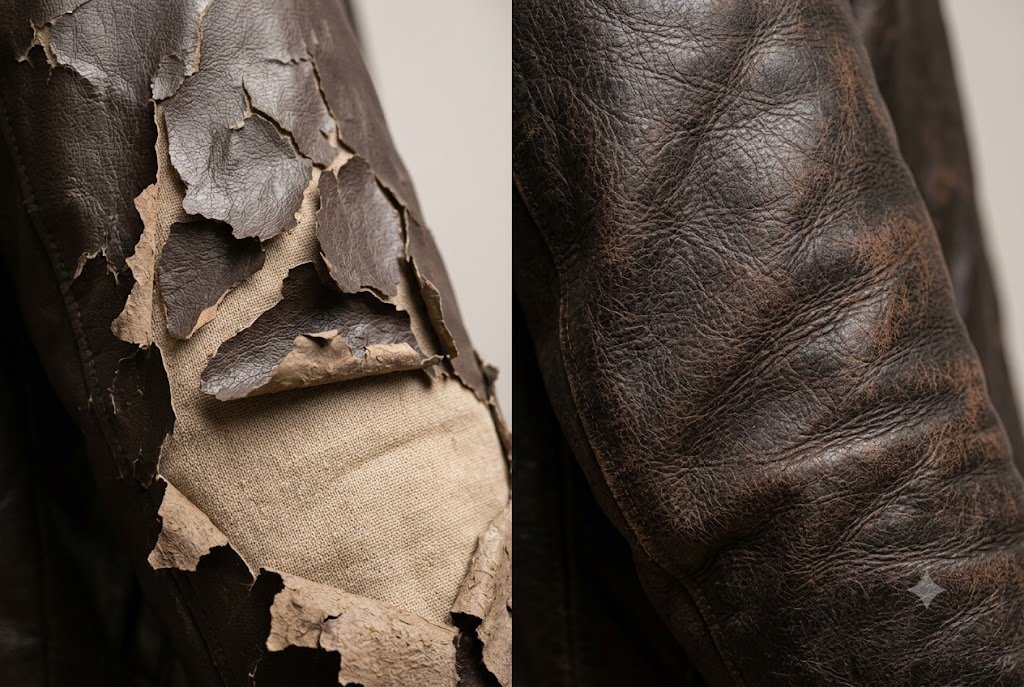
Because the top plastic layer is chemically bonded to a synthetic cloth mesh via adhesive glues, the jacket reacts poorly to everyday environmental stressors. Flexing your elbows, sitting against chairs, and shifting your shoulders places mechanical tension on the plastic coat. Over a short window—typically 12 to 24 months—the plasticizers within the PU or PVC layer dry out due to UV exposure and ambient air currents.
Once dry, the plastic becomes brittle, resulting in deep cracks that eventually trigger localized delamination. This is the technical term for leather jacket vs faux leather peeling, where chunks of the plastic skin flake off, exposing the ugly white fabric strings beneath. Unlike real skin, which can absorb hydration, there is zero biological or chemical method to fix peeling faux leather once the polymer bonds dissolve.
IV. Fit, Care, and Alternative Maintenance
If you currently own a synthetic jacket or are considering an entry-level piece, managing its distinct structural properties is essential to stretching its limited lifespan.
Sizing and Armhole Pressure: Because plastics lack the natural elasticity of organic protein fibers, faux leather will never stretch to accommodate your frame during a leather jacket break-in process. If you buy a slim fit and have a best leather jacket for broad shoulders physique, the tension across your shoulder blades will cause leather jacket armholes too tight tearing at the seams almost instantly. Size accurately up from the start.
Sleeve Precision: Ensure your leather jacket sleeve length guide alignment is flawless. Excess material on a synthetic jacket cannot be easily tailored down, and long sleeves will bunch into permanent, rigid plastic tubes that look unpolished. If you constantly struggle with standard sizing leaving sleeves leather jacket sleeve length too long, bypassing retail chains for our calculated made to measure leather jacket cost strategy is highly recommended.
Chemical and Heat Avoidance: Never apply standard oil conditioners to synthetic hides. Plastics cannot absorb topical oils; the fluid will simply sit on the surface, creating an oily film that attracts dust and accelerates glue rot. Similarly, do not expose a synthetic jacket to high heat. If your jacket arrives with severe creases, check our specialized instructions on how to remove wrinkles from leather safely using indirect, guarded steaming to avoid melting the face coat.
V. FAQ: Unmasking Retail Vocabulary
What is “Vegan Leather” or “Pleather”?
“Vegan leather” and “pleather” are marketing buzzwords used to describe the exact same petroleum-based PU and PVC plastics we decoded above. While “vegan” sounds eco-friendly, the production of traditional PU and PVC involves heavy chemical processing that is highly taxing on the environment. For true bio-conscious consumers, real leather remains a natural byproduct of the global agricultural supply chain that decomposes organically over time.
How can I verify if a jacket is real or fake in a store?
If you are trying to figure out how to tell if leather is real, use the thumb test. Press your thumb firmly into the panel. Real what is lambskin leather or what is cowhide leather will form tiny, organic wrinkles that spread outward and disappear when released. Faux leather will simply sink like a plastic button without any radiating micro-wrinkles. You can read our 6-step checklist on how to tell if leather is real to protect your capital.
Can faux leather work in a smart casual office setting?
Only temporarily. When brand new, a high-grade matte PU jacket can pass for smooth leather in a fast-paced environment. However, because it lacks a natural aging patina, it will always maintain a somewhat artificial flatness under fluorescent lighting. For a long-term leather jacket business casual profile, investing in an authentic, fine-grain skin is vastly superior for projecting professional attention to detail.
VI. Conclusion: Value the Hide Over the Illusion
Demystifying what is faux leather reveals a clear trade-off. Synthetic jackets offer a low-cost, immediate style fix for seasonal trends. If you are experimenting with a highly experimental silhouette that you plan to discard in twelve months, synthetics serve a purpose.
However, if you are looking to build a timeless wardrobe anchor that projects confidence, character, and authentic quality, there is zero substitute for genuine full-grain hide. At Caesar Jackets, we eliminate wholesale fashion house markups to bring you 100% authentic, master-tanned outerwear at accessible direct-to-consumer prices.
If you are currently evaluating legacy retail giants against our transparent operational model, explore our rigorous schott nyc vs caesarjackets and allsaints vs caesarjackets construction reviews to see why bypassing retail middlemen delivers heirloom-grade materials for half the cost. For an all-inclusive masterclass on hide processing, sizing blueprints, and style histories, dive into our master leather jacket guide.