A leather jacket sleeve should feel comfortable when your arms are relaxed and still give you room to move. This leather jacket sleeve length guide explains how to measure a jacket, check where the cuff sits, and account for differences in fit between jacket styles. Because brands may measure sleeves differently, compare like with like rather than relying on a single number.
Why Sleeve Length Matters in a Leather Jacket
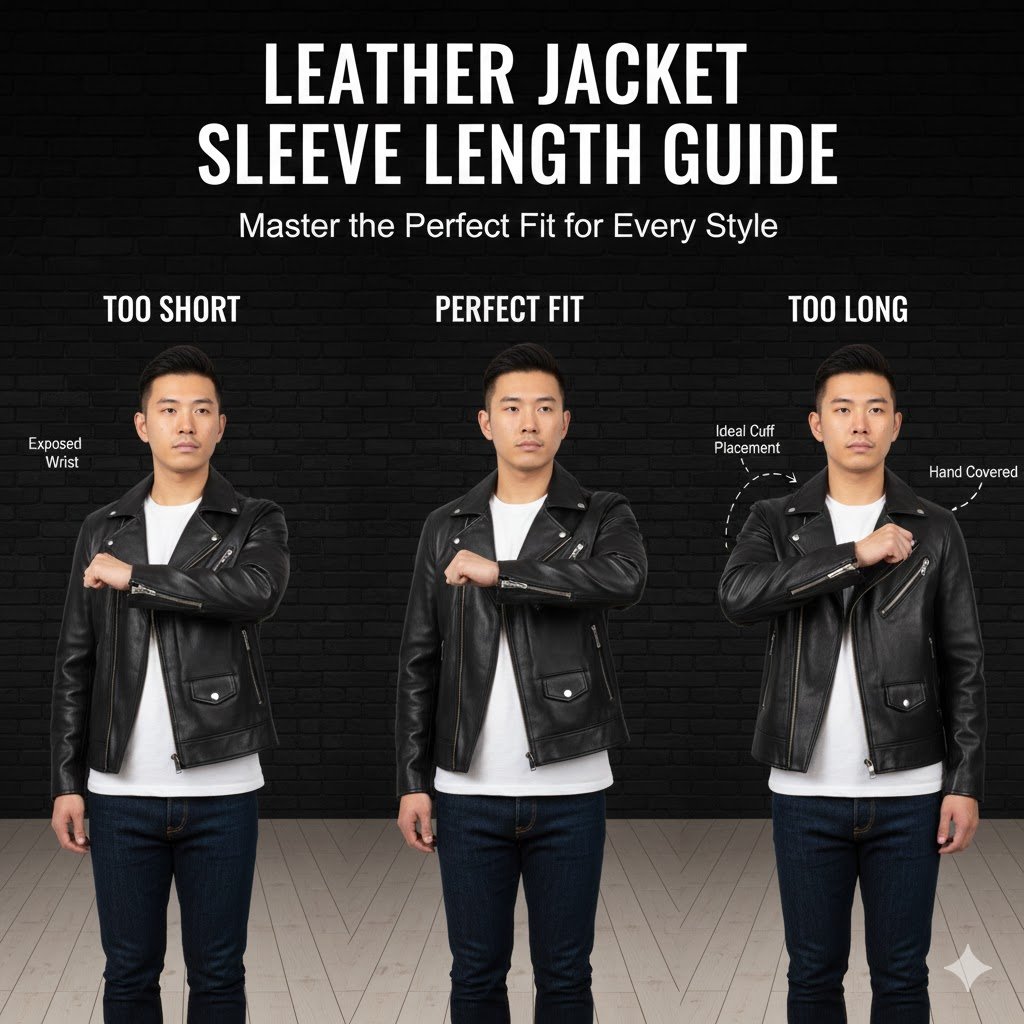
Sleeves that are too long can cover the hands or bunch around the cuff. Sleeves that are too short may pull back when you reach forward or bend your arms. Either issue can make an otherwise well-fitting jacket feel uncomfortable.
Leather may soften and crease with wear, but do not buy a jacket expecting wear to correct a noticeably wrong sleeve length. The cut, shoulder placement, cuff design, and intended use all affect how the sleeve sits.
How to Measure a Leather Jacket Sleeve
First check how the seller defines “sleeve length.” Some size charts give a garment measurement from the shoulder seam to the cuff; others give a body measurement that starts at the back of the neck and runs over the shoulder and down the arm. These numbers are not directly interchangeable. For example, Proper Cloth’s jacket-measuring instructions describe measuring a jacket from the shoulder seam along the sleeve to the cuff, while GU’s clothing measurement guide distinguishes sleeve measurements by their starting points.
Measure a jacket that already fits you
- Lay the jacket flat and smooth the sleeve without stretching it.
- Find the shoulder seam where the sleeve joins the body of the jacket.
- Measure along the sleeve to the edge of the cuff, following the sleeve’s shape rather than cutting diagonally across it.
- Write down the measurement method as well as the number, then compare it with the seller’s size-chart instructions.
If the jacket has a dropped shoulder or no obvious shoulder seam, the seller may use a different method. Check the product’s measurement notes or ask the seller how the sleeve measurement is taken before comparing sizes.
Measure your arm if the size chart asks for a body measurement
Stand naturally with your shoulders relaxed. Bend your elbow slightly and ask someone to measure from the shoulder point down to the wrist, following the curve of your arm. If the chart starts at the center back of the neck, follow that chart’s instructions instead; do not substitute a shoulder-seam-to-cuff garment measurement.
Measure both arms if you can. Small differences are common, and the fit of the jacket on your body matters more than making both sleeve measurements identical on paper.
Where Should a Leather Jacket Sleeve End?
As a practical starting point, check whether the cuff reaches around the wrist area when your arms hang naturally. It should not consistently cover your knuckles, and it should not leave an uncomfortable gap when you move. The exact position depends on the jacket’s design, the layer underneath, and how you plan to wear it.
Put the jacket on over a typical shirt or other layer, fasten it as intended, and check both arms relaxed and bent. Then reach forward as you would when driving or riding. A sleeve that shifts slightly during movement may be expected; one that pulls hard at the shoulder or leaves the wrist exposed in the jacket’s intended position may not be the right fit.
How Jacket Style Changes Sleeve Fit
Biker and motorcycle jackets
Check these jackets with the arms in a forward, riding-like position as well as at rest. The sleeves and cuffs may be designed to work with that posture, so judging them only while standing still can be misleading. Fasten any cuff zipper or snap before checking the fit.
Explore our men’s biker leather jackets if you are comparing riding-oriented styles.
Bomber jackets
Ribbed cuffs can hold the sleeve at the wrist and change its appearance compared with a plain leather cuff. Check that the cuff feels comfortable and stays in place without pulling the sleeve tightly up your arm. Do not assume every bomber’s ribbed cuff will make an otherwise oversized sleeve fit correctly.
For casual options, browse our men’s bomber jackets.
Hooded and layered jackets
Try the jacket with the type of layer you expect to wear underneath. A thick hoodie can change how the sleeve feels, but it is not a dependable way to correct a sleeve that is substantially too long. Compare fit using a realistic layer rather than adding bulk just to move the cuff.
If you have longer arms or a long torso, compare sleeve and body measurements separately rather than sizing up automatically. Our guide to leather jacket sizing for tall men explains how to check those proportions against a jacket’s measurements.
For outfit ideas on wearing a hoodie under a leather jacket, see our leather jacket with hoodie outfit guide.
Common Sleeve Measurement Mistakes
- Measuring the arm and jacket the same way: A body measurement and a garment measurement may start at different points.
- Measuring with your arm raised: This changes the position of the shoulder and sleeve. Follow the chart’s instructions and use a relaxed posture unless it specifies otherwise.
- Ignoring the shoulder fit: A shoulder seam that sits too low can make the sleeve appear longer. Check the overall jacket fit, not just the cuff.
- Ignoring the cuff design: Ribbing, zippers, snaps, and adjustment tabs affect how the sleeve sits and how it can be adjusted.
- Assuming leather will shrink to fit: Choose a jacket based on its current measurements and fit, not on hoped-for changes after wear.
Quick Sleeve Fit Checklist
- The shoulder seam sits in the intended position for the jacket’s cut.
- The cuffs feel comfortable with your usual base layer.
- The sleeves do not consistently cover your hands when your arms are relaxed.
- You can reach forward without excessive pulling at the shoulders.
- You checked the seller’s measurement method before comparing size-chart numbers.
If your measurements fall between sizes, compare the chest and shoulder measurements too; sizing up for sleeve length alone may leave the rest of the jacket too loose. If the jacket has already arrived and its sleeves cover your hands, see what to do when leather jacket sleeves are too long.
Frequently Asked Questions
Should a leather jacket sleeve cover my hand?
It should not consistently cover your knuckles when your arms are relaxed. Check the cuff in the position and with the layers you will actually wear, since jacket style and intended use can change the ideal fit.
Should I measure the sleeve on my body or on a jacket?
Use the method requested by the size chart. A body measurement follows your arm; a garment measurement usually runs from a jacket seam to the cuff. Do not compare them as if they were the same measurement.
Do leather jacket sleeves become shorter with wear?
Do not rely on wear to shorten a sleeve. Leather may soften and develop creases, but choose a jacket whose sleeve length works for you when you try it on.
Can leather jacket sleeves be altered?
Some sleeves can be shortened, but the cuff construction and hardware affect the work. For practical options and specialist advice, see our guide to leather jacket sleeves that are too long.