There is a frustrating irony in finding a jacket that fits perfectly across the chest but leaves you feeling handcuffed. Having leather jacket armholes too tight is one of the most common complaints in menswear, especially for those with athletic builds. It restricts your range of motion, makes driving uncomfortable, and can eventually cause the underarm seams to burst.
However, before you return your jacket, it’s important to distinguish between a “bad fit” and a “technical fit.” In this guide, we will explore the science of the armhole (the scye), how to manage leather jacket armholes too tight, and when it’s time to call a professional.
I. The “High Armhole” Paradox: Why Tight Isn’t Always Bad
In the world of high-end tailoring, a smaller, higher armhole is actually considered a sign of quality. According to the Britannica guide on garment construction, a high armhole allows the sleeve to move independently of the body.
💡 CaesarJackets:The “Scye Gap” Reality
Most men think leather jacket armholes too tight means they need a lower armhole. In reality, a lower armhole creates a “Scye Gap”—excess leather under the arm that causes the entire jacket to lift up like a tent whenever you raise your hand. At Caesar Jackets, we aim for a high armhole to provide a sharp silhouette, but it must be combined with a wider shoulder pitch to ensure the leather doesn’t pinch the bicep or lat.
II. 5 Fixes for Tight Armholes
| Method | Best For | Effectiveness |
| 1. The Alcohol/Water Stretch | Minor pinching at the seam. | Softens the hide to allow a 5-10% expansion. |
| 2. Professional Conditioning | Stiff, new cowhide jackets. | Increases fiber elasticity for easier movement. |
| 3. High-Heat Steam | Stubborn, thick hides. | Relaxes the collagen structure of the leather. |
| 4. Changing the Layer | Bulky hoodies or sweaters. | Reduces the internal volume to free up arm space. |
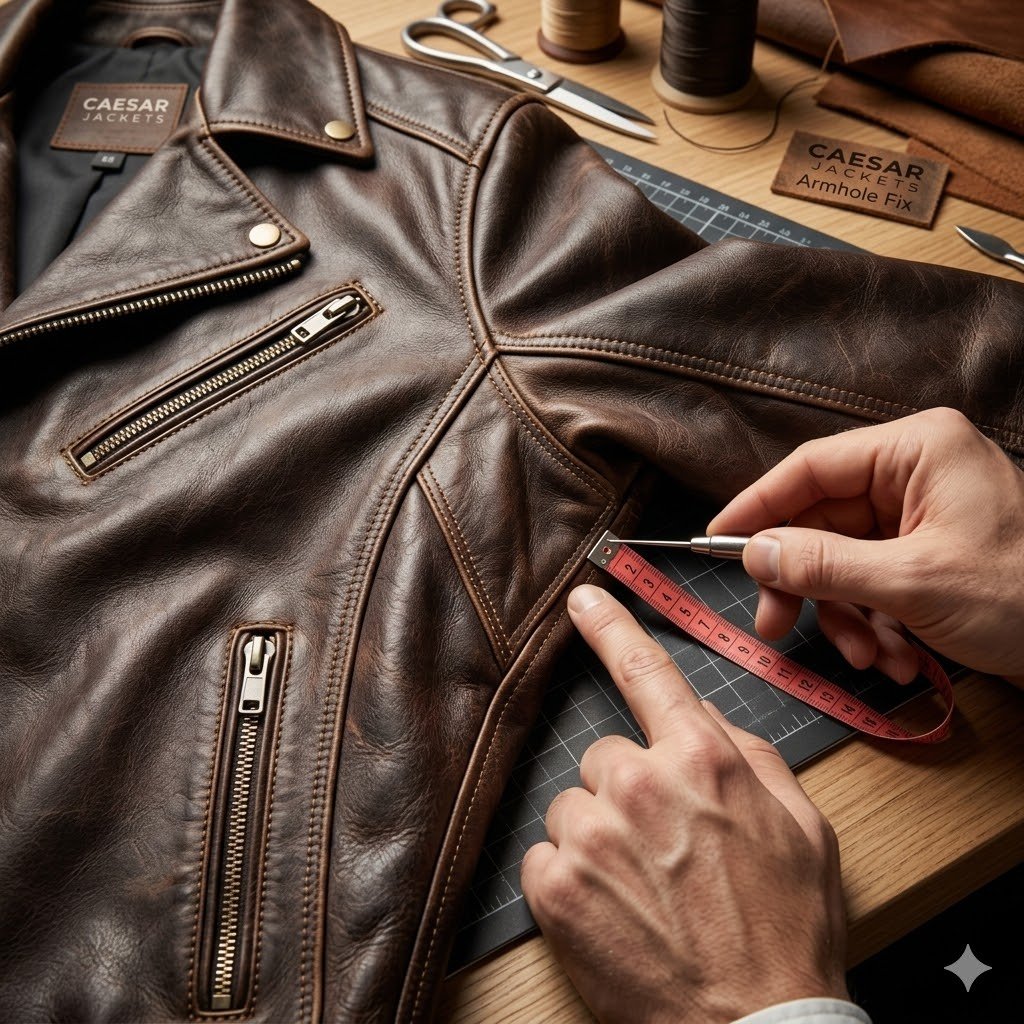
| 5. The Underarm Gusset | Extreme restriction. | A tailor adds a diamond-shaped leather patch for extra room. |
III. How to Safely Stretch Tight Armholes at Home
If your leather jacket armholes too tight issue is a matter of the leather being “newly stiff,” you can perform a targeted stretch:
Hydrate the Area: Apply a generous amount of leather conditioner specifically to the underarm seams.
Wear and Move: Put on a thick sweater and wear the jacket around the house. Perform large arm circles. This forces the leather to mold to your specific arm shape.
Softening Techniques: If the leather feels like cardboard, follow our guide on how to soften stiff leather.
Avoid Dryness: Once stretched, don’t let it dry out, or it will shrink back. This is a vital part of the natural aging process.
IV. Finding the Perfect Balance: Fit vs. Mobility
To avoid the leather jacket armholes too tight struggle in the future, pay attention to these three factors:
The Material: A sheepskin leather jacket is much more forgiving than heavy buffalo hide.
The Style: Motorcycle jackets often have “Action Backs” to compensate for high armholes, whereas classic cafe racers are more restrictive.
Proportions: If you have broad shoulders, a standard off-the-rack size will almost always feel too tight in the armholes. Consider our made to measure leather jacket cost for a personalized scye measurement.
V. FAQ: Tight Armholes & Alterations
Can a tailor lower the armholes of my leather jacket?
Technically, yes, but it is extremely difficult. It requires recutting the sleeve and the side panels. It is often cheaper to stretch the leather or opt for a custom fit.
Will the armholes loosen over time?
Yes. Real leather is an organic material that stretches where tension is applied. If you want to speed this up, check our break-in guide.
How do I know if the armhole is too tight?
If you feel a “tingling” in your hands or if the leather jacket sleeve length shortens significantly when you raise your arms, the armhole is likely too small for your frame.
VI. Conclusion: Don’t Settle for Discomfort
A leather jacket should feel like armor, not a straitjacket. While some tightness is expected during the initial wear, leather jacket armholes too tight should never compromise your daily life. At Caesar Jackets, we balance high-performance silhouettes with comfortable tailoring to ensure you get the best of both worlds.