Purchasing a premium genuine leather jacket is an undeniable milestone in a man’s style journey. It is a signature investment piece leather jacket engineered to outlast trends, develop a magnificent character, and mold perfectly to your physical frame. However, as textile manufacturing technology advances, the market has been flooded with ultra-convincing synthetic counterfeits. Modern plastic leather (PU and PVC) can easily deceive the untrained eye in a dimly lit showroom or through a compressed online photo.
Getting duped by fake leather isn’t just a financial loss; it is a sartorial failure. Synthetic jackets do not breathe, they feel stiff, and they are prone to peeling within months. Knowing how to tell if leather is real is the ultimate shield for any serious consumer looking to invest in authentic quality. In this 1,500-word definitive masterclass, we will arm you with 6 scientific, sensory, and structural tests used by heritage tanners to spot genuine hides instantly.
I. The Biological Difference: Cellular Flaws vs. Plastic Precision
To understand how to tell if leather is real, you must understand that genuine leather is an organic, biological product. It is the processed skin of an animal, which means it carries the natural story of that animal’s life. Synthetic leather, on the other hand, is a petroleum-based liquid poured onto a fabric mesh.
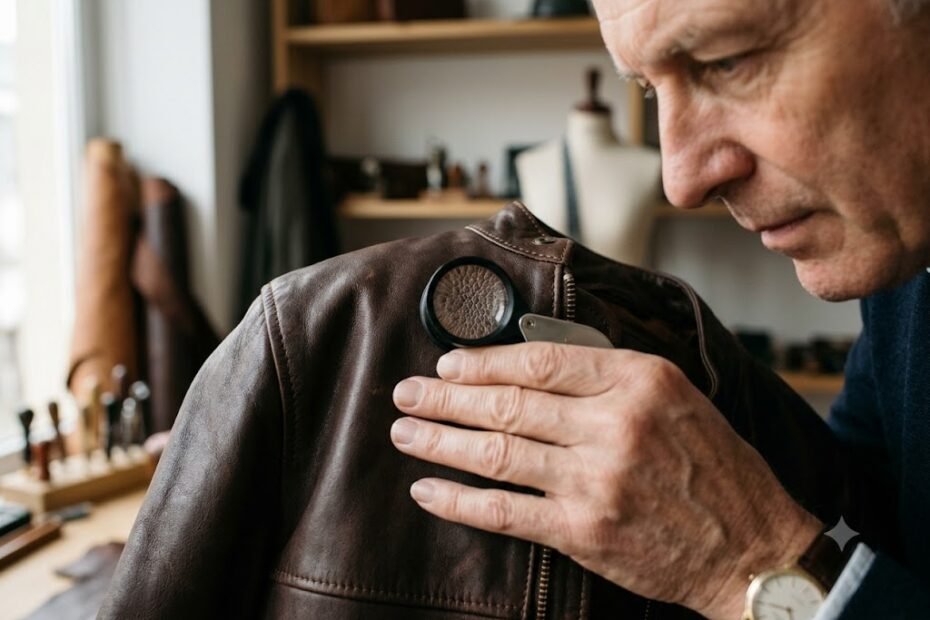
According to the material grading parameters outlined by the Leather Working Group (LWG), genuine top-tier hides will never possess a mathematically perfect surface. Real skin features microscopic pores, insect bite marks, stretch lines, and slight variations in grain density. When analyzing a jacket, looking closely at the grain patterns is the easiest way on how to tell if leather is real. If the texture repeats perfectly every two inches like a wallpaper print, you are looking at a machine-embossed plastic stamp. Real top grain vs full grain leather structures boast an organic randomness that factories simply cannot replicate.
II. 6 Professional Tests to Identify Genuine Leather
Test 1: The Water Absorption Test (The Porosity Check)
Because real leather is a biological skin, it is inherently porous. It naturally breathes and interacts with atmospheric moisture, making porosity a great indicator of authenticity.
How to Execute: Drop a single, tiny droplet of water onto an inconspicuous area of the jacket. Wait 60 to 90 seconds.
The Result: Real leather will slowly absorb the water, causing the spot to darken slightly before drying naturally. This is a classic method on how to tell if leather is real. Synthetic faux leather is non-porous plastic; the water drop will simply pool on the surface and slide off indefinitely.
Aesthetic Note: Be careful when using this test on heavily treated or waxed finishes. However, on premium drum-dyed what is lambskin leather, this test is highly accurate.
Test 2: The Fire Test (The Thermal Reaction)
This is the most definitive, extreme test to determine how to tell if leather is real, best reserved for hidden sections like the inside of a pocket hem or a fabric swatch.
How to Execute: Hold a lighter flame to the edge of the leather swatch for exactly 2 seconds.
The Result: Real leather is naturally flame-resistant. It will char slightly and emit a smell resembling burnt hair. If you are questioning how to tell if leather is real, observe the reaction: fake leather is pure plastic; it will catch fire instantly, melt, drip, curl rapidly inward, and emit a toxic chemical odor.
Test 3: The Olfactory Test (The Scent Analysis)
Your nose is one of your greatest assets when identifying premium goods. Synthetic chemicals cannot accurately mimic biochemistry, giving you a sensory lesson on how to tell if leather is real.
How to Execute: Lean in and smell the hide directly.
The Result: Real leather has a distinctive, rich, earthy, and slightly sweet aroma that cannot be manufactured. If the jacket smells heavily of petroleum, vinyl, spray paint, or industrial solvents, it is synthetic. If you ever purchase a genuine hide that has picked up temporary storage musk, utilize our guide on clearing a leather jacket smells like chemicals safely.
Test 4: The Edge and Fiber Audit
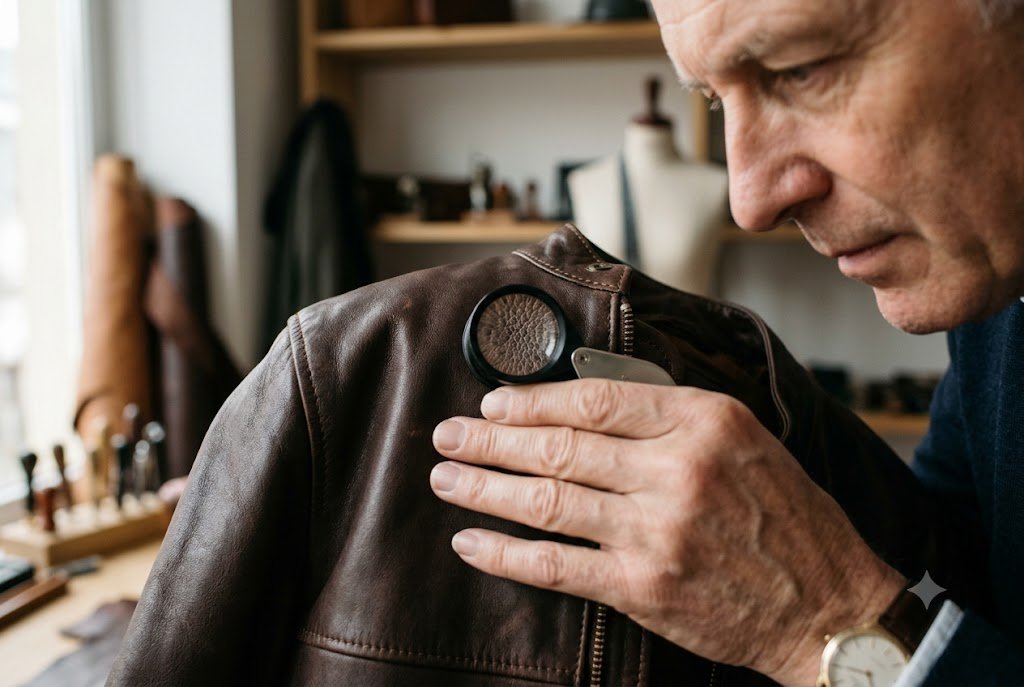
Machine-cut synthetic edges look completely clean and uniform, while organic cuts show the underlying dermal layers. This provides another visual guide on how to tell if leather is real.
How to Execute: Inspect the raw edges of the garment, specifically around the seams, buttonholes, or inside the zipper lining.
The Result: Real leather will show a rough, slightly frayed edge consisting of thousands of intertwined protein fibers. Faux leather will show a perfectly smooth, straight edge, often revealing the woven textile backing fabric underneath where the plastic coating was glued.
Test 5: The Elasticity and Wrinkle Test
Real skin stretches and forms micro-wrinkles under pressure, exactly like the skin on your knuckles. This is a quick and non-destructive way on how to tell if leather is real.
How to Execute: Press your thumb firmly into the center of the leather panel, pushing downward.
The Result: Genuine leather will display tiny, radiating wrinkles around your thumb print that disappear the moment you let go. Fake leather will simply depress under your thumb like a plastic sheet, maintaining its flat texture without any organic wrinkling. If your genuine jacket picks up deep fold lines during shipping, read our guide on how to remove wrinkles from leather safely.
Test 6: The Price and Retail Reality
Quality craftsmanship requires specialized labor and raw material costs. There are no shortcuts in premium leather production, which is why pricing scales can teach you how to tell if leather is real.
The Reality: If a retailer claims a jacket is “100% genuine full-grain leather” but is selling it for $49, it is an absolute lie. Take a look at the historical pricing index on Heddels and review our global data analysis on made to measure leather jacket cost metrics to understand the baseline economics of real hide production.
III. The Material Matrix: Real vs. Fake Comparison
According to the leather performance guidelines at the American Leather Chemists Association (ALCA), authentic hide behaves as an anisotropic material, meaning its physical properties vary depending on the direction of the grain. This chart highlights those core variations:
| Identification Metric | Genuine Real Leather | Synthetic Faux Leather (PU/PVC) |
| Pores & Texture | Organic, irregular, unique marks | Perfectly uniform, repeating stamps |
| Tactile Feel | Warm, supple, molds to your body | Cold, rigid, rubbery plastic feel |
| Aging Character | Develops a rich vegetable tanned leather jacket patina | Suffers leather jacket vs faux leather peeling |
| Water Reaction | Absorbs moisture slowly | Repels water completely |
| Hardware Fit | Complemented by premium ykk vs sbs zippers | Often paired with cheap, lightweight pot metal |
IV. The Longevity Factor: Why Real Hides Win
Mastering how to tell if leather is real is ultimately an exercise in long-term financial wisdom. Fake leather is a disposable product. Within 12 to 24 months of regular wear, the plastic coating will inevitably dry out, crack, and begin shedding flakes. Once this happens, the damage is irreversible.
Genuine animal skin is a living matrix of collagen fibers. When properly maintained, it is virtually indestructible. Over years of wear, it adapts to your movements, accumulating a rich finish that tells your unique story.
Preventative Hydration: To ensure your investment spans decades, you must understand how to stop leather from cracking by applying a clean, wax-free conditioner every six months.
Texture Maintenance: If your jacket feels overly rigid out of the box, review our steps on how to soften stiff leather to safely accelerate the natural break-in process.
Environmental Shielding: If you get caught in a sudden storm, ensure you follow our protocols for drying a leather jacket in rain safely away from artificial heaters to prevent warping.
V. FAQ: Advanced Authentication Questions
What does “Genuine Leather” actually mean on a label?
Beware of clever labeling. While it sounds authentic, “Genuine Leather” is actually a technical industry term for the lowest grade of real leather. It is made from the leftover split hides after the top layers are shaved off, glued together with binders, and painted. For true heirloom quality, you must look for Full-Grain or Top-Grain tags. Learn the technical details via our breakdown on how to identify full grain leather.
Can fake leather survive the summer?
Hardly. Plastic jackets trap heat and sweat, accelerating the degradation of the synthetic backing. Real leather thrives when stored correctly. Review our professional steps on how to store a leather jacket in summer to keep your real hides mold-free.
Which jacket styles are most commonly faked?
Traditional heavy biker jackets and sleek racers are heavily counterfeited because their hardware can hide low-grade surfaces. When buying a sleek corporate piece like a mens leather business jacket slim fit black brown lapel, mastering how to tell if leather is real ensures it fits into your leather jacket business casual rotation cleanly.
VI. Conclusion: Insist on Authenticity
Understanding how to tell if leather is real is a rite of passage for any discerning gentleman. By trusting your senses—inspecting the random pore structures, verifying the earthy aroma, auditing the raw fiber edges, and feeling the thermal response—you protect your wardrobe from cheap petroleum replicas.
At Caesar Jackets, we operate on a model of absolute transparency. We bypass luxury retail middleman markups to deliver 100% authentic, premium full-grain and top-grain hides crafted to serve you for a lifetime. If you are comparing legacy fashion houses against our direct-to-consumer framework, take an analytical look through our comprehensive schott nyc vs caesarjackets and allsaints vs caesarjackets reviews to see why cutting out the retail markup delivers identical materials for half the cost. For an all-inclusive education on leather selection, pattern layouts, and sizing, explore our master leather jacket guide.