When summer arrives with its soaring temperatures and heavy humidity, your heavy outerwear naturally gets pushed to the back of the wardrobe. However, while denim, wool, and synthetic parkas can handle being ignored for a few months, real animal hide cannot. Leaving a premium garment neglected during the hottest months of the year is the fastest way to ruin your investment.
Knowing how to store a leather jacket in summer is a critical skill for any enthusiast. Leather is an organic, porous material containing natural oils and moisture. If exposed to the wrong summer environment, it can easily succumb to mold infestation, dry rot, structural distortion, or severe discoloration. In this 1,500-word definitive guide, we will break down the exact biological and environmental rules required to keep your leather pristine until autumn returns.
I. The Biology of Storage: Why Summer is Toxic to Leather
To understand how to store a leather jacket in summer, you must understand what happens to animal hide when it gets warm. Leather absorbs atmospheric moisture. According to the material safety preservation standards outlined by the Leather Working Group (LWG), real leather thrives in stable environments where the relative humidity stays between 40% and 50%.
💡 CaesarJackets:The “Micro-Climate Trap”
Many people believe that sealing a jacket inside a cheap, zippered plastic garment bag is the ultimate way to protect it. At Caesar Jackets, we call this the Micro-Climate Trap. Plastic is completely non-porous. When summer temperatures spike, any residual moisture trapped within the leather or the jacket’s fabric lining evaporates, hits the plastic barrier, and condenses. This turns the inside of the bag into a mini greenhouse—the perfect, humid breeding ground for black and white mold spores. Your leather must breathe; sealing it in plastic is a death sentence for the hide.
II. Step-by-Step Blueprint: How to Store a Leather Jacket in Summer
Step 1: Deep Structural Cleaning
Never store a dirty jacket. Sweat residues, body oils around the collar, and invisible street dust act as nutrients for mold. Learn how to clean a leather jacket at home properly before long-term storage. If your jacket has picked up environmental contaminants, make sure you remove any chemical smells or lingering smoke odors using professional charcoal filters rather than chemical perfumes.
Step 2: Replenish the Biological Oils
Summer humidity actually accelerates internal drying if the room becomes too hot, leading to fiber stiffness. Before packing it away, you must apply leather conditioner to seal in a balanced layer of moisture. This crucial shield is what stops the leather from cracking during a long heatwave.
Step 3: Choose the Right Support Framework
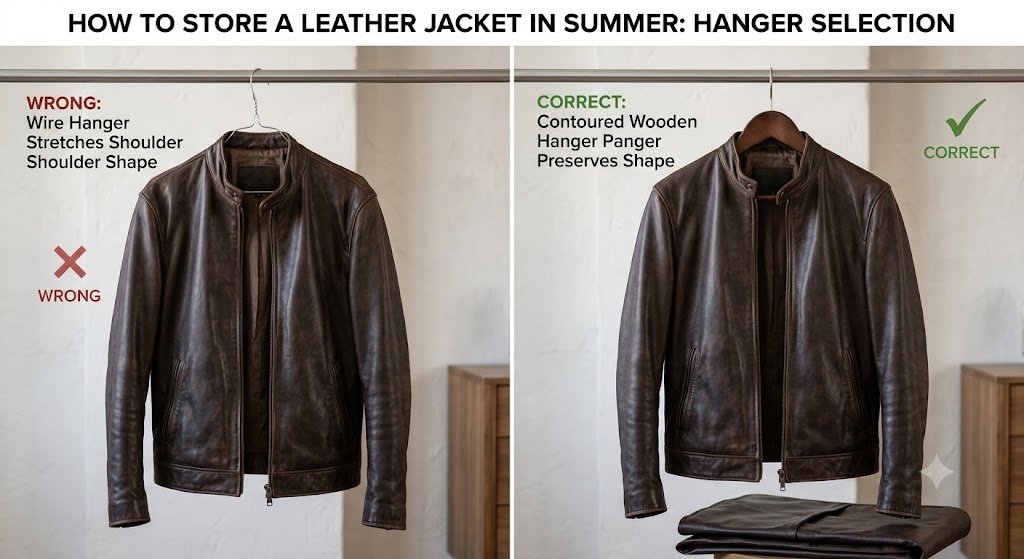
Never hang a heavy investment piece leather jacket on a thin wire or plastic hanger. The weight of a premium full-grain cowhide jacket will press down on the narrow hanger edges, permanently stretching out the shoulder caps and distorting the fit. Always use a wide, contoured wooden hanger that mimics human shoulder proportions.
Step 4: The Breathable Cover Shield
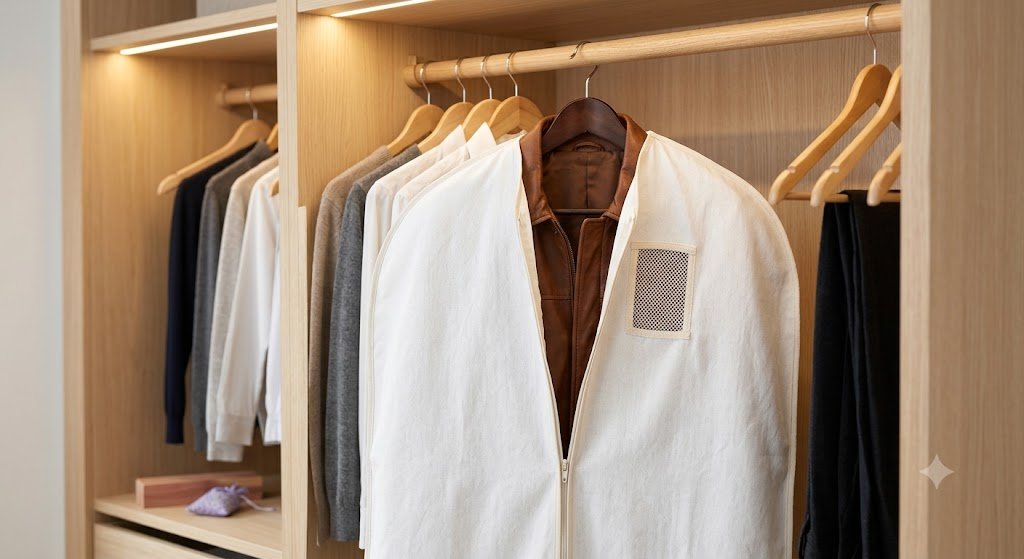
Instead of plastic, drape your jacket in a breathable fabric cover. A 100% cotton garment bag, an unbleached linen sack, or even a clean, old cotton pillowcase with a hole cut for the hanger hook works perfectly. This protects the leather from dust and light while allowing air molecules to circulate freely.
Step 5: Environmental Architecture (The Wardrobe Setup)
Where you place the jacket is just as important as how you hang it. Avoid attics, uninsulated crawlspaces, or damp basements. Keep your wardrobe slightly spaced out—do not jam twenty heavy clothes tightly against your leather jacket, as stagnant air pockets encourage mold. For extra security, hang a pouch of silica gel or activated charcoal nearby to absorb excess moisture.
Step 6: The Mid-Summer Inspection
Do not leave your jacket completely abandoned from May to September. Once every 4 to 6 weeks, open your wardrobe, take the jacket out into a well-ventilated, shaded room, and inspect the seams. This simple action disrupts potential mold colonies and allows you to catch early signs of dryness.
III. Environmental Parameters for Summer Care
| Factor | Ideal Range | Danger Zone | The Real Risk to Your Leather |
| Humidity | 40% – 50% RH | Above 60% RH | Rapid mold growth and fiber rotting. |
| Temperature | 60°F – 72°F (15°C – 22°C) | Above 85°F (30°C) | Drying of natural oils, leading to structural stiffness. |
| Light Exposure | Complete Darkness | Direct Sun / UV | Accelerates severe leather fading. |
IV. Proportions, Storage, and Frame Preservation
Different leather jackets have different weight distributions, which dictates how they handle summer storage tension:
Heavy Weights: Hides like rugged buffalo leather place immense pressure on the shoulder seams when hanging for four months straight. If you have an athletic build with a jacket optimized as the best leather jacket for broad shoulders, consider laying the jacket flat in a breathable trunk if your wardrobe hangers aren’t sufficiently wide.
Delicate Hides: Premium lambskin leather jackets have thin, supple skins. They are highly susceptible to taking on temporary folding impressions. If stored jammed against other clothes, you will find deep creases by autumn. If this happens, follow our precise guide on how to remove wrinkles from leather safely using low, indirect heat.
Sleeve Protection: Ensure the sleeves hang naturally without being bent or crushed against walls. If a sleeve is kept bent at a sharp angle all summer, the leather break-in process will freeze that crease permanently, which can alter how your sleeve length looks when you wear it again.
V. Advanced Recovery: What to Do If Things Go Wrong
If you didn’t know how to store a leather jacket in summer previously and discovered your jacket has been compromised, do not panic. Most issues can be systematically resolved if treated with professional care.
Dealing with Mold: If you spot white fuzz, take the jacket outside immediately so spores do not contaminate your house. Wipe it down gently with a cloth dampened in a 50/50 mix of distilled water and isopropyl alcohol. Allow it to air dry fully in the shade.
Fixing Hardness: If summer heat has baked the oils out of your hide, rendering it stiff, consult our expert breakdown on how to soften stiff leather to restore its original buttery texture.
Color Restoration: If accidental UV exposure near a window left your jacket unevenly toned, follow our steps for fixing sun-faded leather jackets to revive its deep color.
VI. FAQ: Summer Storage Concerns
Should I store my leather jacket in the basement?
No. Basements are typically high-humidity zones. Unless you have a dehumidifier running 24/7 keeping the air below 50% RH, storing your leather there will almost guarantee mold growth.
Is it safe to store real leather next to faux leather?
Avoid direct skin-to-skin contact. As we explored in our comprehensive real leather vs vegan leather durability study, synthetic faux alternatives use plasticizers that can degrade or chemically leach into real animal hide over months of tight contact, causing the faux jacket to begin peeling and ruining both surfaces.
What should I do if my jacket got caught in a summer storm before storage?
Never store a damp jacket. According to the leather care experts at Heddels, let it dry naturally away from artificial heat sources first. Storing a wet jacket turns it into an instant mold catalyst.
VII. Conclusion: Protect the Heritage on Your Back
Mastering how to store a leather jacket in summer is the true hallmark of a style purist. By rejecting airtight plastic traps, insisting on wide anatomical support, and controlling humidity, you protect the structural engineering of your garment. Your reward will be a beautiful, rich aging patina process that resumes the moment the autumn breeze arrives.
At Caesar Jackets, we cut out wholesale markups to deliver artisan-grade full-grain jackets built to last a lifetime—provided you give them a helping hand when the seasons shift. If you are comparing legacy brands, look over our exhaustive Schott NYC vs CaesarJackets breakdown to see why our DTC model offers top-tier value. For all other fitment and construction guidelines, explore our comprehensive Ultimate Leather Jacket Guide.