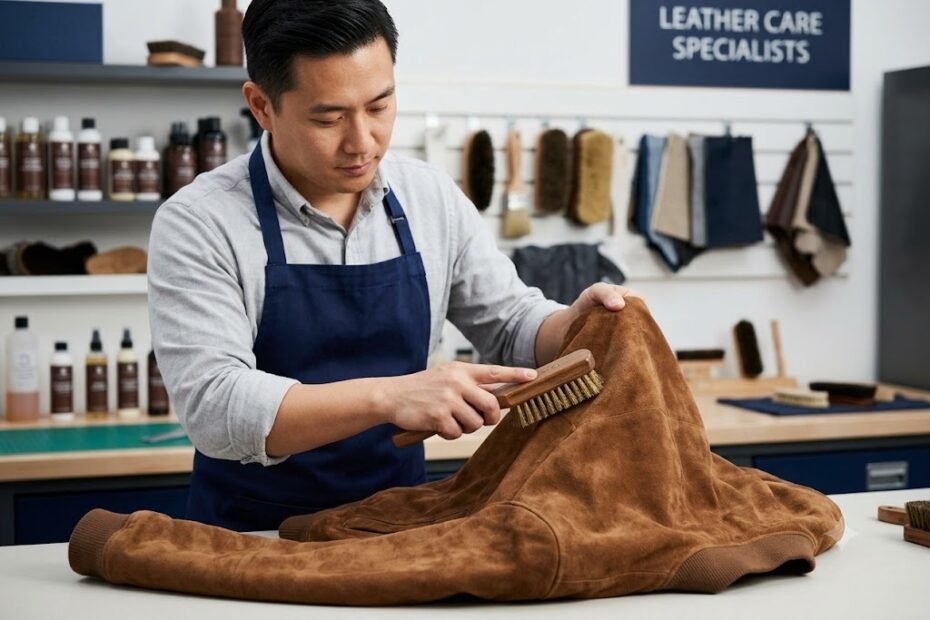
Suede is undeniably one of the most luxurious, stylish, and tactile materials in menswear. Its velvety texture and soft nap give any outerwear piece an instant touch of high-end sophistication. However, because suede is crafted from the undercut of animal hide, it is far more porous and vulnerable to water spots, grease, and dirt than traditional smooth full-grain leather. The moment dirt or a spill strikes, many owners panic and contemplate washing suede leather jacket items in a standard household washing machine or submerging them in a sink—a catastrophic mistake that can permanently ruin the texture, strip natural oils, and shrink the garment.
In 2026, the resurgence of vintage, heritage, and western-inspired aesthetics has made suede outerwear a wardrobe staple once again. Knowing how to maintain and clean this delicate material safely at home ensures your investment retains its luxurious hand-feel for decades. This comprehensive operational guide breaks down the science of suede care, offering safe, step-by-step methods for washing suede leather jacket garments, handling stubborn stains, and preserving the delicate nap without causing irreversible water damage.
The Absolute Golden Rule: Never Submerge Suede in Water
Before attempting any cleaning routine, you must understand the core physics of suede. Submerging suede in water dissolves the internal natural tanning oils that keep the leather fibers pliable. As the water evaporates, the fibers contract and harden, leaving you with a stiff, brittle, and distorted garment with a ruined nap.
Unless the care tag explicitly states the garment is crafted from specialized “washable suede” (a chemically treated synthetic or modified hide), never place your jacket in a washing machine or soak it in a tub. Safe washing suede leather jacket techniques rely on dry methods, specialized suede rubbers, and targeted steam or foam applications that clean without saturating the leather core. For detailed guidance on caring for delicate textures, explore our comprehensive suede jacket care guide.
Dry Cleaning vs. Targeted Home Care: Knowing When to Stop
Not all stains require the same level of intervention. Knowing when to handle a spot at home and when to hand the jacket over to a certified leather specialist prevents costly mistakes.
| Cleaning Scenario | Safe Home Method | Professional Intervention Needed? |
| Dry Dust & Mud | Suede Brush & Eraser Block | No; easily resolved at home. |
| Liquid & Water Drops | Blotting & Gentle Brushing | No; clean immediately before drying. |
| Oil & Grease Stains | Cornstarch / Talcum Powder Absorber | Recommended if set deep into the nap. |
| Full Interior Odors | Hanging Ventilation & Steam Inversion | Recommended for total overhaul. |
If your suede jacket has suffered a massive oil spill, severe color dye transfers, or extensive water saturation, do not attempt aggressive home washing. Professional leather dry cleaners utilize specialized non-water solvents and re-oiling tumbling processes that restore the hide safely.
Step-by-Step Guide: Safe Spot-Washing and Refreshing at Home
When your jacket needs a thorough refresh or has accumulated localized dirt, follow this proven four-step dry-cleaning protocol to restore its appearance safely.
Step 1: Raise the Nap with a Specialist Suede Brush
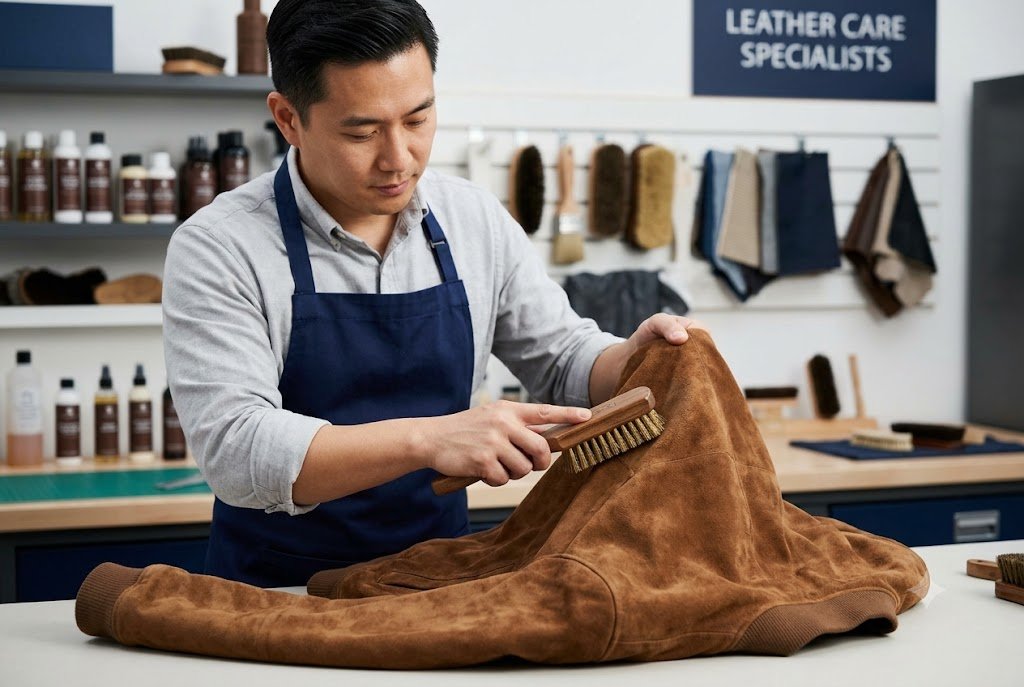
Before applying any cleaning agent, use a natural bristle or brass-wire suede brush to gently lift dirt trapped between the fibers. Always brush in a single direction following the grain of the nap. This unseats loose dust and restores the uniform color direction of the leather.
Step 2: Erase Surface Scuffs and Dried Dirt
For stubborn scuffs, water marks, or dried mud, use a dedicated suede eraser (or a clean, un-dyed rubber eraser). Rub the eraser firmly over the affected area in back-and-forth motions. The eraser crumbles into small particles that lift embedded dirt away from the leather fibers without abrading the surface. Brush away the crumbs thoroughly afterward.
Step 3: Absorb Liquid and Oil Stains with Powder
If you spill a liquid or oil-based substance on your suede, act fast:
Blot, Don’t Rub: Press a clean paper towel or microfiber cloth gently against the spill to draw out excess moisture. Rubbing will push the stain deeper into the porous leather core.
Apply Absorbent Powder: Dust a generous layer of cornstarch or talcum powder directly over the stain and let it sit undisturbed for 8 to 12 hours. The powder draws the grease out of the hide.
Brush Clean: Gently brush away the caked powder with your suede brush.
Step 4: Neutralize Odors and Refresh the Interior Lining
The exterior suede hide requires dry care, but the interior fabric lining often absorbs sweat and body odors. To clean the lining without getting the suede wet, turn the jacket inside out and suspend it on a sturdy, wide wooden hanger in a well-ventilated room. Spray the fabric lining lightly with a 50/50 mix of distilled water and plain white vinegar, taking care not to soak through to the outer leather. To explore the mechanics of maintaining garment interiors, check our analysis on leather jacket lining options.
How to Protect Suede Against Future Water Damage
Prevention is the ultimate strategy when managing suede. Before wearing your jacket out into unpredictable weather, treat the exterior with a high-quality, fluoropolymer-free suede protector spray.
Hold the spray can roughly 8 to 10 inches away from the hide and apply a light, even mist across the entire garment. Allow it to dry completely in a cool area for 20 minutes before applying a second coat. This creates an invisible hydrophobic barrier that causes rain droplets to bead up and roll off the surface rather than soaking into the leather. If you are comparing weather performance across different leather finishes before buying your next piece, read our detailed comparison on suede jacket vs leather jacket properties.
Proper Storage: Protecting the Soft Nap Year-Round
Improper storage destroys more suede jackets than actual daily wear. Suede requires continuous air circulation and protection from direct UV light to prevent fading and dry rot.
Use Wide Wooden Hangers: Never store suede on thin wire hangers, as they stretch out the shoulder line and cause permanent creases.
Avoid Plastic Covers: Never enclose a suede coat in airtight plastic garment bags, which trap ambient humidity and foster mold growth. Use breathable cotton garment bags instead.
Keep Away from Sunlight: Prolonged exposure to direct sunlight bleaches natural suede dyes rapidly. Store your jacket in a cool, dark, climate-controlled closet. To keep all your investment pieces safe during off-seasons, review our complete guide on how to store a leather jacket in summer.
Internal and External Resources
To ensure your premium seasonal wardrobe expansion remains technically flawless, explore these authoritative links:
Internal: Discover how to style your clean suede outer layer by reading our guide on what to wear with a suede jacket.
Internal: Learn about the structural durability of different hides in our guide on lambskin vs cowhide leather jacket characteristics.
External: Visit the Leather Working Group to study international environmental standards for suede tanning and chemical safety.
External: Consult the textile preservation archives at Britannica to study the historical development and molecular structure of brushed split hides.
Summary of Best Practices
Successfully washing suede leather jacket items at home is about adopting gentle, waterless cleaning methods that preserve the natural character of the hide. By avoiding total water submersion, utilizing specialized suede brushes and erasers for surface scuffs, treating grease with absorbent powders, and applying a hydrophobic protective spray, you keep your suede outerwear looking rich and luxurious. Treat the material with care, respect its unique texture, and enjoy a timeless piece that elevates your personal style for years to come.