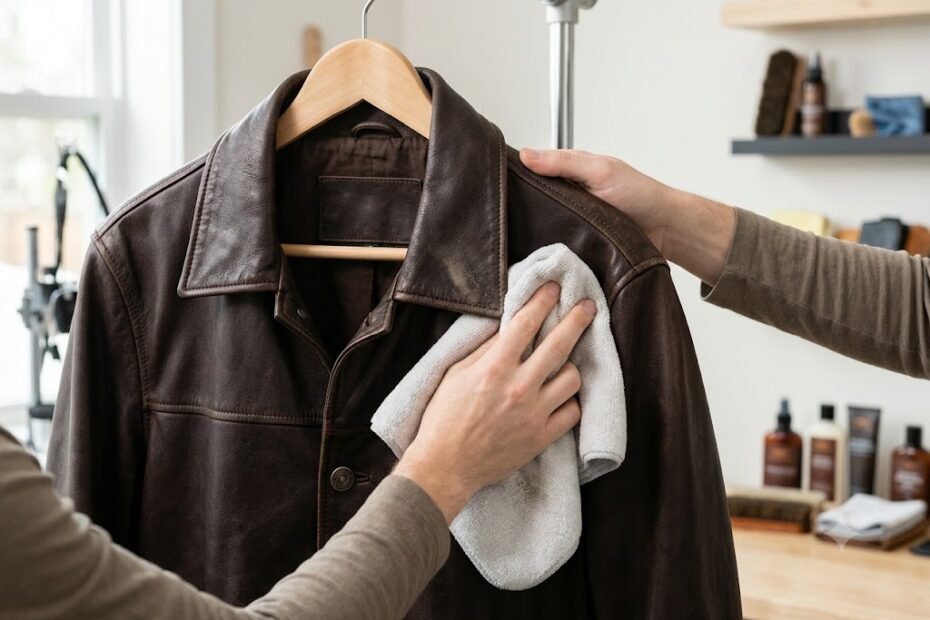
A genuine leather coat is one of the most resilient, stylish, and durable investments you can add to your winter wardrobe. Unlike synthetic plastic layers that degrade quickly, real animal hide develops a rich, organic character over time. However, daily wear inevitably exposes your garment to urban dust, rain spots, salt stains, and everyday grime.
When dirt begins to dull the natural sheen of your outerwear, you face a critical maintenance question: how do you clean a leather coat without causing accidental water damage, stiffness, or discoloration?
Cleaning real leather requires a completely different approach than washing standard cotton, canvas, or wool outerwear. Because natural hide contains essential moisture oils trapped within its organic fiber matrix, using harsh laundry detergents or putting your jacket in a washing machine will strip those oils away, leaving the leather brittle, cracked, and ruined.
To protect your garment and keep it looking pristine for decades, here is the complete step-by-step master guide to maintaining your leather coat at home.
Step 1: Pre-Cleaning Assessment and Dry Dusting
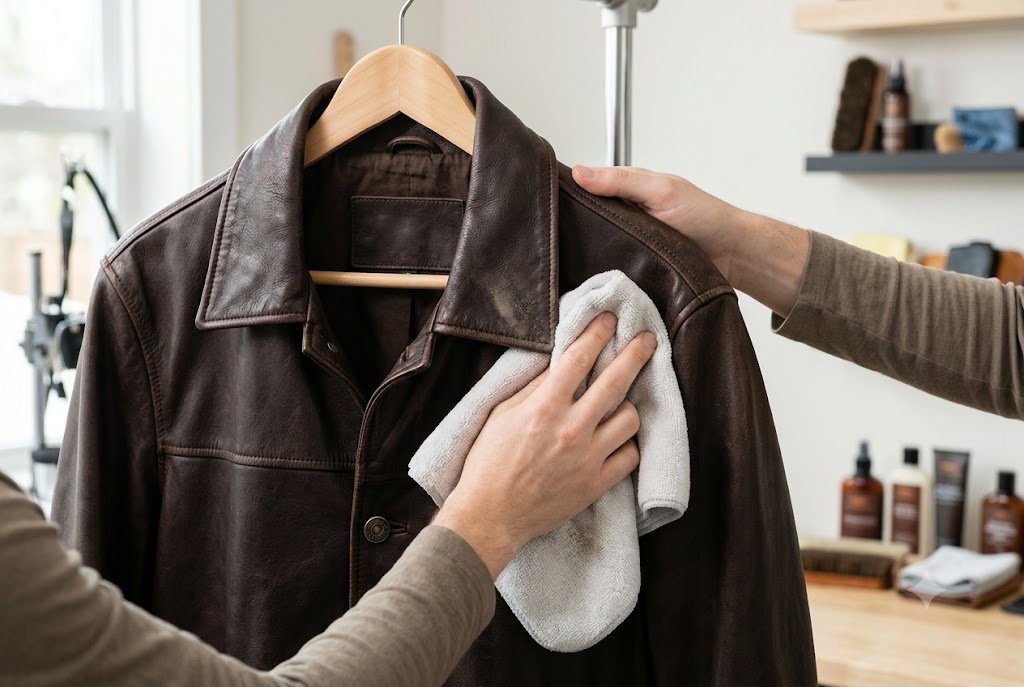
Before applying any liquid cleaner or specialized leather product, you must assess the type of hide you are working with and remove loose surface debris.
Identify Your Leather Type
Smooth Top-Grain/Full-Grain Leather: Smooth, sealed leathers (such as cowhide, sheepskin, or lambskin) can easily tolerate mild water-based spot cleaning techniques.
Suede or Nubuck: These materials feature an exposed, velvet-like “nap”. Never use wet soapy water on suede. Instead, use a specialized crepe brush and eraser as outlined in our dedicated suede jacket care guide.
Wipe Away Loose Surface Grime
Take a completely dry, soft microfiber cloth and wipe down the entire exterior of the coat. Pay special attention to the shoulders, collar, and sleeve cuffs where airborne dust and dead skin oils accumulate. Removing dry dust first prevents you from rubbing abrasive dirt particles deeper into the leather pores during the wet cleaning phase.
Step 2: Mixing a Mild Spot-Cleaning Solution
When evaluating how do you clean a leather coat safely, the Golden Rule is to avoid harsh chemical cleaners, bleach, ammonia, or acetone. These aggressive solvents destroy the finish and strip away the natural color dyes.
The Safe DIY Solution
Mix a few drops of mild, pH-neutral liquid baby shampoo or gentle dish soap into a bowl of lukewarm distilled water.
Dip a clean microfiber towel into the soapy mixture, and then wring it out thoroughly until the cloth is barely damp.
The towel should never be dripping wet. Leather should never be saturated with excess water.
Step 3: Spot-Cleaning the Exterior Hide
With your barely damp cloth, begin cleaning the coat using gentle, circular motions. Work in small, controlled sections—moving from the collar down to the shoulders, sleeves, chest panels, and bottom hemline.
| Stain Type | Recommended Cleaning Strategy | What to Avoid |
| Water Spots / Rain Lines | Dampen the surrounding area slightly with a moist cloth to blend the water boundary, then let air-dry. | Rubbing forcefully on a single wet spot, which pushes water deeper into the pores. |
| Road Salt / Winter Slush | Mix equal parts white vinegar and distilled water; gently blot the salt line with a damp towel. | Leaving salt on the hide overnight, which permanently dehydrates the fiber matrix. |
| Grease / Food Oils | Dust the spot with cornstarch or talcum powder; leave overnight to absorb the oil, then brush away. | Applying liquid soaps directly onto grease, which spreads the stain further. |
If you encounter stubborn scuffs or deeply embedded grime on an old coat, see our comprehensive tutorial on how to clean a leather jacket for specialized stain removal techniques.
Step 4: Removing Soap Residue and Air-Drying
Once you have wiped down the entire surface, you must remove any lingering soap film. Soap residue left on leather hide will dry out the pores and attract fresh dirt twice as fast.
The Soap Rinse: Take a second clean microfiber cloth, dampen it strictly with pure distilled water (no soap), wring it out completely, and wipe down the coat once more.
Drying the Leather: Pat the entire coat dry with a fresh, dry towel to absorb remaining surface moisture.
The Drying Environment: Hang the coat on a wide, contoured wooden hanger in a cool, well-ventilated room out of direct sunlight.
Critical Warning: Never place a damp leather coat near a radiator, space heater, or fireplace, and never use a hot hair dryer. Direct heat bakes the moisture out of the hide’s organic cellular structure, causing the leather to shrink, harden, and crack permanently.
Step 5: Refreshing the Interior Fabric Lining
The inside fabric lining absorbs body heat, sweat, and cologne over time. Understanding how do you clean a leather coat completely means treating the interior liner with equal care.
Turn the coat inside out so the fabric lining is fully exposed.
Hang the garment up and spray the lining lightly with a 50/50 mixture of distilled water and isopropyl alcohol (or vodka) to neutralize odor-causing bacteria.
For localized armpit or collar stains on the lining, spot-clean gently with a soft sponge and mild soapy water, taking care not to soak through the fabric into the outer leather hide.
Allow the lining to air-dry completely before turning the coat right-side out.
If your coat has developed a deeply embedded stale aroma after long-term storage, check out our guide on how to safely get rid of a stubborn leather smell.
Step 6: Conditioning to Restore Essential Oils
Cleaning removes surface dirt, but it also removes a tiny fraction of the hide’s natural oils. Therefore, the final, non-negotiable step in the process is conditioning. Conditioning restores softness, revives the rich depth of color, and maintains water resistance.
Wait until the coat is 100% dry.
Apply a quarter-sized amount of high-grade, natural leather conditioner or balm onto a soft sponge or cloth.
Work the conditioner into the leather using light, circular motions across the entire exterior.
Let the conditioner penetrate the pores for 20 minutes, then buff away any excess product with a dry microfiber towel until the hide feels smooth and non-greasy.
For complete seasonal preservation guidelines, refer to our master framework on leather jacket care guide protocols.
Key Material Performance Metrics: Real Leather vs. Synthetics
Understanding the biological origin of your garment helps you maintain realistic expectations when cleaning. Material testing standards overseen by global watchdogs like the Leather Working Group show that natural hides feature microscopic breathing pores.
According to structural textile benchmarks published by the Britannica Encyclopedia, real leather absorbs liquid conditioners, allowing it to remain supple for 10 to 20 years.
Synthetic faux leather (PU or PVC), on the other hand, consists of a plastic coating over fabric. Plastic cannot absorb conditioners. Washing or spot-cleaning synthetic materials with warm water often accelerates the breakdown of the plastic polymer, causing the synthetic coating to flake and peel away within 2 to 3 years. To understand how real hide durability compares to synthetic alternatives, read our longevity report on real leather vs vegan leather durability.
Summary Checklist for Cleaning Certainty
| Maintenance Stage | Recommended Action | What to Avoid |
| Preparation | Dry-dust surface dirt with a soft microfiber cloth. | Using stiff plastic bristle brushes that scratch the hide. |
| Washing | Spot-clean using a barely damp towel with mild baby soap. | Submerging the coat in a bathtub or washing machine. |
| Drying | Hang in a shady, cool, well-ventilated room. | Exposing wet leather to radiators or hot hair dryers. |
| Finishing | Apply a natural cream conditioner once dry. | Over-saturating the hide with silicone-based sprays. |
Keep Your Outerwear Looking Timeless
Knowing how do you clean a leather coat gives you full control over the lifespan and appearance of your favorite outerwear pieces. By dusting regularly, spot-cleaning with gentle pH-neutral soap solutions, drying away from direct heat, and nourishing the hide with a quality conditioner once or twice a year, your jacket will retain its head-turning luster for decades.
Whether you are caring for a heavy-duty mens motorcycle jacket or a supple womens classic leather jacket, proper care honors the craftsmanship built into every seam. Treat your leather coat well, and it will serve as your signature personal armor for a lifetime!