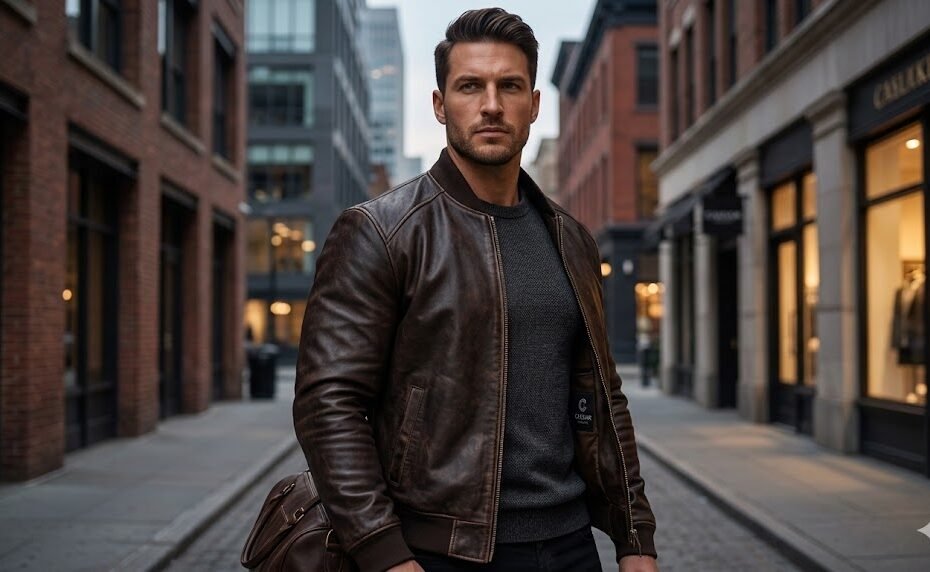
Finding the best leather jacket for broad shoulders men is not simply a matter of buying one size larger. A larger jacket may give you more room across the chest, but it can also leave excess fabric at the waist, drop the shoulder seams and make the sleeves too long.
The right jacket should follow your natural V-taper while giving your upper back and arms enough room to move. This guide explains what to check in the pattern, how each major jacket style works for a broader frame, and how to compare real product measurements before ordering.
What to Look for in the Best Leather Jacket for Broad Shoulders Men
Tailoring is the starting point. Britannica’s overview of tailoring explains why garment proportions and construction matter as much as the material itself. For a broad-shouldered build, pay attention to five areas rather than relying on the size label alone.
1. Correct shoulder seam placement
The shoulder seam should finish close to the outer edge of your shoulder, not halfway down your upper arm. If the seam sits too far outside the shoulder, the jacket is too large even if the chest feels comfortable. Leather shoulders are difficult to alter cleanly, so this measurement should take priority over a loose waist or sleeve.
2. Enough upper-back mobility
An action back, bi-swing back or carefully shaped back panel can provide extra movement when you reach forward, ride or drive. These features help reduce pulling across the shoulder blades, but they should be checked together with the jacket’s actual shoulder width and armhole shape.
3. Armholes that are high but not restrictive
A high armhole can help the sleeve move with your arm instead of lifting the whole jacket. However, a high armhole is not automatically comfortable. If the chest, shoulder pitch or bicep area is too narrow, it can still pinch. If you regularly experience tightness under the arms, see our guide to leather jacket armholes that feel too tight.
4. A controlled waist, not a boxy cut
Broad shoulders usually look more balanced when the jacket narrows gently toward the waist. Look for a tapered pattern, side adjusters, a belt or a ribbed hem. The waist should follow your shape without compressing your midsection or creating a large hollow behind your back.
5. Sleeve length that matches your shoulder fit
Do not choose a jacket by sleeve length before checking the shoulders. A dropped shoulder can make the sleeves appear too long even when the sleeve measurement is technically correct. After the shoulder seam is in the right place, compare the cuff position with your wrist bone and review our leather jacket sleeve length guide.

Best Leather Jacket Styles for Broad Shoulders
There is no single jacket style that suits every broad-shouldered man. The best choice depends on how much structure, layering room and waist definition you want.
| Style | Why it can work | What to check |
|---|---|---|
| Cafe racer | The clean collar and simple front keep the silhouette sharp without adding visual bulk. | Make sure the upper back and armholes are not cut too narrowly. |
| Biker jacket | Wide lapels and an adjustable belt can balance a broad chest and define the waist. | Watch for excessive padding, heavy hardware and a front that pulls when zipped. |
| Bomber jacket | A roomier chest and ribbed hem can provide comfort while creating a natural taper. | A dropped shoulder or very oversized body may make the upper half look boxy. |
| A-2 or flight jacket | The structured shoulder and practical cut can suit a strong, athletic frame. | Allow for the lining and any sweater underneath before choosing your size. |
Material changes the way a jacket behaves. Supple sheepskin generally drapes more easily, while heavier cowhide or buffalo leather may hold a stronger shape and require more break-in time. Compare grain and weight in our guides to sheepskin leather and cowhide versus buffalo leather before treating one hide as universally better.
How to Check the Fit Before You Order
Use your body measurements and a well-fitting jacket together. Our leather jacket measurement guide explains how to record the chest, shoulder, sleeve and back length. Then compare those numbers with the product’s own size chart.
- Measure the shoulders. Record the distance between the natural shoulder points. Do not measure over a thick hoodie.
- Check the chest and upper back. You should be able to zip the jacket over a light base layer without diagonal pulling across the back.
- Test arm movement. Raise your arms, reach forward and imitate the movement you will use most often. The hem may move slightly, but the jacket should not ride up sharply.
- Check the waist. A broad-shouldered build usually needs room in the chest without a completely loose waist. Side adjusters, a belt or a shaped hem can help.
- Confirm sleeve length. Once the shoulder seam is correct, the cuff should finish around the wrist area without covering the hand.
If standard sizes cannot provide enough shoulder room without excess waist or sleeve length, compare the available options in our men’s leather jackets collection and review the brand’s measurement chart for each product. You can also compare a men’s sheepskin biker-style jacket as a material and construction example; use its current product measurements rather than assuming the listed size will fit a broad chest. For a more precise shoulder-to-waist ratio, see our information on made-to-measure leather jacket costs.
Common Fit Mistakes to Avoid
- Buying a larger size automatically. This may solve a tight chest but create dropped shoulders, long sleeves and a loose waist.
- Choosing the thickest leather. Heavy leather is not automatically more suitable. Weight, lining and flexibility should match your climate and layering habits.
- Ignoring the back panel. A jacket can look correct from the front and still restrict the shoulder blades when you reach forward.
- Using shoulder padding to create width. If you already have a broad frame, natural shoulder construction usually looks more balanced than extra padding.
- Measuring only your body. Garment measurements reveal how the pattern is actually cut. Use both sets of measurements whenever possible.
Product and Material Checks That Matter
Before choosing a jacket, confirm the material, lining, available sizes, shoulder or chest measurements and return conditions on the product page. A category label such as “leather jacket” does not tell you whether the garment is genuine leather, faux leather, lightly lined or designed for winter layering.
For sourcing and sustainability claims, look for evidence instead of relying on broad marketing language. The Leather Working Group standards and certification overview explains how assessment can cover areas such as traceability, chemical management and environmental performance. This does not replace checking the individual product details, but it is a useful standard for judging the quality of a supplier’s claims.
FAQ: Broad Shoulders and Leather Jackets
Should I size up for broad shoulders?
Not automatically. First compare the shoulder, chest and upper-back measurements. If sizing up creates a dropped shoulder and very long sleeves, a different cut or made-to-measure option may be better.
Which leather is most comfortable for broad shoulders?
Comfort depends on hide weight, pattern, lining and movement allowance. Supple leather can feel easier to wear, while a heavier hide may offer more structure. Fit should be evaluated before choosing by material alone.
Are bomber jackets good for broad shoulders?
They can be. A bomber with adequate chest room and a controlled ribbed hem can balance a V-shaped build. Avoid very dropped shoulders or excessive volume if you want a cleaner silhouette.
Can a tailor alter the shoulders of a leather jacket?
Shoulder alterations are complex because they affect the collar, armhole and sleeve position. Sleeve and side-seam adjustments are generally more practical, so choose the shoulder measurement carefully before ordering.
Final Buying Checklist
The best leather jacket for broad shoulders men should give you room where you move and structure where you need shape. Before ordering, confirm the shoulder seam, upper-back mobility, armhole comfort, sleeve length, waist control, leather weight and size-chart measurements.
Once you have compared those details, explore the current men’s leather jacket collection and select the style that matches your use case. A well-fitting jacket should support your proportions and movement from the first wear—not depend on buying a larger size and hoping the rest of the pattern works.