When you first purchase a high-end leather jacket, you aren’t just buying a garment; you are initiating a decade-long relationship. The true test of a hide isn’t how it looks under store lights, but how it performs as a leather jacket after 10 years of rain, sun, road trips, and daily wear.
While fast-fashion alternatives crumble within months, a premium investment piece undergoes a metamorphosis. It stops being an object and starts being a “second skin” that maps the history of your life through its creases and grain. In this 1,500-word guide, we will explore the science of aging, the structural reality of long-term wear, and how to ensure your jacket looks better at year ten than it did at day one.
I. The Science of the “Ten-Year Transformation”
What exactly happens to the biological structure of a leather jacket after 10 years? According to the Leather Working Group (LWG) structural studies, leather is an organic matrix that reacts to its environment.
💡 CaesarJackets:Combatting “Protein Cross-link Fatigue”
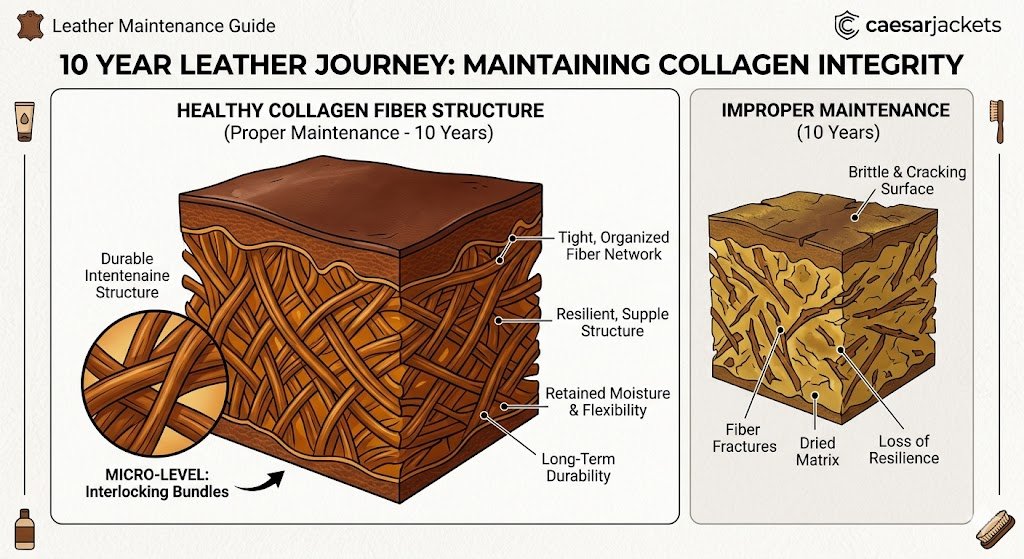
The primary reason low-quality jackets fail before the decade mark is what we call Protein Cross-link Fatigue. In cheap, highly processed “genuine leather,” the collagen fibers are heavily sanded and coated in plastic. Over 10 years, these plastic bonds snap under the stress of movement.
At Caesar Jackets, we exclusively use full-grain leather. This keeps the protein fibers intact. After 10 years, instead of snapping, these fibers simply “relax,” allowing the jacket to mold to your specific anatomy—your shoulder slope, your elbow bend, and even the way you sit. This is why a leather jacket after 10 years feels significantly more comfortable than a brand-new one.
II. Patina: The Reward of Longevity
The most celebrated aspect of a leather jacket after 10 years is the patina. This isn’t just “wear and tear”; it is the natural oxidation and absorption of oils that creates a unique luster.
Color Depth: A brown leather jacket will darken in high-friction areas (cuffs and collar) while developing lighter highlights where it stretches.
Grain Evolution: Buffalo leather and cowhide will reveal a more pronounced texture, while lambskin becomes incredibly soft and glove-like.
Structural Memory: By the tenth year, the “Action Back” or gussets will have “memorized” your maximum reach, providing a fit for broad shoulders that no tailor could replicate.
III. Comparing 10-Year Durability: Real vs. Faux
| Feature | Real Full-Grain (Caesar Jackets) | Faux/Vegan “Leather” |
|---|---|---|
| Year 1 | Stiff, smells of hide, requires break-in. | Soft, looks perfect, smells of plastic. |
| Year 5 | Perfectly broken in; fits like a glove. | Peeling starts at the neck and cuffs. |
| Year 10 | Iconic patina; structural masterpiece. | Disintegrates; likely in a landfill. |
According to Heddels’ longevity research, the lifespan of a synthetic jacket is rarely more than 3 years. Choosing a leather jacket after 10 years is not only a style choice but a massive sustainability win.
IV. Maintenance: How to Reach the 10-Year Milestone
A leather jacket after 10 years only looks legendary if it hasn’t been neglected. You are the “curator” of this investment.
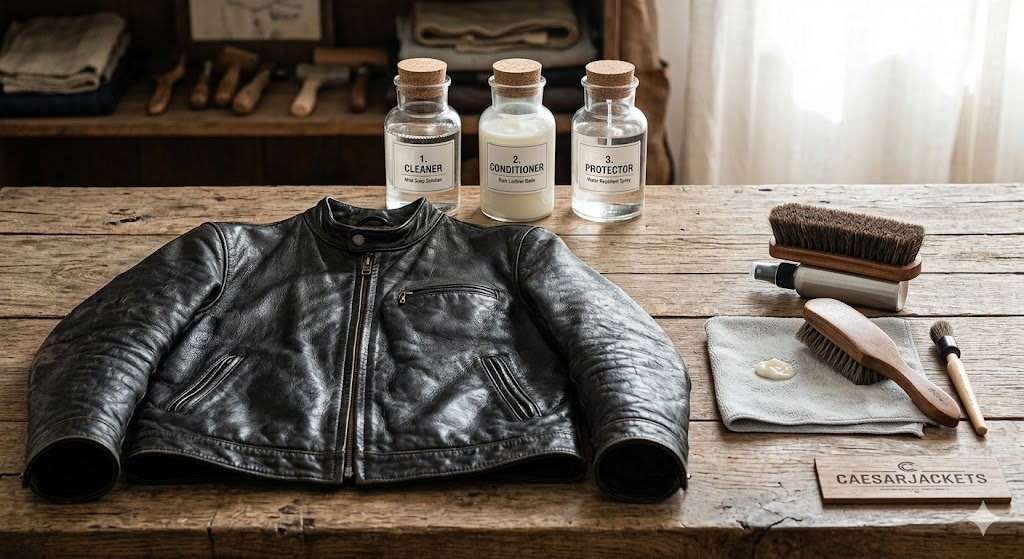
Hydration is Non-Negotiable: To prevent the protein fibers from snapping, you must apply conditioner to prevent cracking. This is especially vital for winter riding jackets exposed to road salt.
Color Restoration: If your jacket has spent a decade in the sun, it may need color help. See our guide on how to fix sun-faded leather.
Hardware Care: Don’t ignore the zippers. High-quality YKK vs SBS hardware will last a decade if kept free of grit and occasionally lubricated with graphite.
Cleaning: Over a decade, oils and sweat can build up. Knowing how to clean a leather jacket at home and removing persistent odors is crucial for hygiene.
V. FAQ: The Long-Term Lifecycle
Will my jacket stretch too much after 10 years? High-quality leather stretches only where tension is applied. If you find your jacket has become too loose, follow our tips on how to stretch (or manage) the fit.
What if the lining wears out before the leather? This is common. A leather jacket lining is a sacrificial layer. After 10 years, it is standard practice to have a tailor replace the lining while keeping the exterior hide intact.
Can a 10-year-old jacket still be professional? Absolutely. A minimalist leather jacket outfit that has aged well often looks more sophisticated than a brand-new one, especially when paired with khaki pants or a suit.
VI. The Resale and Heirloom Value
A leather jacket after 10 years often carries a “Vintage Premium.” In brands like Schott NYC vs CaesarJackets, the older pieces are often more sought after by collectors because the break-in work is already done.
At Caesar Jackets, we don’t build for the season; we build for the heritage. Whether you are a tall guy or a short guy, our made-to-measure approach ensures that your leather jacket after 10 years still respects your proportions as it develops its unique character.
VII. Conclusion: The Decadel Milestone
Looking at a leather jacket after 10 years is like looking at a diary you can wear. It tells the story of where you’ve been and who you’ve become. By choosing full-grain real leather and maintaining it with care, you aren’t just buying clothes—you are creating an heirloom.
For a deeper dive into how to start your own 10-year journey, consult our Ultimate Leather Jacket Guide.