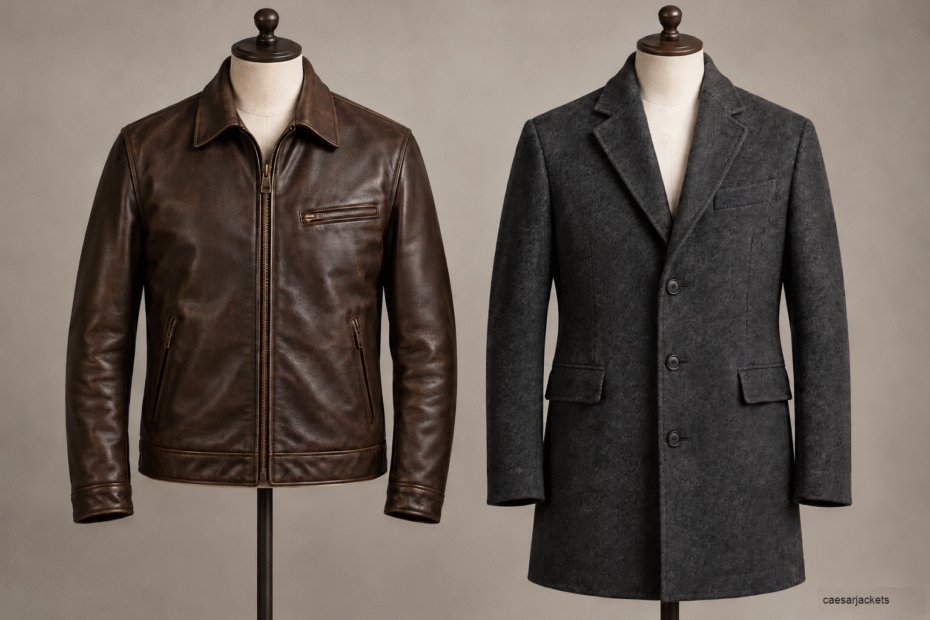
Choosing between a leather jacket and a wool coat comes down to how you dress, the weather you face, and the layers you prefer. A leather jacket usually brings a shorter, more casual silhouette and a wind-resistant outer surface, while a wool coat often gives more coverage and a classic look. In the leather jacket vs wool coat decision, the fabric alone does not determine warmth: lining, weight, fit, and what you wear underneath all matter.
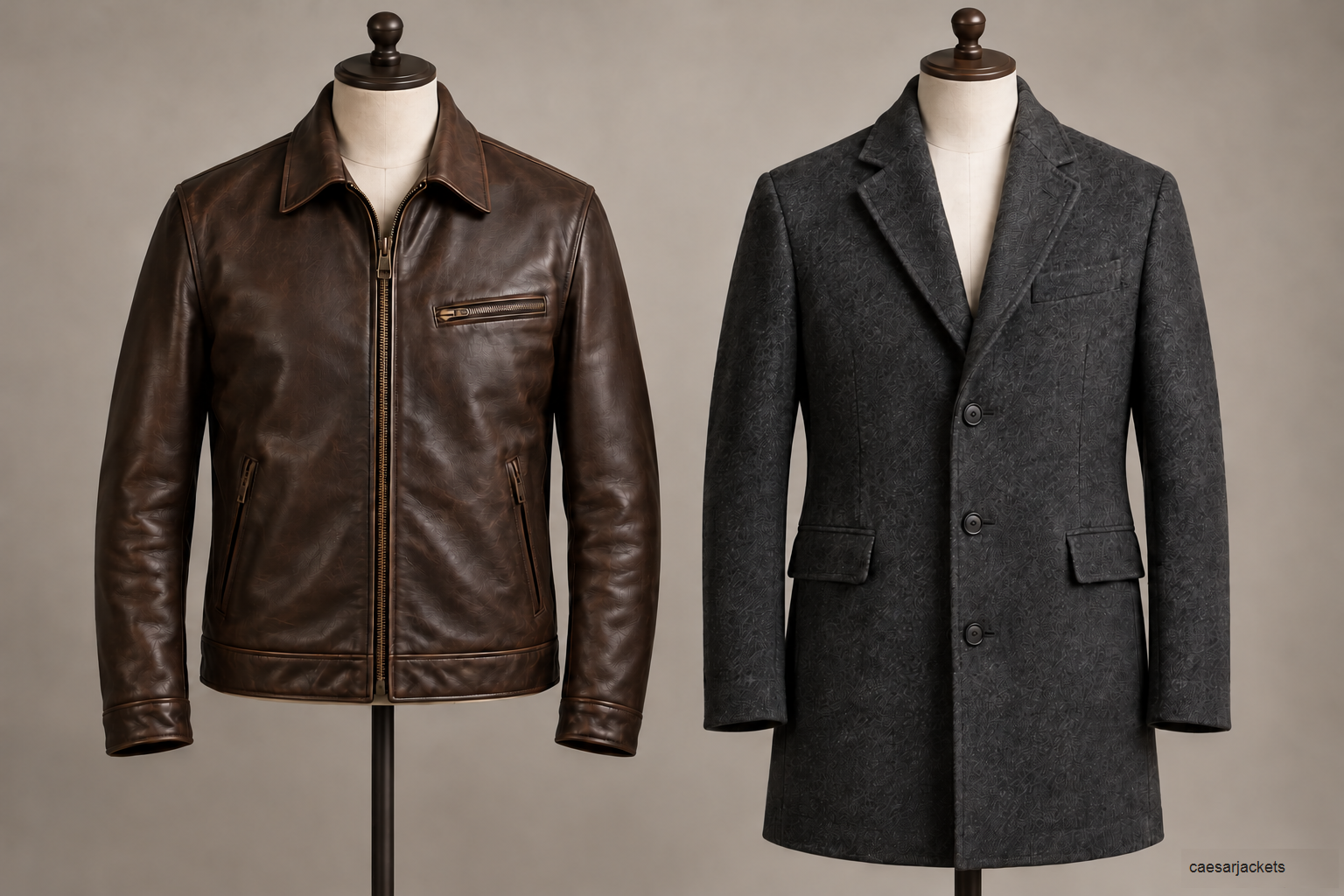
Leather Jacket vs Wool Coat: What Changes in Everyday Wear?
Think about your typical day before comparing materials. A jacket that works for a short commute or a casual weekend may not be the best choice for standing outside in cold weather. The leather jacket vs wool coat comparison is most useful when you consider the complete garment: its cut, lining, closure, and room for a sweater.
| What to compare | Leather jacket | Wool coat |
|---|---|---|
| Typical coverage | Often waist or hip length | Often extends to the thigh or knee |
| Common look | Casual, rugged, or polished depending on the style | Classic, tailored, or more formal |
| Layering | Works best with enough room for your usual mid-layer | Longer cuts can cover more of an outfit |
| Weather limits | Can resist wind, but rain performance depends on the leather and finish | Can insulate well, but is not automatically waterproof |
1. Warmth Depends on More Than the Fabric
A heavy wool coat with a close weave and a suitable lining may feel warmer than a lightweight leather jacket. A lined leather jacket can be comfortable in cool, breezy weather, especially when paired with a sweater, but a short cut leaves more of your lower body exposed.
Wool fibers naturally help trap air and manage moisture, according to Woolmark’s overview of wool’s breathability. That does not make every wool coat equally warm. Fabric weight, coat construction, wind, and the layers beneath it still affect comfort. When weighing a leather jacket vs wool coat for colder days, check the lining and try the garment over the clothes you actually plan to wear.
2. Consider Rain, Wind, and Your Commute
Neither material should be treated as universally weatherproof. Some leather finishes shed light moisture, but prolonged exposure can stain or dry out leather. Wool can handle some damp conditions, yet a saturated coat may become heavy and take time to dry. For both garments, follow the care label and the maker’s weather guidance.
If your commute is windy, a well-fitted leather jacket that closes securely may feel comfortable, while a longer wool coat offers more coverage over your hips and legs. For frequent rain, consider a dedicated waterproof shell or umbrella. CaesarJackets’ guide to wearing a leather jacket in the rain explains sensible precautions for leather.
3. Match the Cut to Your Clothes
A leather jacket pairs easily with jeans, boots, knitwear, and casual outfits. A wool coat can sit neatly over office clothes, dresses, or tailored trousers, while still working with everyday layers. The right choice is the one that fits your wardrobe rather than an imagined occasion.
Check shoulder seams, sleeve length, and how the front closes. If you regularly wear thick sweaters, make sure the jacket does not pull across your back or restrict movement. A wool coat should also leave room for layering without looking oversized. For styling ideas, see our guide to styling a men’s leather jacket.
4. Factor in Care Before You Buy
Leather benefits from prompt attention to spills and careful drying away from direct heat. Wool coats often need brushing, airing, and cleaning according to the garment label. The right routine depends on the material, finish, and manufacturer’s instructions—not a one-size-fits-all home remedy.
The Leather Working Group’s explanation of leather making describes how processing and finishing can vary. That variation is one reason leather care instructions differ by product. Read our leather jacket care guide before cleaning or conditioning a new jacket.
5. Choose for the Days You Dress For Most
Choose a leather jacket if you want a versatile shorter layer for casual outfits and cool, breezy days. Choose a wool coat if you value extra coverage, a tailored appearance, or a piece that can go over smarter clothing. If your weather changes sharply through the season, owning both may make sense: a leather jacket for milder days and a longer coat when you need more coverage.
In the end, leather jacket vs wool coat is not a contest with one universal winner. Compare the garment’s lining, length, fit, and care requirements, then decide which one will earn more use in your actual week. If a leather layer fits your routine, browse our men’s leather jackets or women’s leather jackets to compare styles and cuts.