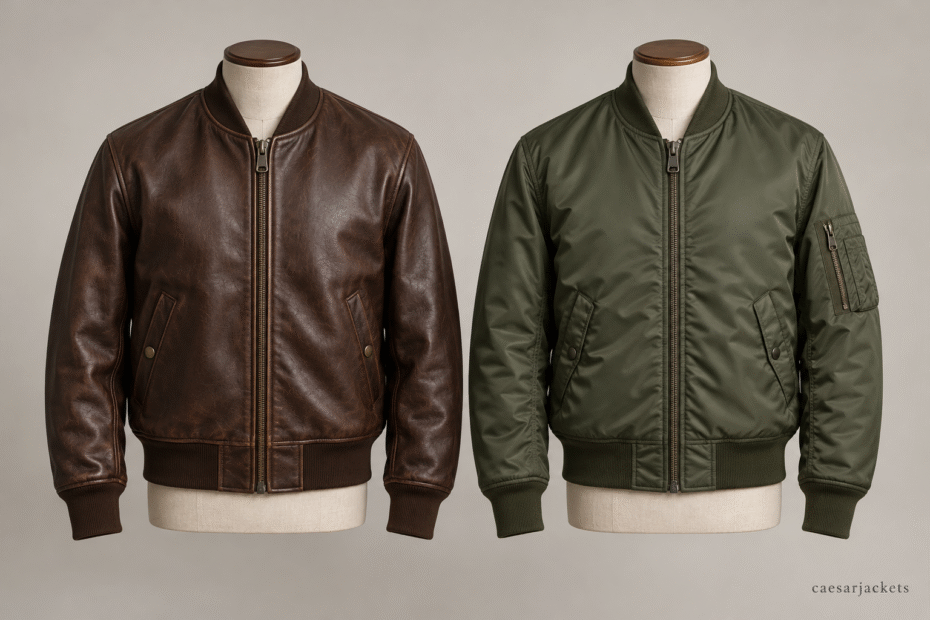
A leather bomber jacket vs nylon bomber comparison comes down to what you want from an everyday layer. Leather brings a distinctive grain and substantial feel; nylon is often lighter and easier to pack. Neither material guarantees a particular level of warmth or weather protection on its own, since lining, construction, and finish matter too. Compare these five trade-offs against how and where you’ll wear the jacket.
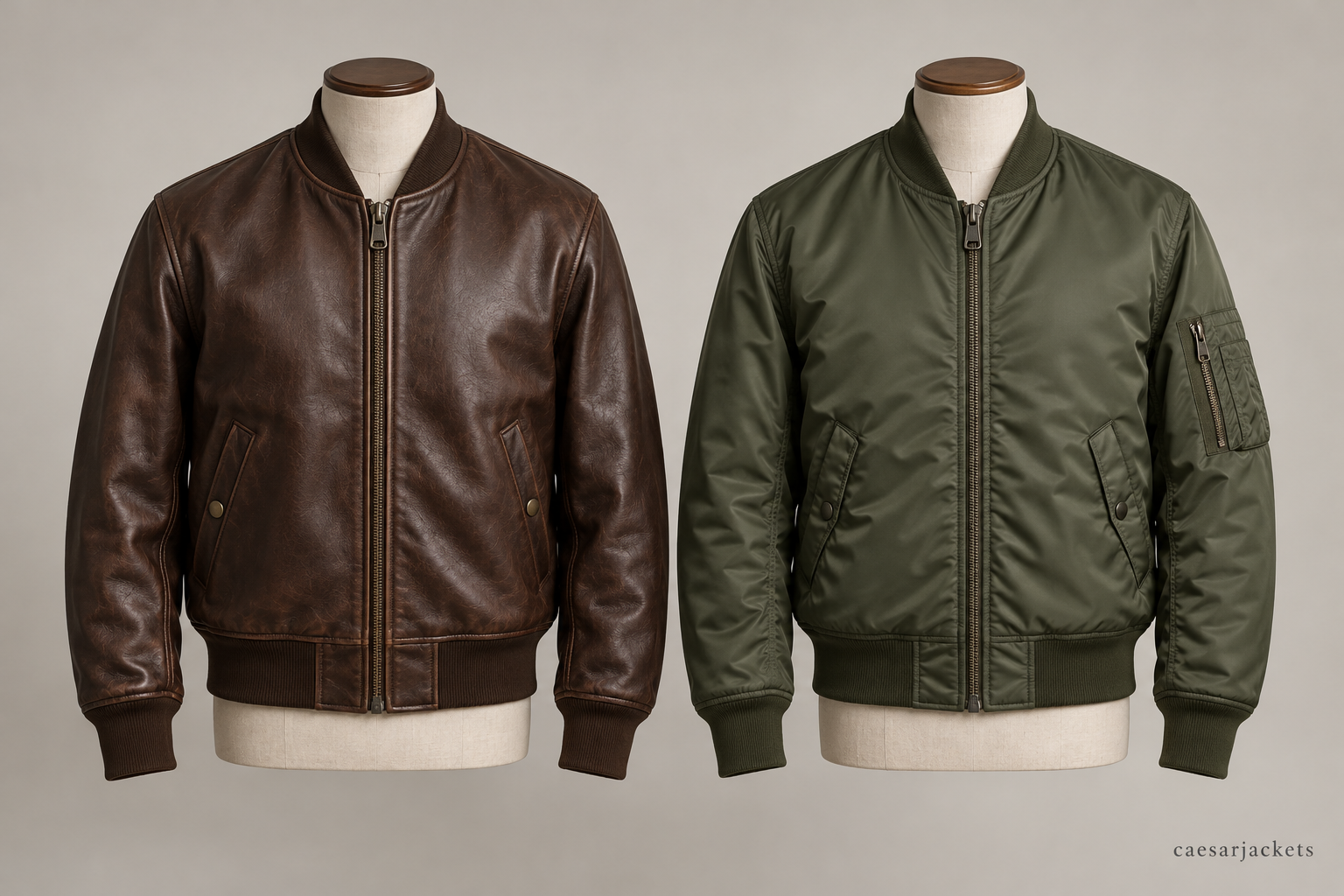
Leather Bomber Jacket vs Nylon Bomber: 5 Differences to Compare
| What to compare | Leather bomber | Nylon bomber |
|---|---|---|
| Surface and feel | Natural grain; feel varies with hide, tanning, and finish | Woven surface; feel varies with weave, weight, and coating |
| Weight and packing | Often feels more substantial; may take more room to pack | Often lightweight and easier to fold or pack |
| Weather performance | Depends on leather finish, seams, and lining | Depends on weave, coating, and seam construction |
| Care | Follow the leather maker’s cleaning and storage advice | Follow the garment label; some nylon shells are machine washable |
1. Look and Feel
A leather bomber has visible grain and a more substantial hand. Its appearance can change with the hide and finish: some leather is smooth and polished, while other finishes look matte, pebbled, or distressed. The Leather Working Group explains that finishing treatments can affect leather’s appearance and performance. Its overview of leather making covers steps such as dyeing, coating, and waterproofing.
A nylon bomber usually has a more uniform woven surface, sometimes with a subtle sheen. For a real product example, Patagonia’s nylon jacket description specifies a lightweight nylon shell with a water-repellent finish. That illustrates why it’s useful to check a jacket’s fabric and treatment details instead of assuming all nylon bombers perform the same way.
2. Weight and Packability
Nylon is often the more packable option, especially when the shell is thin and unlined. A leather bomber generally feels more substantial and may need more room in a suitcase. But compare the actual jackets: a lined nylon bomber may be bulkier than a lightweight leather style.
If you travel often or want a layer to keep in a bag, check the listed garment weight and how it folds. If you want a jacket with a more structured look, the extra weight of leather may feel like a worthwhile trade-off.
3. Warmth and Weather
The shell material alone doesn’t tell you how warm a bomber will be. Lining, insulation, knit cuffs, and hem all affect how it feels in cool weather. A thin nylon bomber can be useful as a light layer, while an insulated version may work better in colder conditions. A leather bomber can block some wind, but it is not automatically waterproof or warm.
For either material, check the product details for lining and weather treatments. If you expect rain, look for clear care and water-resistance information rather than treating “leather” or “nylon” as a weather rating.
4. Care and Long-Term Use
Leather needs material-specific care. Keep it away from prolonged direct heat, and follow the maker’s advice before applying cleaners or conditioners. Nylon care varies by garment: some shells can be machine washed, while coated or lined jackets may need different handling. Check the care label before washing either one.
A leather bomber may develop changes in color and surface with wear, depending on its finish. Nylon tends to keep a more consistent appearance, though it can still snag, fade, or show wear. For leather care basics, see our leather jacket care guide.
5. Choose for Your Routine and Style
A leather bomber may suit you if you value a distinctive texture, a more substantial feel, and a jacket that can anchor casual outfits. A nylon bomber may suit you if low weight, easy packing, or straightforward care matters more. Try the jacket on over the layers you expect to wear, and check the shoulders, sleeves, and waistband when you move.
The leather bomber jacket vs nylon bomber decision also depends on the rest of your wardrobe. Leather can pair easily with denim, chinos, and knitwear; nylon often leans more casual or sporty, depending on its color and details. For other bomber silhouettes, see our guide to bomber vs. aviator jackets.
If you’re still weighing leather bomber jacket vs nylon bomber options, start with your most common use: travel, daily commuting, cool-weather layering, or outfit styling. Compare the lining, weight, finish, and care label on the specific jackets, then choose the one that fits your routine. Browse our men’s leather jacket collection to explore leather styles.