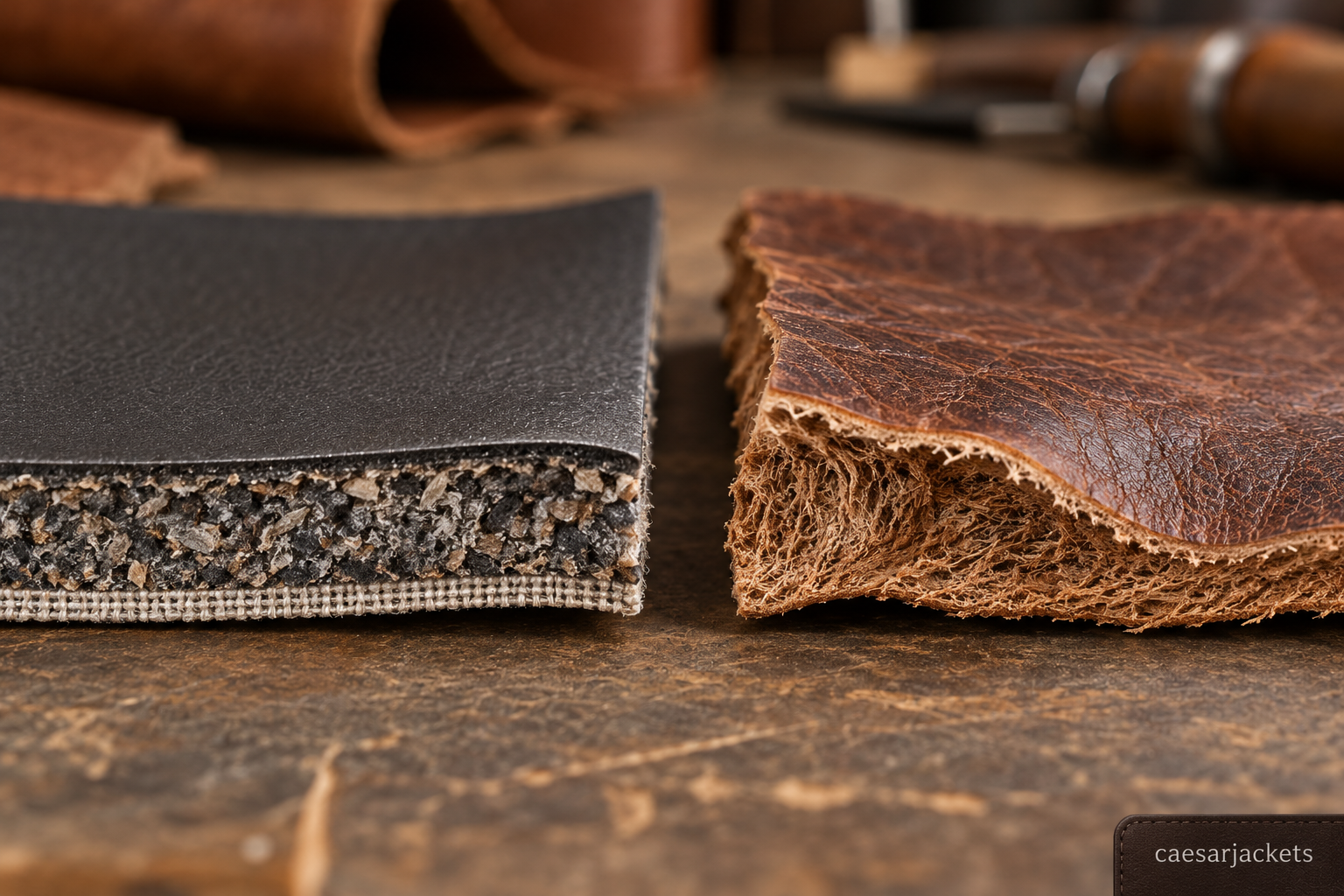
In a bonded leather vs genuine leather comparison, the key difference is how the material is made: bonded leather is formed from leather fibers combined into a sheet, while genuine leather generally refers to material made from an animal hide. But “genuine leather” is not a precise quality grade, so the label alone cannot tell you how durable a jacket will be. Check the shell’s exact composition, construction, finish, and seller disclosures before buying.
Bonded Leather vs Genuine Leather: What Do the Terms Mean?
What bonded leather is made from
Bonded leather, also called reconstituted or composition leather in some contexts, is made by binding leather fibers or small leather remnants into a sheet. The precise recipe can vary. Binders, backing materials, surface coatings, and finishing methods may all affect how the finished material looks and performs.
That means “bonded leather” does not describe one universal recipe or a guaranteed percentage of hide. Ask the seller what the material contains and whether the garment’s outer shell is bonded material, a continuous hide, or a mixture of materials.
What “genuine leather” tells you—and what it does not
“Genuine leather” is commonly used to distinguish animal-hide leather from wholly synthetic alternatives, but it does not identify one specific grade, hide layer, finish, or level of durability. A listing using this phrase should also tell you more: for example, the animal source, whether the leather is full-grain, top-grain, or split leather, and how the surface is finished.
The Leather Naturally terminology guide explains the recognized definition of leather and distinguishes leather from leather-fiber materials. The International Council of Tanners’ guidance on leather descriptions also emphasizes clear material descriptions. Labeling rules can vary by product and market; the U.S. FTC Leather Guides address misleading composition claims for products within their scope.
How Bonded Leather and Genuine Leather Compare
The most useful way to compare bonded leather vs genuine leather is to look at the material structure and the job the garment needs to do—not to assume every item carrying a “genuine” label is high grade.
| What to compare | Bonded leather | Genuine leather |
|---|---|---|
| Material structure | Leather fibers or remnants bound into a sheet; backing and surface layers may be part of the construction. | Material made from an animal hide, but the label alone does not specify grade or hide layer. |
| Wear behavior | Performance depends on the binder, backing, coating, and manufacturing. Surface wear may expose or separate underlying layers. | Varies by hide, grade, finish, thickness, stitching, and use. It may soften and develop wear character, but is not immune to damage. |
| Repair options | Repair can be difficult if a bonded or coated layer separates from its backing. | Some scuffs, seams, and finish issues may be repairable, depending on the damage and leather type. |
| Price and value | Often positioned as a lower-cost material, but compare the garment’s price with its disclosed composition and expected use. | Prices vary widely. “Genuine” by itself is not proof of premium quality or good value. |
| Best buying question | What fibers, binder, backing, and coating make up this material? | What hide and grade are used, and what is the finish on the jacket shell? |
Which Material Makes More Sense for a Leather Jacket?
Jackets flex repeatedly at the elbows, shoulders, cuffs, and front panels. For frequent wear, the material’s construction matters: a bonded sheet may behave differently under repeated bending than a continuous hide, while a genuine-hide jacket can still vary substantially in quality and longevity.
If you want a jacket made from animal hide, look for a clear shell-composition statement and details about hide type and finish. Then compare those details with the practical guidance in our leather selection guide for jackets. For a broader comparison between animal-hide leather and synthetic alternatives, see real leather vs. faux leather.
Do not treat “genuine leather” as a shortcut for “high quality.” A well-made jacket depends on the hide and finish as well as the pattern, seams, lining, hardware, and quality control. If you are comparing jacket options, browse the men’s leather jacket collection and check each product’s specific material description rather than relying on the category name.
How to Check a Leather Listing Before You Buy
- Read the full material breakdown. Look for shell, lining, and trim listed separately. “Leather jacket” in a product title does not establish that every panel is made from the same material.
- Ask what “genuine” means for that product. Request the animal source, grade or hide layer, and surface finish. If the seller cannot provide those details, treat the label as incomplete—not as proof of a particular quality level.
- Ask directly whether any panels are bonded or coated. Request the material composition and backing details. Do not assume a stated percentage applies to all bonded materials.
- Review close-up photos and construction details. Images of edges, seams, and the reverse side can add context, but photographs alone cannot reliably verify composition. Our guide to identifying full-grain leather covers one specific hide grade; it should not be used to infer that every non-full-grain product is bonded.
- Compare the return policy and warranty. Material claims are more useful when the seller explains what is covered if the surface cracks, separates, or differs from the listing.
Avoid destructive checks such as burning, cutting, or applying solvents to a jacket. These can damage the garment and still may not give a dependable answer about its full construction. If you already see peeling or separation, the likely repair options depend on whether the failing layer is leather finish, bonded material, or synthetic coating; see our overview of leather jacket and faux-leather peeling for the related surface-failure issue.
Is Bonded Leather Always Worse Value?
Not necessarily for every use. A lower-priced bonded item may suit someone who wants a particular look for occasional wear and understands the material’s construction. It is a less straightforward choice for a frequently worn jacket if the listing does not explain what the shell is made from or how the material handles repeated flexing.
For a bonded leather vs genuine leather buying decision, compare the upfront price with intended wear, disclosed materials, return terms, and repairability. There is no reliable cost-per-wear calculation without those details—and there is no universal lifespan that applies to every bonded or genuine-leather garment.
FAQ: Bonded Leather vs Genuine Leather
Is bonded leather real leather?
Bonded leather can contain leather fibers, but it is a reconstituted material rather than one continuous hide. Its exact composition varies, so check the product’s material disclosure.
Does “genuine leather” mean high quality?
No. The phrase does not specify a single grade or finish. Ask whether the jacket uses full-grain, top-grain, split leather, or another clearly described material.
Can bonded leather be used for jackets?
It can be used in products marketed as leather-look outerwear, but suitability depends on its composition and construction. For a jacket that will be worn often, ask how the material is built and what the seller covers under its return or warranty policy.
Which should I choose for a jacket?
Choose based on the disclosed shell material, intended frequency of wear, budget, and repair options. If selecting animal-hide leather, compare the specific hide and finish; do not rely on “genuine leather” alone.
Bottom Line
The central difference in bonded leather vs genuine leather is material structure, but the words on a product page are only a starting point. Bonded leather is made from bound leather fibers or remnants; “genuine leather” is not a specific quality grade. For a jacket, verify the shell composition, hide details, finish, construction, and seller terms before deciding whether the price represents good value.