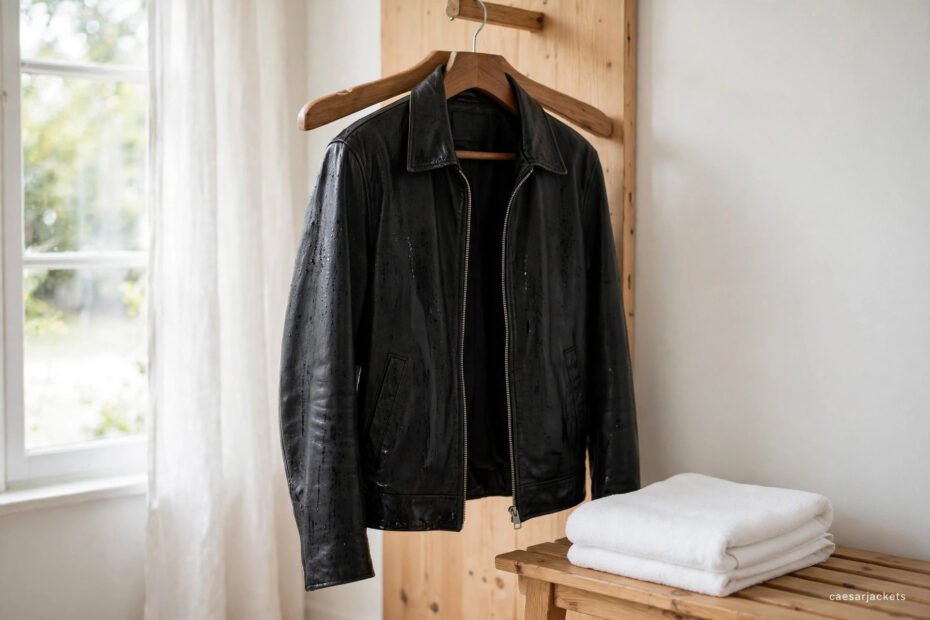
A wet leather jacket is not ruined, but how you dry it decides whether it comes back soft or stiff. The short answer to how to dry a wet leather jacket: blot away the water, reshape the jacket while it is still damp, and let it air-dry naturally at room temperature. Never use a radiator, a hairdryer, or direct sun to speed things up; heat drives the natural oils out of the hide, leaving leather dry, stiff, and crack-prone.
Whether it got caught in the rain, buried in wet snow, or soaked some other way, the same principles apply; the details depend on how wet it is and what it is made of. This guide covers the full routine: judging the soak, blotting and reshaping, air-drying properly, and the care that follows. For how the soaking happens, see our guide to a leather jacket in the rain, and for snow specifically, our guide on wearing a leather jacket in snow.
First, How Wet Is It?
Not every wet jacket needs the same treatment: a damp shell and a saturated lining dry on different timelines.
- Lightly damp. The surface feels cool and slightly darkened, the lining is dry. Blot, hang, and air-dry — the simplest case.
- Soaked shell. The leather is darkened throughout, water no longer beads, and the lining may be damp. Follow the full routine below.
- Saturated. Water runs from the seams, the lining is wet through, and the jacket feels noticeably heavy, for example after a long downpour or a wash gone wrong — follow the full routine, allow a much longer dry, and check the lining carefully. Our guide on can you wash a leather jacket explains why machine washing is a bad idea.
How to Dry a Wet Leather Jacket, Step by Step
Work through these steps in order. Drying time varies with the soak, the lining, the airflow, and the room, so judge by feel, not by the clock.
1. Blot, do not rub. Press a clean, light-coloured, absorbent cloth against the wet areas, working in sections and moving to a dry part of the cloth as it picks up water. For a soaked jacket, lay it flat on a dry towel and press gently; rolling the towel draws out more. Never wring or twist the jacket itself.
2. Empty the pockets and reshape while damp. Take everything out of the pockets, fasten the zips or snaps as normally worn, and smooth the collar, straighten the sleeves, and ease the shoulders back into shape. Lightly fill sleeves and pockets with dry cloth or plain paper to hold the shape. Leather dries in the shape it holds, and creases set during drying are hard to remove later.
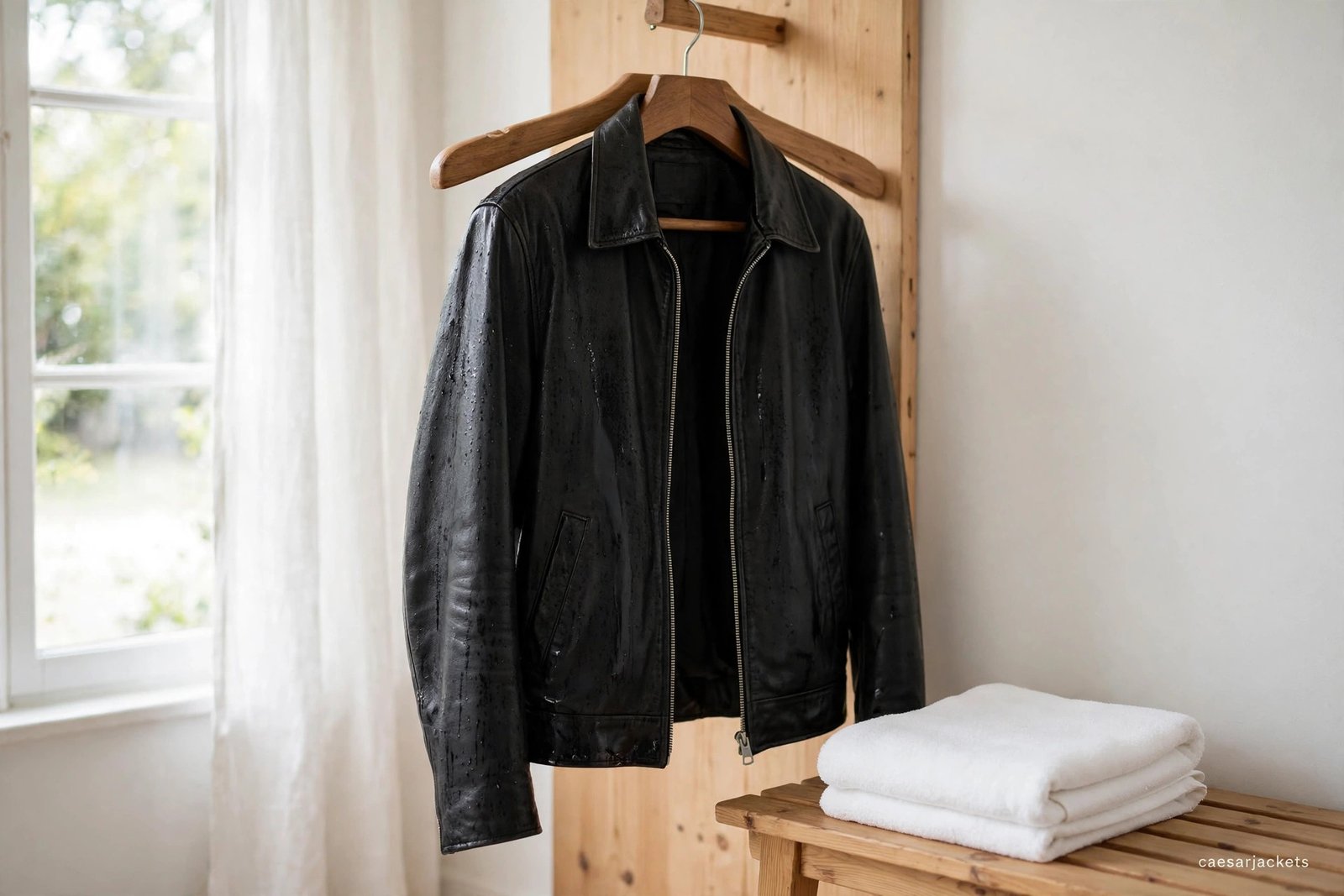
3. Hang it on a broad, supportive hanger. Use a wide wooden or padded hanger; narrow wire hangers dent damp shoulders, and the marks can stay.
4. Set up the air-dry. Choose a cool, shaded, well-ventilated room. An open window or a fan in the room helps; air should circulate, not blow directly on the jacket. Keep it away from radiators, heaters, direct sun, and hairdryers, and out of closed closets and plastic bags. Leather Naturally, an industry body, recommends natural drying for wet leather in its general leather care guidance.
5. Wait, and check before you call it dry. Feel the shell, seams, pockets, and lining; seams and linings dry last, so it is dry only when the lining and pocket interiors feel dry too. Do not wear or store it while any part is still damp.
6. Condition, then store. Once it is fully dry, inspect the jacket, condition it if needed, and store it properly; the checks below say what to look for, and our leather jacket storage tips cover hangers and breathable storage.
What Never to Do When Drying Leather
Most drying damage is not caused by the water but by the shortcut used to remove it. Leather is tanned animal hide, a collagen-fibre material, as Britannica’s guide to hides and leather explains, and that fibre structure is what heat harms.
- Direct heat of any kind. Radiators, heaters, hairdryers, and tumble dryers drive moisture out too fast, carrying the hide’s natural oils with it; fibres contract unevenly, leaving leather stiff and crack-prone. Our guide on how to stop leather from cracking explains the connection.
- Direct sunlight. Sun combines heat with ultraviolet light, fading colour and drying the surface. Choose shade and ventilation, not a sunny windowsill.
- Wringing or twisting. Squeezing water out by force creases and distorts damp leather, softer and weaker than when dry.
- Sealed storage while damp. A closed closet or plastic bag traps moisture against the leather, inviting a musty smell and mould.
- Conditioner on damp leather. Conditioning before the jacket is fully dry traps moisture in the fibres; wait until it is dry, and only if the leather needs it.
Drying Different Leathers
The steps above work for most jackets, but the material changes the risks; check the care label.
| Leather type | Drying notes | What to watch for |
|---|---|---|
| Finished or pigmented smooth leather | Most forgiving; blot and air-dry as above | Seams and worn areas dry at different rates; check before storing |
| Aniline or other absorbent smooth leather | Blot very gently; water marks show more clearly | Ask a professional before conditioning or treating marks |
| Suede or nubuck | Shake off loose water and air-dry; pressing hard flattens the nap | Brush the nap gently once dry; see our guide on whether a suede jacket can get wet |
| Shearling or wool-lined jackets | The lining holds water; allow much longer to dry | Seek professional help after heavy soaking |
| Faux leather (PU-coated) | The coated surface sheds water; blot and air-dry | Check the care label; heat can damage the coating and crack creases |
After It Is Dry: Check, Condition, and Store
Once fully dry, inspect it before it goes back into use. Water marks often fade as drying completes; if they remain, the leather jacket care guide covers cleaning and conditioning. If the leather feels stiff, our guide on how to soften stiff leather explains how to work flexibility back, and if cracking has already started, see how to repair cracked leather before it spreads.
Condition only if the leather feels dry or stiff, using a product suited to that leather and following its instructions, testing on a hidden area first. The jacket’s feel, not a schedule, is the guide.
A musty smell usually means the jacket was stored before it was fully dry. Air it out in a ventilated room and check seams and lining for mould; our guide on how to remove mold from a leather jacket covers the early signs, and established mould is a job for a professional.
Store the jacket only when fully dry, in a cool, dry place with room for air circulation, following our leather jacket storage tips.
When to Get Professional Help
Consult a leather-care professional when:
- It was saturated and remains distorted or stiff after drying.
- Dye transfer, colour change, or staining you cannot identify.
- Mould keeps coming back after cleaning, or the smell persists.
- A shearling or wool lining soaked through.
- A delicate or unknown finish.
Frequently Asked Questions
How long does it take to dry a wet leather jacket?
There is no fixed time; it depends on how soaked the jacket is, whether it is lined, and the airflow and humidity in the room. A lightly damp shell dries far sooner than a soaked, lined one. Judge by feel: it is dry only when the shell, seams, pockets, and lining all feel dry.
Can I use a hairdryer on a leather jacket?
No. A hairdryer is direct heat, and direct heat drives the natural oils out of the hide, leaving leather stiff and crack-prone. Room-temperature air circulation is the only safe way to speed drying.
Can you dry a leather jacket in the sun?
No. Sunlight combines heat with ultraviolet light, fading the colour and drying the surface. Dry it in a cool, shaded, ventilated room instead.
Should I condition a leather jacket after it gets wet?
Only once it is fully dry, and only if the leather feels dry or stiff. Use a conditioner suited to that leather, follow its instructions, and test it on a hidden area first; the leather jacket care guide covers conditioning in more detail.
What if my leather jacket smells musty after drying?
A musty smell usually means the jacket was stored before it was fully dry. Air it out in a ventilated room and check seams and lining for mould; if the smell persists or you find mould, see our guide on how to remove mold from a leather jacket, and consult a professional if it keeps coming back.
Drying is mostly patience: blot, reshape, and let room air do the work. For how it got wet, see our guides to a leather jacket in the rain and wearing a leather jacket in snow.