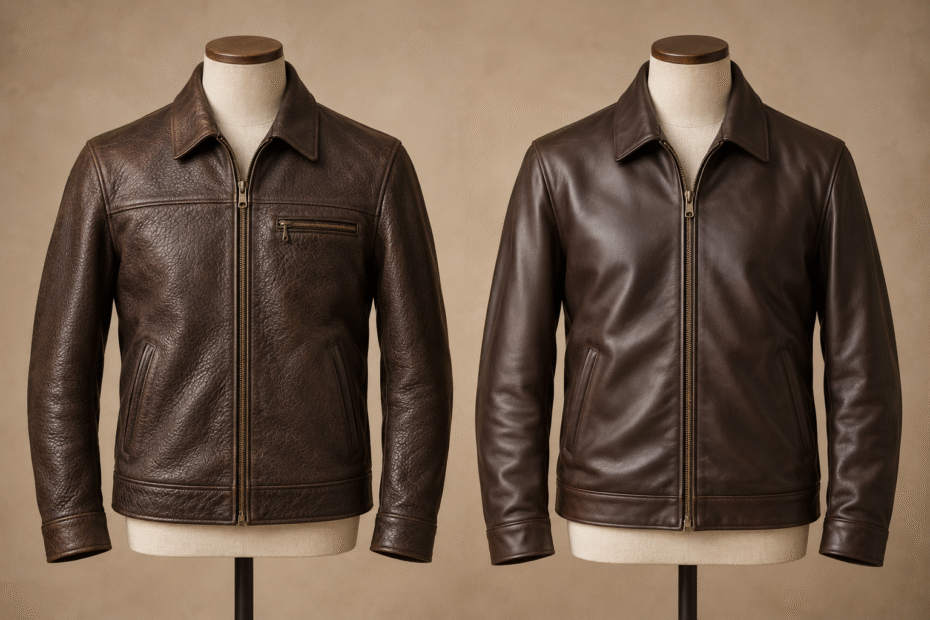
Choosing between goatskin and lambskin often comes down to the feel you want from a jacket. Goatskin usually has a more visible grain, while lambskin is often chosen for its smooth, soft hand. But tanning, thickness, and finish can change how either one feels. This goatskin vs lambskin leather guide explains what to look for, so you can compare the actual jackets rather than rely on the hide name alone.
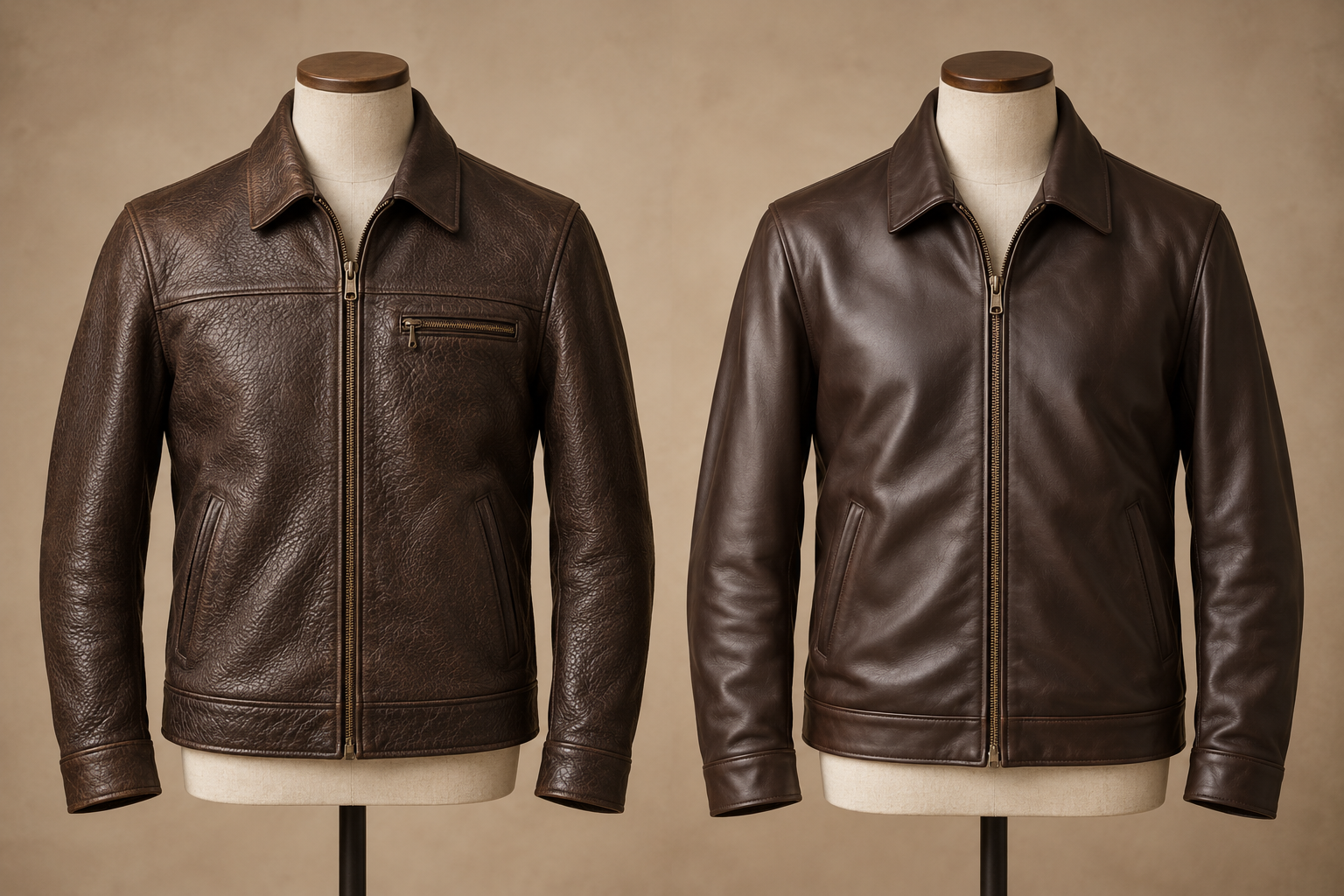
Goatskin vs Lambskin Leather: The Feel and Grain
Goatskin commonly has a small, pebbled grain that gives it a more textured look. It can feel supple while still having some structure. If you like a jacket with visible grain and a little more definition, goatskin may appeal to you.
Lambskin is often valued for its fine grain and soft feel. A well-made lambskin jacket can drape smoothly and feel comfortable early on. That softness can make it a good option for a close-fitting fashion jacket or for someone who prefers less stiffness from the start.
These are common tendencies, not guarantees. The Leather Working Group explains that finishing processes can alter a leather’s appearance and performance. The leather-making process can include changes to thickness, color, texture, and surface finish. That means two jackets made from the same kind of skin may still feel noticeably different.
Which Leather Is More Comfortable for Daily Wear?
Comfort depends on more than softness. A lambskin jacket may feel easy to wear right away, but the cut, lining, seams, and sleeve shape still affect movement. A goatskin jacket may feel more structured, yet be comfortable for long wear if it fits well and the leather is flexible.
When comparing a goatskin vs lambskin leather jacket in person, zip it up and move your arms forward as if reaching for a steering wheel or desk. Check whether the shoulders, elbows, and back feel restrictive. If you plan to wear a sweater underneath, try the jacket over a similar layer. This fit test tells you more about everyday comfort than the hide name by itself.
Durability: What the Hide Name Can and Can’t Tell You
Goatskin is frequently chosen for jackets where a textured, hard-wearing feel is desirable. Lambskin is generally treated as a softer, more delicate option, so it may show scuffs or scratches more readily depending on its thickness and finish. Still, it would be misleading to say every goatskin jacket will outlast every lambskin jacket.
Leather quality, thickness, construction, and use all matter. The leather’s finish also makes a difference: coatings and treatments can change the surface and how it responds to wear. For a useful explanation of how these steps affect leather, see Leather Naturally’s overview of leather manufacturing.
For motorcycle riding, don’t use the skin type as a substitute for protective specifications. Check that the garment is designed and certified for your intended use. A fashion jacket made from goatskin or lambskin does not automatically provide motorcycle protection.
How to Choose Between Goatskin and Lambskin
- Choose goatskin if: you prefer a visible grain and a jacket with a more defined feel.
- Choose lambskin if: you want a smooth look and tend to prioritize softness and drape.
- Compare the finished jacket if: you’re unsure. Read the maker’s description, check close-up photos, and try it on if possible.
Think about how you’ll use the jacket, too. A relaxed weekend jacket and a fitted layer for evenings may call for different weights and cuts. If you’re considering other hides, our guides to goat leather and lambskin leather explain each material in more detail.
Care for Either Leather Gently
Keep the jacket on a broad, sturdy hanger and follow its care label. If it gets wet, let it air-dry away from direct heat. Avoid applying a conditioner or water-repellent product until you’ve checked that it is suitable for that leather and finish. For specific care instructions, see our leather jacket care guide.
There isn’t one universal winner in the goatskin vs lambskin leather comparison. Goatskin may suit you if you like a more pronounced grain and structured feel; lambskin may suit you if softness and smooth drape are higher priorities. Compare the particular jacket’s finish and fit, then choose the one you’ll feel comfortable wearing often.