Choosing a denim jacket vs leather jacket depends on how you plan to wear and care for it—not on a universal claim that one material is better. Denim is a woven cotton fabric; a genuine leather jacket is made from animal hide. Their feel, fit, weather performance, and care needs differ, while the quality of a specific jacket also depends on its construction and finish.
This comparison looks at seven practical differences so you can decide which layer suits your wardrobe, routine, and care preferences.
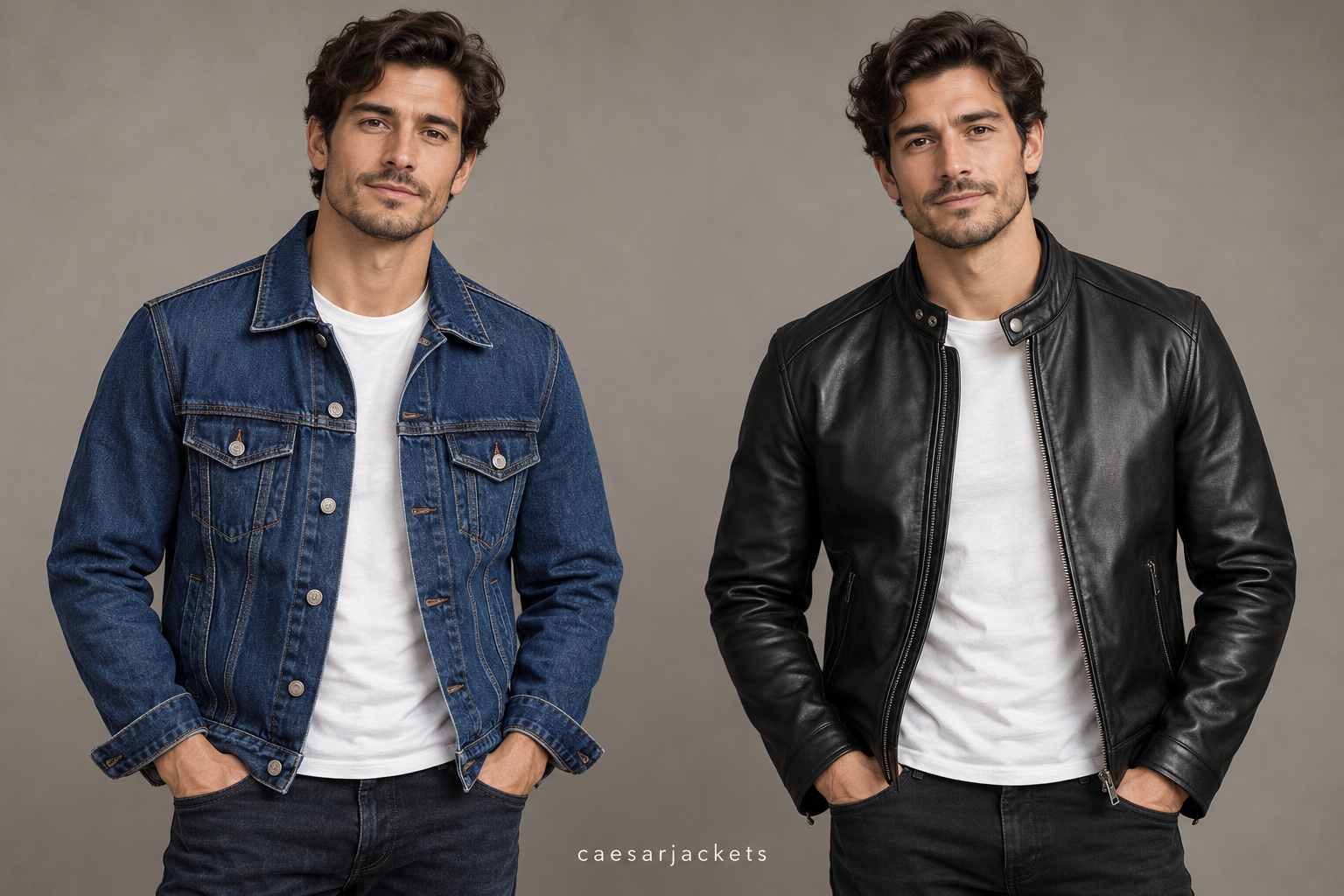
Denim Jacket vs Leather Jacket: At a Glance
| Factor | Denim jacket | Genuine leather jacket |
|---|---|---|
| Material | Cotton denim; weight and finishing vary. | Animal hide; leather type, finish, lining, and construction vary. |
| First feel | May feel soft or stiff depending on weight and whether it was washed. | May feel structured at first; the feel depends on the hide, finish, and lining. |
| Break-in | Regular wear can soften the fabric; washing may also change fit or color. | Wear may help the jacket feel more familiar, but it will not fix a poor fit. |
| Weather use | Warmth depends on fabric weight, lining, and layers. | Warmth depends on lining and construction; leather alone does not guarantee insulation. |
| Care | Follow the garment label; washing can affect shrinkage and color. | Follow the garment’s care instructions; avoid routine machine washing. |
| Style | Relaxed, casual texture that pairs naturally with everyday basics. | A more structured visual layer, with a look that varies by cut and finish. |
| Best first check | Check the fit, fabric details, and wash instructions. | Check the material description, measurements, lining, and care instructions. |
1. Material and Feel
Denim is cotton twill, and jackets can use different weights, washes, and finishes. A prewashed denim jacket may feel comfortable from the start, while heavier or less-washed denim can feel rigid. Some product listings include fabric weight; many do not. Do not assume all denim jackets have the same stiffness or break-in time.
Leather is also not one uniform material. The type of hide, surface finish, tanning, lining, and pattern all affect how a jacket feels. Read the product description rather than assuming that every leather jacket will be heavy, stiff, or warmer than denim.
2. Break-In and Fit
For a denim jacket, ordinary wear can gradually soften areas that move with your body. Start with comfortable periods of wear and check the care label before washing or soaking. If you want a step-by-step routine, read how to break in a denim jacket.
A new leather jacket may also feel structured, but it should not be uncomfortably tight in the shoulders or chest. Wear can soften the material, but it is not a substitute for choosing the right size. Check shoulder alignment, sleeve length, and movement before buying. Our leather jacket fit guide explains the main fit checks, and the leather jacket break-in guide covers leather-specific advice.
The denim jacket vs leather jacket decision should therefore start with fit, not an assumption that one material will stretch or mold to any body shape.
3. Washing, Shrinkage, and Care
Denim care depends on the garment’s fabric and finishing. Washing may soften some jackets, but it can also affect color and dimensions. “Shrink-to-fit” is a product-specific label, not a rule for every raw denim garment or denim jacket. Levi’s describes its Shrink-to-Fit jeans as unpreshrunk denim and provides care instructions for those jeans; do not transfer their sizing or soaking directions to a jacket unless its maker gives the same instructions. See Levi’s official shrinkage and Shrink-to-Fit information.
Leather requires different care. Do not put a leather jacket in a washing machine or use denim break-in methods on it. Check the care label or ask the retailer for product-specific guidance. Leather Naturally advises testing care products on a small, inconspicuous area and letting wet leather dry naturally; see its guide to caring for leather. For a site-specific overview, read our leather jacket care guide.
4. Warmth and Weather
Neither material guarantees warmth on its own. A lined denim jacket may be warmer than an unlined leather jacket, while an insulated leather style may be designed for cooler weather. Check the lining, construction, and product specifications, then consider what you will wear underneath.
Neither material should automatically be treated as waterproof. Finishes and care products may affect how a garment handles light moisture, but follow the manufacturer’s instructions and avoid exposing a jacket to conditions it is not designed for.
5. Style and Everyday Use
Denim is an easy casual layer over T-shirts, shirts, and light knitwear. Different washes can make it feel more understated or more rugged. For outfit ideas, see our guide to how to wear a denim jacket.
A leather jacket can also be casual, but the cut and finish change the overall effect: a clean, minimal style looks different from a biker jacket with prominent hardware. Browse men’s leather jacket styles to compare silhouettes, or explore the men’s leather jacket collection. Check each product’s material and lining rather than relying on the category name alone.
6. Durability, Repair, and Cost
There is no dependable material-only answer to which jacket will last longer. Fabric weight, seam construction, hardware, finish, frequency of wear, and care all matter. Denim can be patched or altered by a clothing repair shop; leather may also be repairable, but repairs can require a specialist and may cost more. Compare the specific garment’s construction and the likely care or repair needs before making a purchase.
Price is similarly product-specific. A higher price does not by itself prove a better fit or longer service life. Compare the material description, construction details, measurements, return policy, and care requirements.
7. Which One Should You Choose?
- Choose denim if you want a casual cotton layer, prefer simpler home-care options where the label permits them, and like a fabric that can develop visible wear over time.
- Choose leather if you prefer its structured look and are comfortable following material-specific care instructions and checking the product’s lining and fit.
- Compare both if your priority is versatility. Consider your climate, what you already own, how often you will wear the jacket, and whether you are willing to maintain it.
The right denim jacket vs leather jacket choice is the one that fits your actual routine. If you are unsure, try both styles over the layers you expect to wear and compare comfort, movement, and care requirements—not just appearance.
Frequently Asked Questions
Which is warmer, a denim jacket or a leather jacket?
It depends on the garment. Lining, insulation, fabric weight, and layering matter more than the material name alone. Check the product specifications for the specific jacket.
Does a leather jacket last longer than a denim jacket?
Not automatically. Longevity depends on construction, use, storage, care, and whether the garment can be repaired. Compare the specific products rather than treating material as a guarantee.
Can I wash a denim jacket to make it softer?
Only if its care label permits washing. Washing can change color or fit, and the result varies by fabric and finishing. Follow the maker’s instructions instead of using a universal soak method.
Can I use denim break-in methods on a leather jacket?
No. Do not apply denim washing, soaking, or dryer advice to leather. Use the leather garment’s care instructions and a leather-specific guide.
Make the Comparison Product-Specific
A useful denim jacket vs leather jacket comparison comes down to the actual garments: their fit, fabric or hide, lining, construction, care instructions, and how you plan to wear them. Denim offers a casual cotton option; leather offers a different look and different care responsibilities. Compare those details before choosing, and use the product information—not broad material claims—to make the final call.