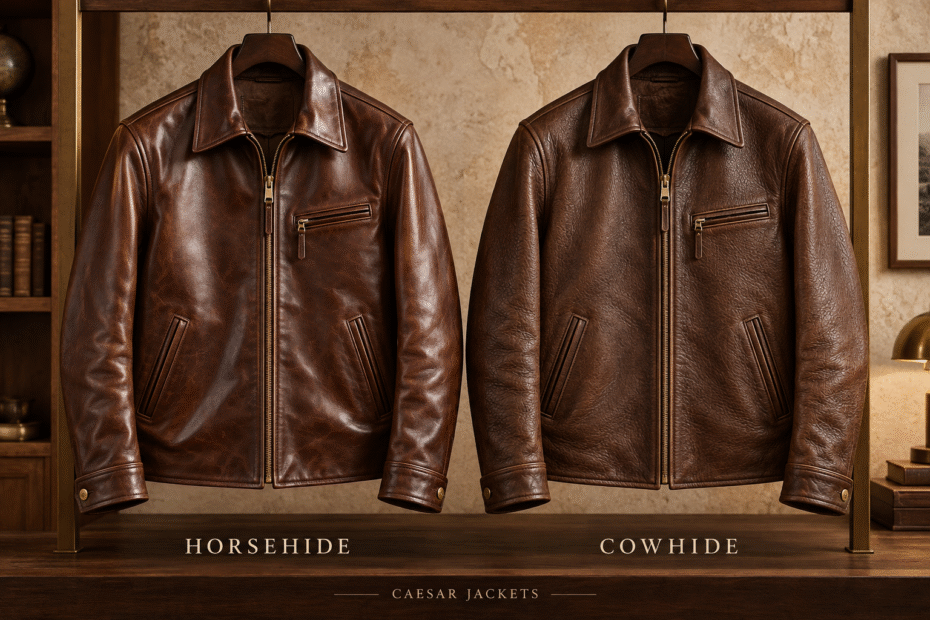
A horsehide vs cowhide jacket comparison can sound like a simple choice between two types of leather. In practice, the hide is only part of the story. Tanning, thickness, finish, lining, and the way a jacket is constructed all affect how it feels and wears. Here’s what to compare so you can choose a jacket that suits your habits instead of relying on a blanket claim about one hide being better.
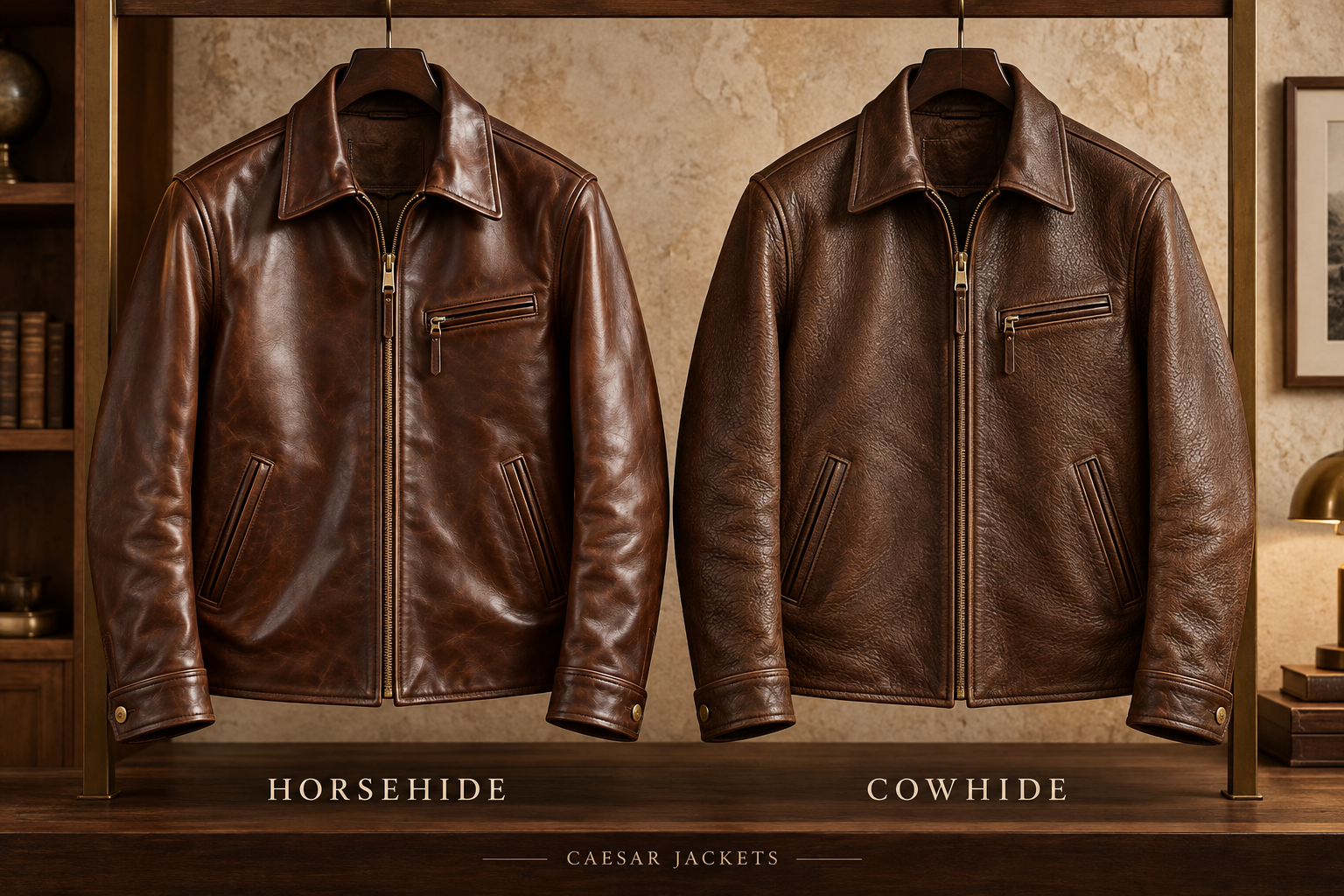
Horsehide vs Cowhide Jacket: What You’ll Notice First
The most noticeable difference may be the jacket’s feel when it’s new. Some makers describe their horsehide as firm at first, with a longer break-in period. For example, one maker’s horsehide jacket description says its leather starts with less give and softens with wear. That’s useful information about that particular leather and jacket, but it doesn’t establish a rule for every horsehide.
Cowhide varies just as much. It can feel supple straight away or substantial and structured, depending on how it was tanned, treated, and finished. In a horsehide vs cowhide jacket comparison, look for the maker’s description of the specific leather, rather than assuming the animal alone tells you how soft or stiff the jacket will be.
How Tanning and Finish Change the Feel
Two jackets made from the same kind of hide can feel quite different. Thickness, oils, waxes, dyes, surface coatings, and other finishing choices can change the leather’s hand and appearance. The Leather Working Group’s guide to leather industry terms explains terms such as full grain and finished leather. Those terms describe aspects of the leather; they don’t by themselves tell you whether a jacket will be soft, heavy, or easy to break in.
Horsehide also comes in different forms. Aero Leather’s range of horsehide options, for example, includes leathers with different names and characteristics. That variety is a good reminder to compare the actual hide and finish specified for a jacket—not just the word “horsehide” on a product page.
Weight, Durability, and Everyday Comfort
Don’t assume a horsehide jacket will always be lighter, heavier, or more durable than a cowhide one. The finished jacket’s weight depends on details such as leather thickness, lining, hardware, and design. If weight matters to you, ask for the garment’s listed weight or try it on. If durability is your priority, check what the maker says about the particular leather, seams, hardware, and care requirements.
Comfort also depends on how you plan to wear it. Try the jacket zipped over the layers you expect to use, then reach forward, bend your arms, and sit down. A jacket that feels impressive on a hanger may be less comfortable for commuting or long days out if its shoulders or sleeves restrict movement.
Patina and the Way a Jacket Ages
Both horsehide and cowhide can develop character with wear, but the result depends heavily on the leather’s surface and finish. A coating may keep the color more uniform, while other finishes can show changes from creasing, rubbing, and exposure more clearly. Natural markings vary from hide to hide, too.
If a particular look matters to you, ask the seller for close-up photos of the exact leather and examples of how that finish changes over time. A horsehide vs cowhide jacket label alone can’t predict the final patina.
Which Jacket Makes More Sense for You?
Horsehide may suit you if you like a firmer, more structured feel and don’t mind a gradual break-in. Check the product details, since horsehide options differ in finish and feel.
Cowhide may suit you if you want a broad range of jacket styles and leather finishes to compare. Some cowhide jackets feel comfortable early on, while others are deliberately thick and structured. Read the product description and, where possible, try the jacket before buying.
Either can be a good choice. In a horsehide vs cowhide jacket decision, your preferred feel, fit, finish, and intended use matter more than picking a supposed universal winner. If you’re still weighing up styles, use our guide to choosing a leather jacket to narrow down the cut and details that fit your routine.
What to Check Before You Buy
- Leather details: Look for the hide type, thickness if provided, tanning method, and finish.
- Break-in expectations: Check whether the maker describes the leather as soft, firm, waxed, or structured.
- Fit over layers: Test the jacket zipped over the clothes you’ll actually wear beneath it.
- Care instructions: Follow the label and maker’s guidance; don’t apply conditioners or treatments without checking compatibility.
- Use case: For motorcycle riding, check for appropriate protective features and certification. Hide type alone doesn’t establish riding protection.
The best horsehide vs cowhide jacket is the one whose specific leather and construction match how you want it to feel and wear. Compare the product details, check the fit, and explore how cowhide compares with buffalo leather if you’re considering other options.