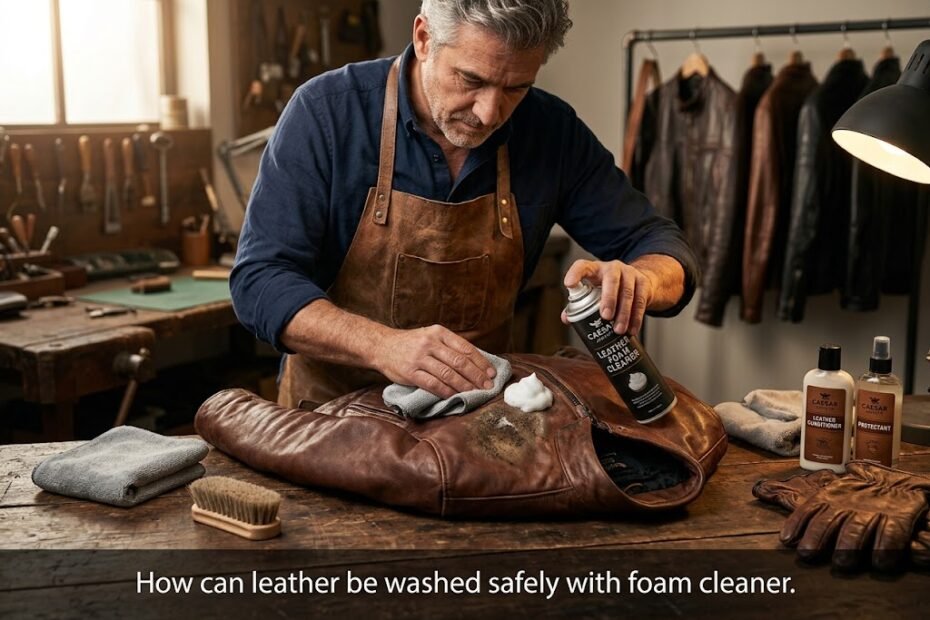
Accidents happen to the finest garments. Whether you spilled morning espresso across your favorite bomber, picked up road grime during a weekend motorcycle ride, or discovered lingering odors on vintage outerwear, the urge to clean your garment thoroughly is natural. If you are standing in front of your laundry machine holding a stained hide, you are likely asking a high-stakes question: can leather be washed like normal clothing, or will water and detergent permanently destroy your investment?
The definitive answer from leather artisans and textile chemists is clear: traditional submersion washing is the fastest way to ruin genuine leather, but leather can be safely cleaned, refreshed, and sanitized using proper hand-treatment protocols.
Genuine hides are biological structures rich in natural tanning oils. Exposing them to turbulent water cycles strips these essential compounds, leaving the hide stiff, brittle, and distorted. In this comprehensive, 1,500-word masterclass, we examine the material science behind moisture interaction, explain why machine washing fails, and provide actionable, step-by-step cleaning methods to ensure your investment piece leather jacket lasts for generations.
I. The Material Science: What Happens When Leather Meets Water?
To truly grasp whether can leather be washed safely, you must understand the biochemical structure of animal skins. Authentic leather is not a woven textile like cotton or polyester; it is a complex, porous matrix of animal protein fibers treated with specialized tanning oils, waxes, and conditioning agents.
According to material standards tracked by the Leather Working Group (LWG), tanning agents bind directly to collagen bundles within the hide to prevent putrefaction and maintain flexibility. When a garment is submerged in water:
Emulsification of Tanning Oils: Water molecules penetrate the porous hide, binding with the tanning oils. As the water evaporates during drying, it pulls these vital oils out through capillary action.
Collagen Fiber Stiffening: Deprived of lubricating oils, the internal protein fibers cross-link and lock tightly together, transforming buttery-soft leather into cardboard-like, brittle sheets.
Hydrothermal Shrinkage: High water temperatures cause the collagen triple helix to collapse, resulting in irreversible shrinkage and warping along the seams.
Understanding this biological mechanism is why textile conservators at the American Leather Chemists Association (ALCA) strongly advise against standard laundering.
II. The Machine Wash Trap: Why Laundry Appliances Destroy Hides
If you search online forums, you will find occasional claims that can leather be washed in a washing machine on a gentle cycle. Treating genuine hide like cotton in an appliance triggers four irreversible failure points:
Mechanical Agitation (Frictional Tearing): The spinning drum causes panels to twist against metal baffles, abrading the delicate grain and causing micro-tears across high-stress points like shoulders and elbows.
Detergent pH Rupture: Standard laundry detergents are alkaline (pH 8–10) designed to dissolve organic fats and proteins. When applied to leather (which thrives at a slightly acidic pH of 4.5–5.5), alkaline detergents dissolve the protective finish, causing instant discoloration and dullness.
Hardware and Lining Delamination: Heavy water immersion weakens the interior glues bonding the leather jacket lining to the exterior panels, while soaking the teeth of heavy-duty ykk vs sbs zippers and metal snaps.
Uneven Evaporation: Thick cowhide or delicate lambskin dries at different rates across seams, leading to puckering, curling edges, and structural distortion.
III. 4 Safe Methods to Clean Leather Without Submersion
Rather than risking total structural failure in a washing machine, use these proven, non-destructive cleaning methods to address specific types of dirt and odors.
Method 1: The pH-Balanced Saddle Soap Surface Clean
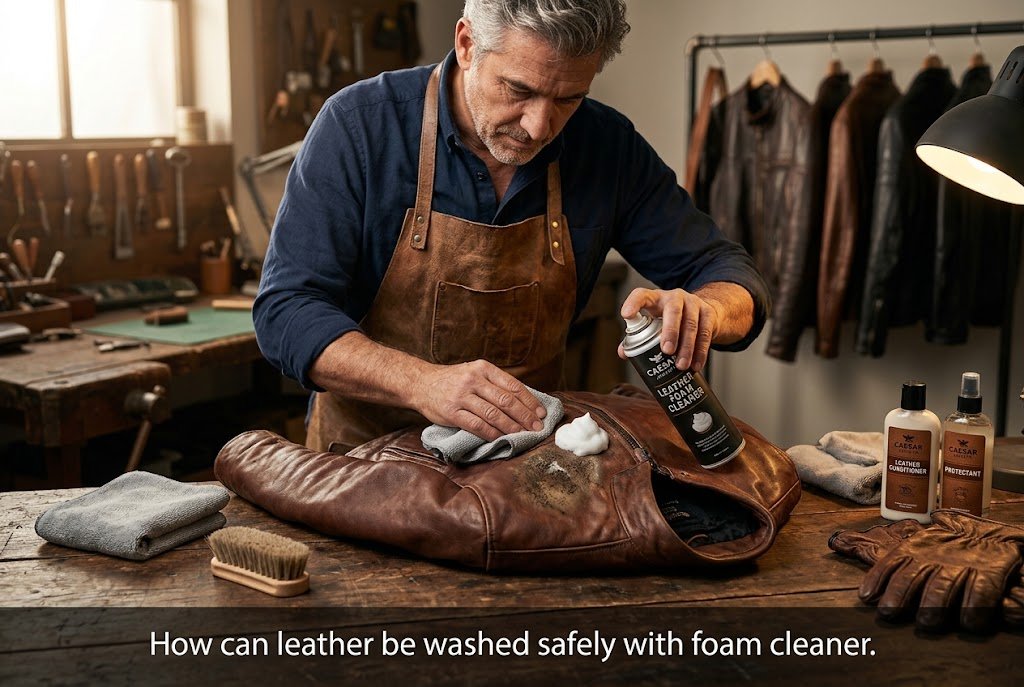
For general surface grime, dust, and light oil stains, a damp wipe using pH-balanced saddle soap or dedicated leather foam is the gold standard.
Preparation: Dampen a clean, lint-free microfiber cloth with lukewarm distilled water. Squeeze out all excess moisture until the cloth is barely damp.
Foam Generation: Work a tiny amount of leather soap into the cloth until a rich, low-moisture foam develops.
Gentle Application: Wipe the leather panels using light circular motions. Never scrub aggressively, as this can wear down the top pigment layer.
Residue Removal: Take a second, clean damp cloth to wipe away the soapy foam, then immediately buff dry with a soft towel.
Rehydration: Always follow up with a light coat of conditioner to prevent the hide from drying out, following our guide on how to stop leather from cracking.
Method 2: Spot-Cleaning Deep Grease and Food Stains
Grease and oil spills cannot be lifted with water; adding moisture will only spread the stain deeper into the dermis.
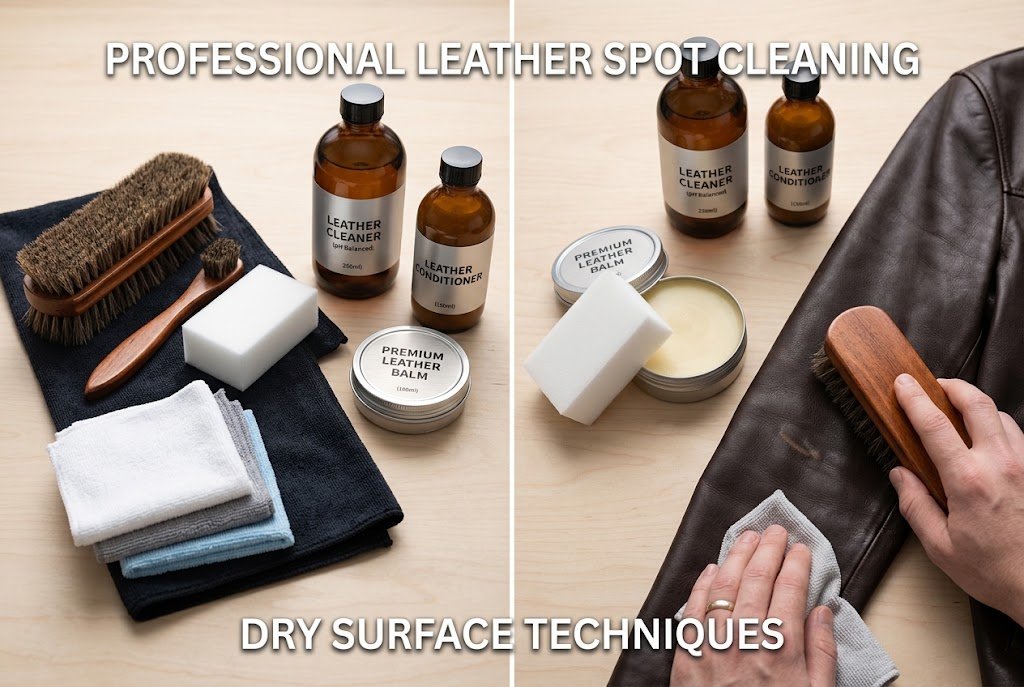
The Cornstarch/Talc Protocol: Dust the grease spot immediately with food-grade cornstarch or talcum powder. Let the powder sit for 8 to 12 hours. The fine particles draw the oil out of the pores through capillary attraction. Gently brush the powder away with a soft horsehair brush.
Stubborn Marks: For sticky residue or light scuffs, review our proven solutions on how to clean a leather jacket and how to remove scratches from leather jacket surfaces safely.
Method 3: Sanitizing and Deodorizing the Interior Lining
Often, what people actually want to wash is not the leather shell, but the sweaty interior lining. You can sanitize the lining without wetting the leather exterior:
Turn the jacket completely inside out over a contoured hanger.
Mix a solution of 1 part distilled white vinegar and 2 parts distilled water in a fine-mist spray bottle.
Lightly mist the fabric lining around the armpits and collar (avoiding direct overspray onto the leather). Vinegar neutralizes odor-causing bacteria naturally without leaving harsh residues.
Hang the jacket in a well-ventilated room with circulating air to dry thoroughly. For deeper odor issues, consult our detailed walkthrough on how to get rid of leather smell.
Method 4: Professional Leather Dry Cleaning
When dealing with heavy ink stains, mold blooms, or full garment contamination, home remedies reach their limit. Commercial laundry dry-cleaners use perchlorethylene, which strips leather oils instantly. Seek out an expert leather dry cleaner who uses specialized silicone or hydrocarbon solvents that cleanse biological fibers while simultaneously re-injecting fatliquors.
IV. Material Matrix: Water Tolerance Across Leather Types
Not all hides react to moisture in the same manner. Your cleaning strategy must match the specific animal hide and tanning method:
| Leather Category | Water Sensitivity | Can It Be Wiped With Water? | Primary Care Method |
| Lambskin / Sheepskin | Extremely High | Damp cloth only; zero friction | Dedicated spray foam & immediate dry buffering on what is lambskin leather |
| Heavy Cowhide / Steerhide | Moderate | Yes, handles light damp cleaning well | Saddle soap wipe + deep conditioning on what is cowhide leather |
| Suede / Nubuck (Split Hide) | Very High | No — Water creates dark water rings | Suede eraser + brass/crepe brush dry restoration |
| Distressed / Pull-Up Leather | Moderate | Yes, absorbs water but re-conditions well | Wax-infused conditioners on what is distressed leather |
| Synthetic Faux (PU/PVC) | Low | Yes, water-resistant exterior | Mild soapy water wipe-down on non-porous surfaces |
V. Post-Cleaning Recovery: Reconditioning and Softening
If your jacket was accidentally soaked in a rainstorm or subjected to improper washing, prompt restoration is essential to save the hide from permanent stiffening.
Accidental Water Exposure ──► Gentle Towel Blotting ──► Wide Wooden Hanger ──► 24-48h Ambient Air Drying
 ──► Leather Conditioner Application
Never Apply Direct Heat: Do not use blow-dryers, clothes dryers, or radiators. Rapid artificial drying bakes the protein chains, causing irreversible hardening.
Structural Support: Support wet garments with a wide, contoured wooden hanger to prevent shoulder sagging, as detailed in our guide to leather jacket storage tips.
Replenish Lost Lipids: Once completely air-dried, apply a lanolin- or beeswax-based leather balm in thin, even layers. If the hide feels rigid after drying, follow our proven steps on how to soften stiff leather and learn how to break in a leather jacket to restore its original suppleness.
Long-Term Care: Establish a bi-annual conditioning routine outlined in our leather jacket care master plan to keep the dermal fibers pliable.
VI. FAQ: Critical Leather Washing Questions
Can you wash faux leather in a washing machine?
While synthetic PU and PVC plastics repel water better than real hides, machine agitation often causes the adhesive backing to delaminate, triggering severe leather jacket peeling. Hand wiping with a damp soapy cloth remains the safest method for synthetics.
What happens if genuine leather gets completely soaked in heavy rain?
Getting wet in rain will not ruin your jacket if you dry it properly. Blot off surface moisture immediately with a dry towel and let the jacket air-dry away from sunlight and heaters. Learn more in our dedicated guide on how to clean leather jackets after weather exposure.
How do I clean sweat stains off a motorcycle riding jacket?
For heavy riding gear like mens motorcycle jackets or specialized motorcycle leather jackets, clean the exterior leather with saddle soap and disinfect the inner armor pockets and mesh lining with antibacterial fabric foam.
VII. Conclusion: Preservation Over Laundering
In summary, can leather be washed? While submersing genuine leather in water or running it through a washing machine causes severe fiber damage, regular surface cleaning with dedicated, pH-neutral formulas keeps your outerwear in pristine condition for decades.
At Caesar Jackets, we build our outerwear from authentic, premium hides engineered for durability and character. Whether you are investing in rugged mens leather jackets, exploring versatile mens casual jackets, or looking for iconic silhouettes like mens bomber jackets and mens classic jackets, our jackets are crafted to age gracefully with minimal, proper maintenance.
Explore our full range of designs—from classic black leather jackets and rich brown leather jackets to tailored womens leather jackets—and discover the enduring value of authentic artisan leather.