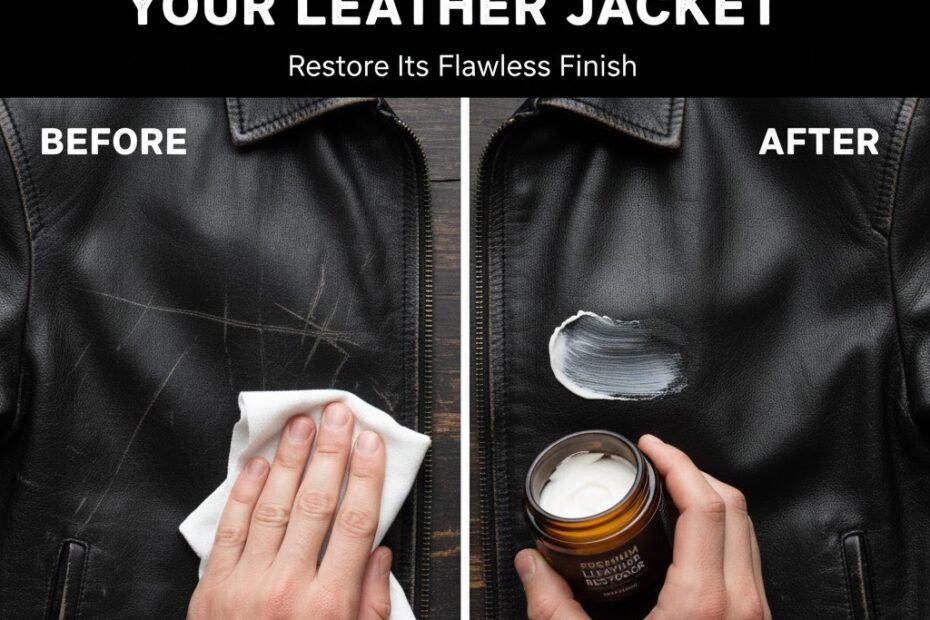
If you’re trying to remove scratches from leather jacket surfaces and bring your favorite piece back to life, you’re definitely not alone. Scratches, scuffs, water spots, oil stains, denim dye transfer—you name it—are extremely common. The good news? You can fix most of them at home without damaging the leather or paying for professional restoration.
This guide breaks down the 10 most effective methods to repair surface scratches, treat deep scuffs, clean stains, and protect your jacket from future damage. It also includes helpful internal resources like how to clean a leather jacket and how to repair cracked leather, along with a few expert external references. Whether you’re dealing with lambskin, sheepskin, cowhide, or vintage leather, this guide has you covered.
This guide walks you through step-by-step methods for fixing surface scratches, deeper scuffs, discoloration, oil stains, and more. You’ll also find internal resources—including how to fix cracked leather and how to safely clean your jacket—to help you keep your leather looking brand new.
Why Leather Jackets Are Sensitive to Scratches and Stains
Leather is durable, but it’s still a natural material. That means it reacts to friction, oils, moisture, and dyes. Lambskin and sheepskin scratch more easily than cowhide because they’re softer. Even premium full-grain leather can pick up marks from zippers, bags, pets, or simply brushing against rough surfaces. Understanding your leather type helps you decide which method is safest when you want to remove scratches from leather jacket surfaces.
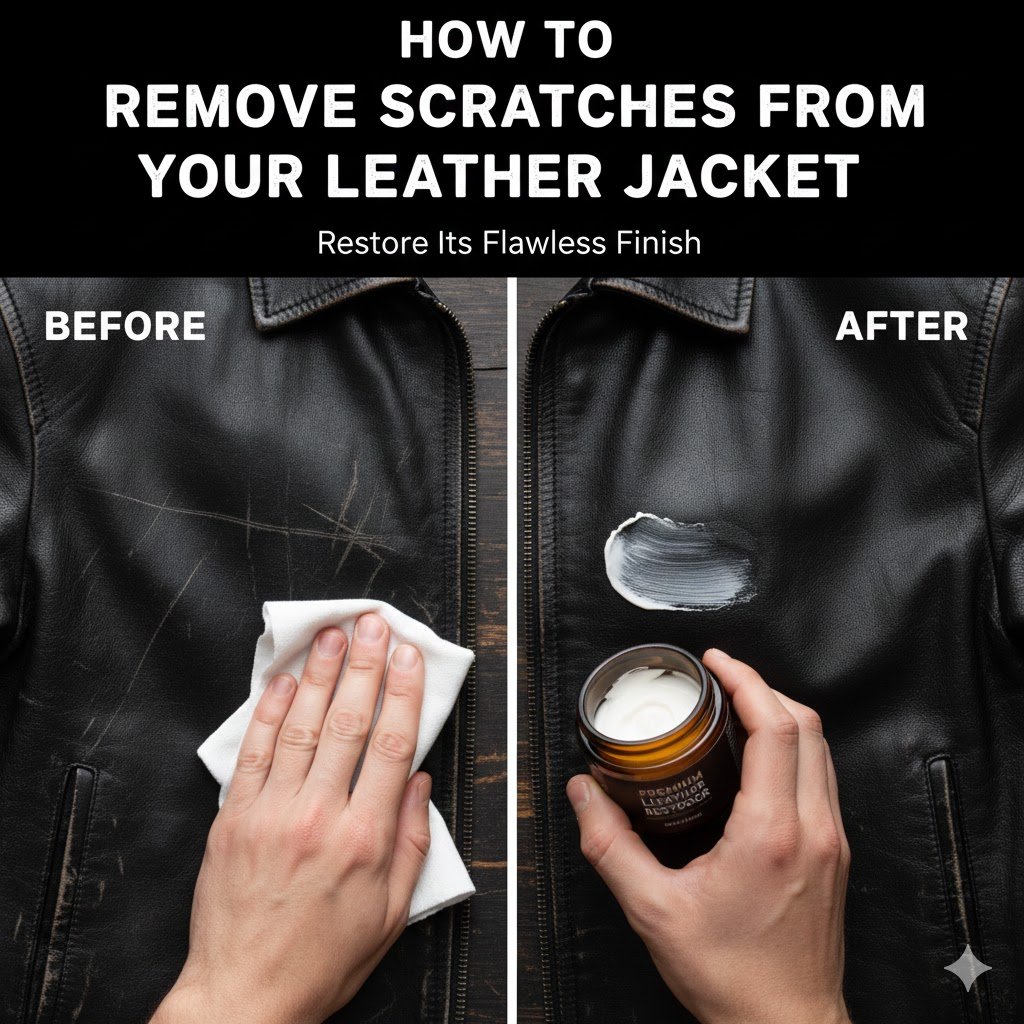
How to Remove Surface Scratches from a Leather Jacket
Minor scratches are often just disrupted fibers lying in the wrong direction. These simple methods usually fix them within minutes.
1. Buffing with Your Fingers (Yes, It Works)
Your natural body oils help rehydrate the leather. Gently rub the scratch in small circular motions for 30–60 seconds. This works best on fresh, light surface scratches.
2. Using Leather Conditioner
Apply a pea-sized amount of conditioner to a microfiber cloth and buff gently. This blends the fibers, adds moisture, and instantly reduces scratch visibility.
If your jacket hasn’t been cleaned in a while, pair this with a proper cleaning routine using this internal guide on how to clean a leather jacket.
3. Applying a Small Amount of Oil (Olive Oil or Jojoba)
For softer leathers—especially lambskin—one drop of oil can help remove scratches from leather jacket surfaces naturally. Don’t overuse it, or the leather may darken. Dab lightly and buff until the scratch blends in.
How to Fix Deep Scratches and Scuffs
Deeper scratches need more than conditioning. These methods work well for scuffs caused by buckles, pets, furniture edges, or accidental scrapes.
1. Leather Repair Cream
Choose a repair cream that matches your jacket’s color. Spread a thin coat over the scratch, let it dry, then buff it. This fills the scratch and creates a smooth, blended finish.
2. Using Heat to Relax the Fibers
Set a hairdryer to low heat and warm the area from 6–8 inches away. The warmth opens leather pores, allowing scratches to blend when gently massaged. Always condition afterward.
3. Professional Repair (When to Consider It)
If you see exposed suede-like fibers or a gouge, it may be time to visit a leather repair shop. They can recolor and refill damaged sections using professional tools. You can compare your damage using resources like the Leather material reference on Wikipedia.
How to Remove Stains from Leather Jackets
Scratches are one thing—but stains are another headache. From water spots to oil stains, the wrong cleaning method can make things worse. Fortunately, many stains can be treated safely at home.
1. Water Stains
Lightly dampen (don’t soak!) the entire panel around the water mark. This evens out the moisture so the stain disappears when it dries. Always finish with conditioner.
2. Ink Stains
Ink is tricky, but rubbing alcohol helps lift it. Dab gently with a cotton swab—never rub hard. For large ink stains, follow expert care guides like the stain-removal techniques found on The Spruce.
3. Oil and Grease Stains
Sprinkle talcum powder or cornstarch on the area and let it sit overnight. It absorbs oils without damaging the leather. Brush off the powder the next morning and apply conditioner.
4. Dye Transfer from Clothes
Leather-safe cleaners work best here. Avoid alcohol because it can strip color. If dye transfer has caused cracking or dryness, check this internal resource on how to repair cracked leather to restore moisture and flexibility.
Preventing Scratches and Stains (The Real Long-Term Fix)
If you want to reduce how often you need to remove scratches from leather jacket surfaces, preventive care is your best friend.
- Use a leather conditioner every 2–3 months.
- Store your jacket on a padded hanger.
- Avoid wearing bags with metal hardware that rub against the leather.
- Keep your jacket away from direct sunlight.
- Use a leather protector spray before traveling.
With proper care, even delicate lambskin stays smooth, soft, and scratch-free for years.
When DIY Isn’t Enough
If your leather jacket has deep cuts, major discoloration, or severe cracking, DIY methods may cause more damage. A professional can recolor, recondition, and refinish the surface correctly.
But for everyday scuffs, surface marks, and light stains, these steps will help you remove scratches from leather jacket materials quickly and safely—and keep your jacket looking incredible for the long haul.
Final Thoughts
Your leather jacket deserves some TLC. Whether you’re restoring a vintage piece or maintaining your everyday favorite, understanding how to fix scratches and stains makes a huge difference. With the right care routine and the techniques above, you can restore shine, smoothness, and color—without replacing your jacket or paying for expensive repairs.