Choosing between lambskin vs sheepskin leather can be tricky for fashion enthusiasts. Both types of leather offer softness and durability, but understanding their characteristics, uses, and care requirements is essential to make the right choice. Whether you’re investing in a jacket, bag, or shoes, knowing the differences can save you money and ensure long-lasting quality.
In this guide, we’ll explore lambskin vs sheepskin leather, including texture, strength, and ideal applications, with expert tips from leather specialists.
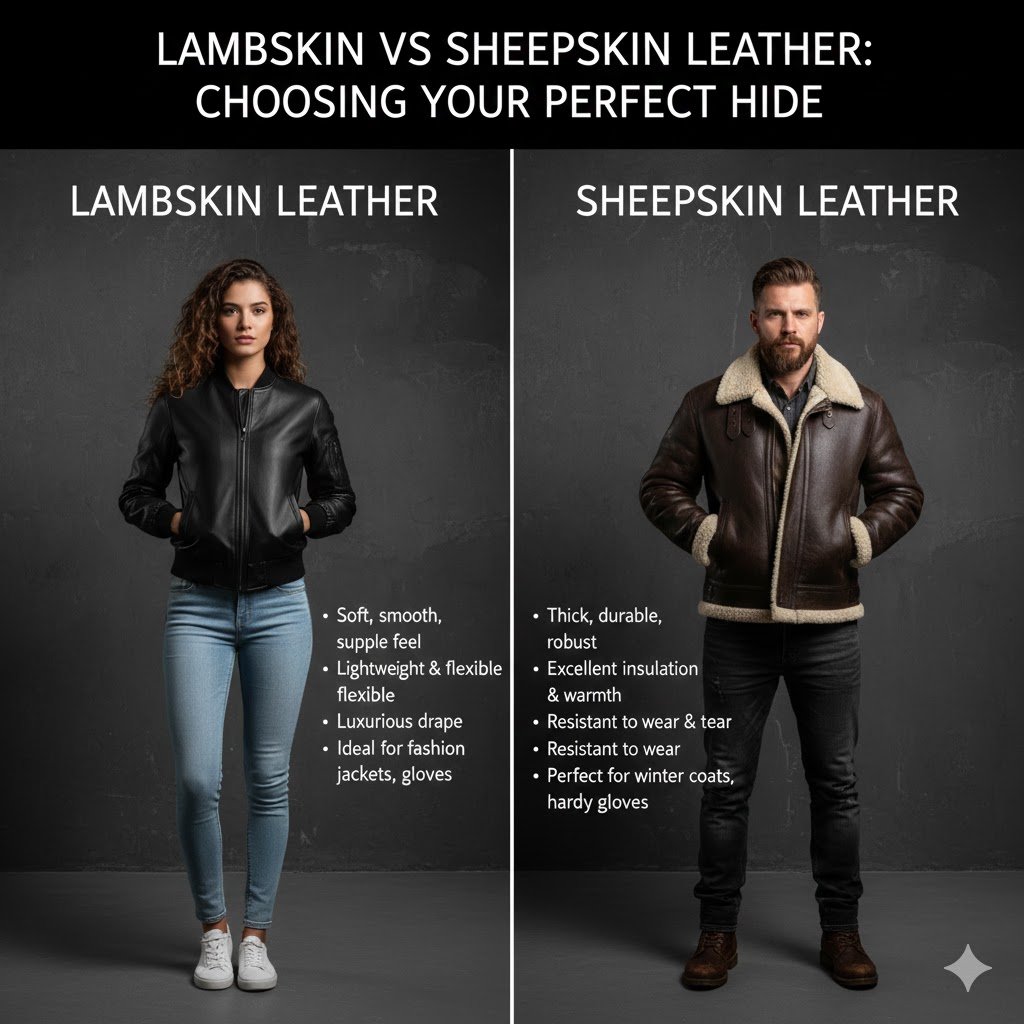
What is Lambskin Leather?
Lambskin leather comes from young lambs, making it extremely soft, smooth, and supple. Its natural grain is fine, giving garments and accessories a luxurious feel. Key properties include:
Lightweight yet durable
Soft to the touch, ideal for jackets and high-fashion bags
Prone to scratching and requires regular conditioning
For detailed care instructions, see this leather jacket care guide.
Typical Uses of Lambskin Leather
High-end leather jackets (men’s leather jacket collection)
Luxury handbags (leather bags category)
Fashion-forward gloves and accessories
Authorities like Leatherology note that lambskin is prized for its soft feel and luxurious appearance.
What is Sheepskin Leather?
Sheepskin leather is derived from mature sheep, offering a slightly thicker and more robust texture than lambskin. Its properties include:
Naturally insulating due to wool or fleece lining
Softer than cowhide but more durable than lambskin
Less prone to scratching, suitable for outerwear and winter wear
Learn more about sheepskin uses in this sheepskin vs cowhide jacket guide.
Typical Uses of Sheepskin Leather
Winter jackets and coats (men’s winter jackets)
Footwear and boots (leather shoes collection)
Lined gloves and fashion accessories
According to Esquire, sheepskin provides warmth and structure, making it ideal for colder climates.
Key Differences Between Lambskin and Sheepskin Leather
1. Texture and Softness
Lambskin: Extremely soft, smooth, luxurious
Sheepskin: Slightly firmer, more textured
2. Durability
Lambskin: Less resistant to scratches and abrasion
Sheepskin: More robust, better for daily wear
3. Weight
Lambskin: Lightweight, ideal for fashion-forward jackets
Sheepskin: Heavier, provides extra warmth
4. Care Requirements
Lambskin: Needs frequent conditioning
Sheepskin: Easier to maintain, more forgiving in outdoor use
5. Price
Lambskin: Premium price due to softness and rarity
Sheepskin: Slightly lower but still high-quality leather
For a complete guide on identifying and caring for different leathers, see how to identify Full Grain leather.
How to Style Lambskin vs Sheepskin Jackets
Lambskin Jackets: Best paired with slim jeans, fitted shirts, and clean sneakers for a polished look. Check men’s leather jacket styles.
Sheepskin Jackets: Ideal for layering with hoodies or knitwear in winter. Explore men’s leather jacket layering tips.
Tips from GQ: choose leather type based on occasion, climate, and desired silhouette.
Common Mistakes When Choosing Leather
Choosing lambskin for heavy outdoor use
Not conditioning lambskin regularly
Misjudging sheepskin weight and warmth
Ignoring lining quality and jacket construction
For maintenance tips, see how to soften stiff leather.
FAQ: Lambskin vs Sheepskin Leather
Which is softer: lambskin or sheepskin?
Lambskin is softer and more luxurious, while sheepskin is slightly firmer and more structured.
Which lasts longer?
Sheepskin is more durable and resistant to scratches, making it better for frequent use.
Can lambskin be worn in winter?
Yes, but it offers less insulation than sheepskin and may require layering.
How do I care for each type?
Condition lambskin more frequently; sheepskin is more forgiving but still benefits from regular care.
Are lambskin and sheepskin suitable for jackets?
Yes, both are excellent; lambskin for fashion-forward looks, sheepskin for warmth and winter wear.
Final Thoughts
Understanding lambskin vs sheepskin leather ensures you select the right material for your needs. Lambskin offers unmatched softness and luxury, while sheepskin provides durability and warmth. With proper care, both types of leather can elevate your wardrobe and remain functional for years.
Authorities like Esquire and Leatherology emphasize evaluating leather type based on texture, use, and maintenance to ensure a long-lasting investment.