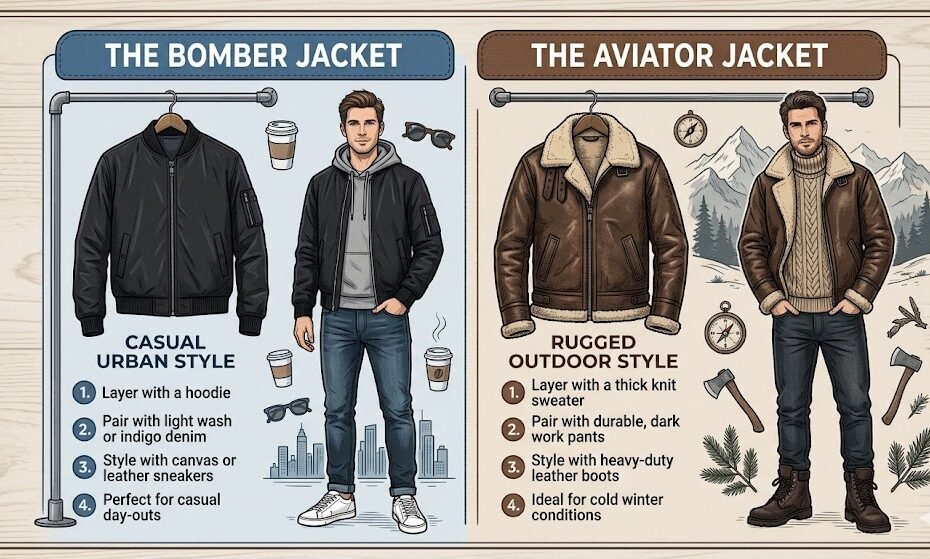
Few garments carry the same historical prestige, rugged structural durability, and effortlessly cool aesthetic as classic military flight gear. Born out of sheer functional necessity in the high-altitude, freezing cockpits of early 20th-century aviation, these jackets were engineered to keep pilots alive under the most brutal environmental conditions. Today, they have successfully left the runway behind to become absolute cornerstones of modern luxury streetwear and heritage style.
However, when exploring premium outerwear to upgrade your personal wardrobe, you will inevitably run into a major point of confusion: the showdown between the bomber jacket vs aviator jacket.
To the untrained eye, the terms are often thrown around interchangeably by fast-fashion brands, creating massive confusion for shoppers. While both garments share a proud military aviation lineage, they are profoundly different in terms of weight, silhouette, material composition, and seasonal utility. One is a highly versatile, lightweight, and sporty layer defined by its clean lines and elastic trim; the other is a heavy-duty, luxurious winter shield dominated by thick, exposed natural fleece and dramatic proportions.
Choosing the wrong one can mean the difference between a sleek, everyday transitional layer and a heavy winter coat that feels far too hot for a mild spring afternoon. To help you make a flawless investment that perfectly matches your lifestyle, climate, and personal style, we have built this ultimate 1500-word comparison blueprint. Let’s break down the history, anatomy, performance, and styling rules of the legendary bomber jacket vs aviator jacket duel.
1. The Historical Flight Deck: Function Breeds Form
To fully understand the structural differences between these two icons, we must step back into the early days of military aviation history. Their modern designs are direct reflections of the specific historical aircraft they were built for.
The Aviator Jacket: The Heavy Bomber Era
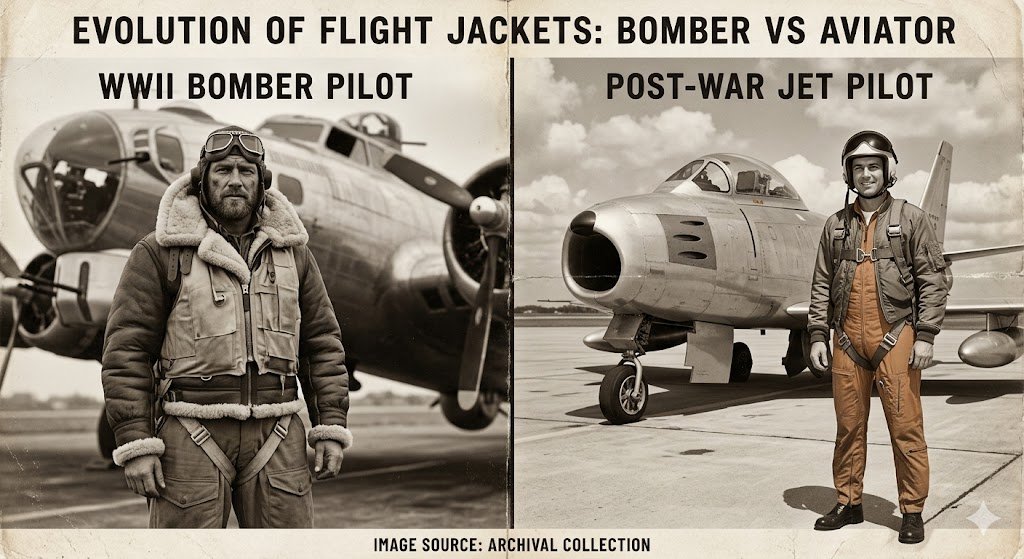
During World War I and World War II, military bomber planes lacked insulated, pressurized cabins. As pilots ascended to altitudes exceeding 25,000 feet, cockpit temperatures plummeted far below zero. To prevent freezing and frostbite, the US Army Air Corps developed heavy-duty, double-faced sheepskin coats, most notably the legendary B-3 Aviator jacket. These jackets were heavy, thick, and designed for one single purpose: absolute thermal survival in an open-air deep freeze.
The Bomber Jacket: The Dawn of the Jet Age
As aviation technology advanced into the late 1940s and 1950s, jet propulsion replaced propeller engines. Cockpits became fully enclosed, pressurized, and much tighter in terms of space. The bulky, heavy shearling aviator coats suddenly became a liability, restricting a pilot’s rapid arm movements and tangling with the complex array of new dials and switches.
The military responded by creating the streamlined MA-1 and B-15 bomber jackets. These designs swapped out heavy sheepskin for lightweight, water-resistant nylon or supple, thin leather hides, introducing a sleek, low-profile fit that prioritized agile movement.
2. Anatomical Comparison: Heavy Luxury vs. Sporty Utility
The core differences in the bomber jacket vs aviator jacket debate are found in their structural details, collar designs, and overall hardware layout.
The Visual Language of the Aviator Jacket
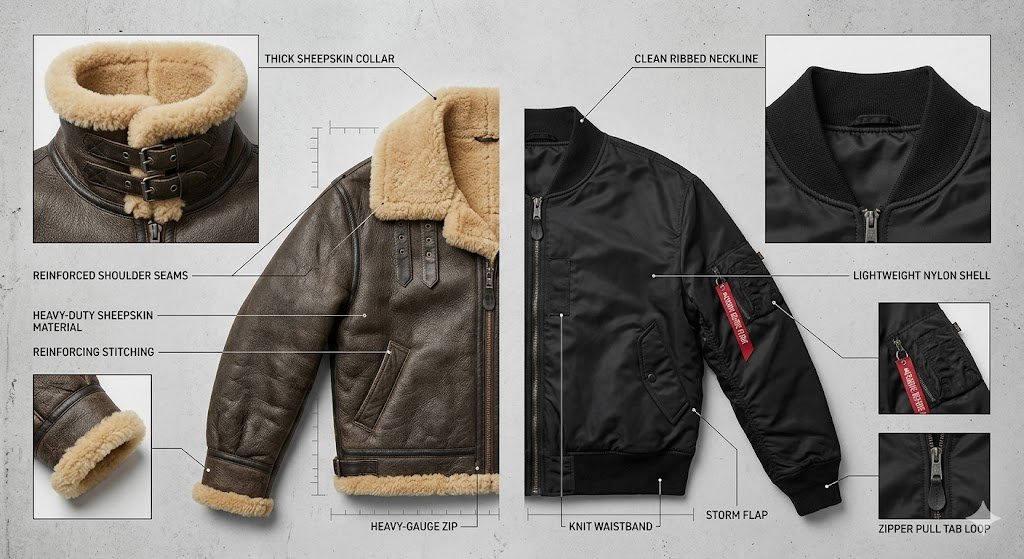
An authentic aviator jacket is defined by its dramatic, plush textures and heavy canvas. The absolute centerpiece of this silhouette is the oversized shearling fur collar, which features double leather throat straps that allow the collar to be buckled tightly around the chin.
The interior of the jacket is entirely lined with exposed wool fleece, which is often visible peeking out from the cuffs and the bottom hemline. It features heavy industrial brass zippers, reinforced leather welt seams, and deep map pockets across the torso, projecting a rugged aura of old-school luxury.
The Visual Language of the Bomber Jacket
The classic bomber jacket relies heavily on clean, athletic minimalism. It completely eliminates oversized fur collars in favor of a low-profile, soft knit ribbed collar that sits flat against the neck.
The defining trait of the bomber is its cinched elastic closure system. It features tightly knitted, elasticated cuffs and an elasticated waistband hemline. This design creates a unique, slightly rounded “blouson” silhouette that keeps the jacket anchored securely to the waist. Additionally, it often features a signature zippered utility cigarette pocket on the left sleeve, emphasizing its practical, industrial roots.
3. Material Performance: Shearling Armor vs. Supple Adaptability
The materials used in these jackets drastically alter how they drape, react to weather conditions, and perform across different seasons. According to material processing and grading standards governed by the Leather Working Group, the source material alters the jacket’s weight and breathability index completely.
The Aviator Jacket: Organic Thermal Power
A true aviator jacket is crafted from premium, double-faced sheepskin. According to historical textile records published by the Britannica Encyclopedia, sheepskin tanned with the wool fleece left intact acts as an incredibly efficient natural insulation matrix.
The natural crimp of the wool fibers creates millions of microscopic air pockets that trap body heat effortlessly while absorbing internal moisture. This makes the aviator jacket an ultimate winter shield, but it also makes the garment exceptionally heavy and strictly limited to freezing winter conditions.
The Bomber Jacket: Year-Round Versatility
Because modern bomber jackets are built for agility, they utilize highly flexible, lightweight materials. While nylon versions are highly common in casual streetwear, premium leather bombers are constructed from buttery-soft lambskin or durable, fine-grained calfskin.
A piece like our signature mens genuine leather jacket delivers incredible windbreaking performance while remaining light enough to wear comfortably through spring, autumn, and mild winter days without causing you to overheat.
4. Sizing and Fit Proportions: Roomy vs. Cropped
Getting your sizing right is paramount when purchasing an investment piece. Both of these aviation icons have very specific tailoring logic.
Aviator Jacket Fit: This style is intentionally cut broad, boxy, and slightly oversized to mimic its heritage military design. The shoulders are slightly dropped, and the torso is straight-cut to allow for heavy clothing underneath. However, it must still fit properly in the chest to prevent drafts. If you want to see how to size your frame for a powerful silhouette, read our master guide on how should a leather jacket fit.
Bomber Jacket Fit: The bomber jacket features a highly structured, shorter length. The elastic waistband is engineered to sit precisely at or an inch below your beltline, creating a tapered look that narrows at the hips. The armholes and sleeves are cut slightly roomier to maintain excellent mobility, but the overall shoulder line must sit cleanly on your natural shoulder bone.
5. Wardrobe Styling: How to Choose Your Signature Look
When making your choice in the bomber jacket vs aviator jacket debate, you must evaluate your local climate and your existing wardrobe palette.
How to Style the Bomber Jacket
The bomber jacket is incredibly versatile, moving effortlessly between casual streetwear and polished smart-casual settings.
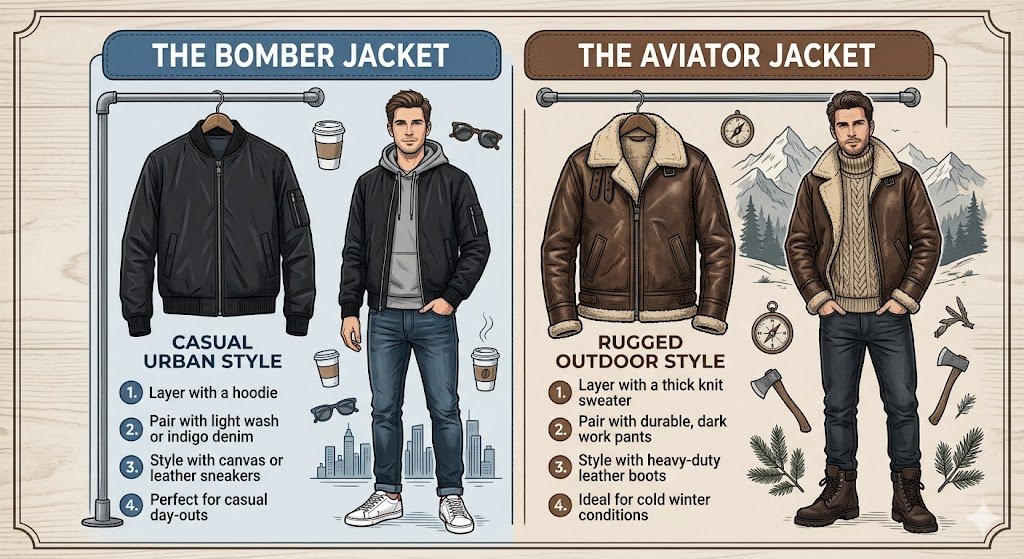
The Street Look: Pair a black or olive green leather bomber over a grey heather hoodie, distressed slim-fit denim, and clean white minimal sneakers.
The Smart-Casual Look: Swap the hoodie for a fine merino wool turtleneck, add a pair of tailored wool trousers, and finish with leather chelsea boots. If you are weighing the bomber against a sleek moto jacket instead, check out our deep-dive comparison on the bomber vs biker jacket.
How to Style the Aviator Jacket
The aviator jacket is a massive, attention-grabbing statement piece that thrives in the dead of winter. Because the jacket carries a lot of visual weight, the rest of your outfit should remain clean, simple, and rugged.
The Heritage Look: Pair a rich brown B-3 shearling aviator jacket with a simple cream cable-knit sweater, dark raw indigo jeans, and heavy-duty brown leather combat boots. To see how these heavy-duty pieces perform against freezing drafts, see our winter assessment on whether leather jackets are warm enough for winter.
Comprehensive Comparison Matrix
To summarize the entire aviation duel, review this quick-reference structural comparison table:
| Feature Metric | The Aviation Bomber Jacket | The Heavy Shearling Aviator Jacket |
| Collar Design | Minimalist, low-profile elastic ribbed collar | Oversized, plush shearling fur collar with throat straps |
| Hem & Cuff Closures | Stretched elastic knit ribbing at wrists and waist | Straight-cut leather with exposed raw wool trim |
| Weight & Feel | Lightweight, highly flexible, easy to pack | Extremely heavy, thick, rigid structural presence |
| Best Season | Spring / Autumn / Mild Winters | Deep Sub-Zero Winter Freeze |
| Visual Silhouette | Sporty, slightly rounded “blouson” profile | Broad-shouldered, boxy, commanding statement look |
| Styling Versatility | High (Pairs easily with t-shirts or formal knits) | Targeted (Thrives exclusively with heavy winter layers) |
Long-Term Material Care and Preservation
No matter which legendary flight icon wins your vote, proper care is non-negotiable for real leather. Authentic animal hides are highly porous organic materials. As outlined in our general leather jacket care guide, exposing a premium coat to direct heat sources like a radiator after a snowstorm will bake the natural moisture out of the leather, leading to permanent stiffness and cracking. Always allow your coat to air-dry naturally on a wide, contoured wooden hanger to preserve its beautiful shape.
Secure Your Flight Heritage with Caesar Jackets
At the end of the day, there is no wrong choice in the battle of the bomber jacket vs aviator jacket. If you want a sleek, sporty, lightweight layer that you can wear across multiple seasons, the bomber jacket is your ultimate weapon. If you want an opulent, ultra-warm statement piece to conquer the absolute worst winter weather in style, the aviator jacket is your match.
At Caesar Jackets, we refuse to settle for the cheap, short-lived synthetic plastics common in fast fashion. We engineer our entire flight collection using 100% genuine, ethically sourced premium leather hides and top-tier metal hardware, tailored to deliver a spectacular, head-turning silhouette right out of the box.
Whether you want to rule the streets in one of our iconic mens bomber jackets or check out our full range of women’s transitional pieces, your next signature outerwear layer is waiting. Browse our new arrivals today and invest in luxury leather built to last a lifetime!