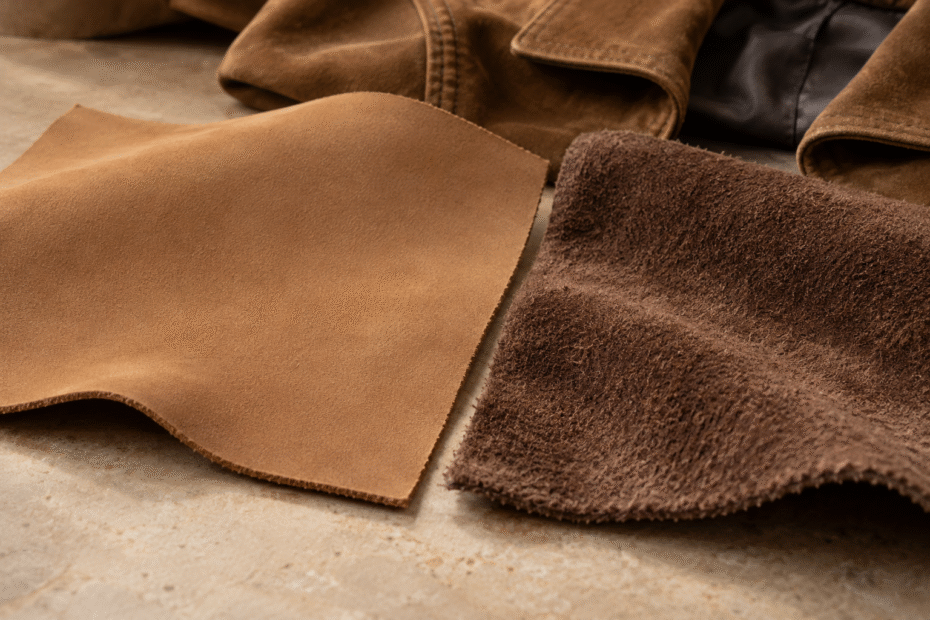
Nubuck and suede can look similar at first glance: both have a soft, brushed surface instead of the smooth finish associated with many leather jackets. The main difference is which part of the hide is buffed. This guide to nubuck vs suede leather explains how that affects the surface, what to check when shopping, and why neither material is automatically the right choice for every jacket.
Nubuck vs Suede Leather: The Main Difference
Nubuck is buffed on the grain side—the outer side of the hide. Suede is generally made from the flesh side or a split layer, then finished to raise a soft nap. The Leather Working Group defines nubuck as leather buffed to create a velvety effect while retaining a visible grain pattern. Its glossary describes suede velours as leather or split leather mechanically finished to create a velvet-like nap. See the Leather Working Group’s leather definitions.
In simple terms, nubuck keeps the grain-side surface beneath its nap; suede usually uses the flesh side or split. The Leather Research Laboratory’s suede and nubuck overview explains this distinction. Product terminology can vary, so check the maker’s description if the hide layer matters to your decision.
How to Tell Them Apart by Texture
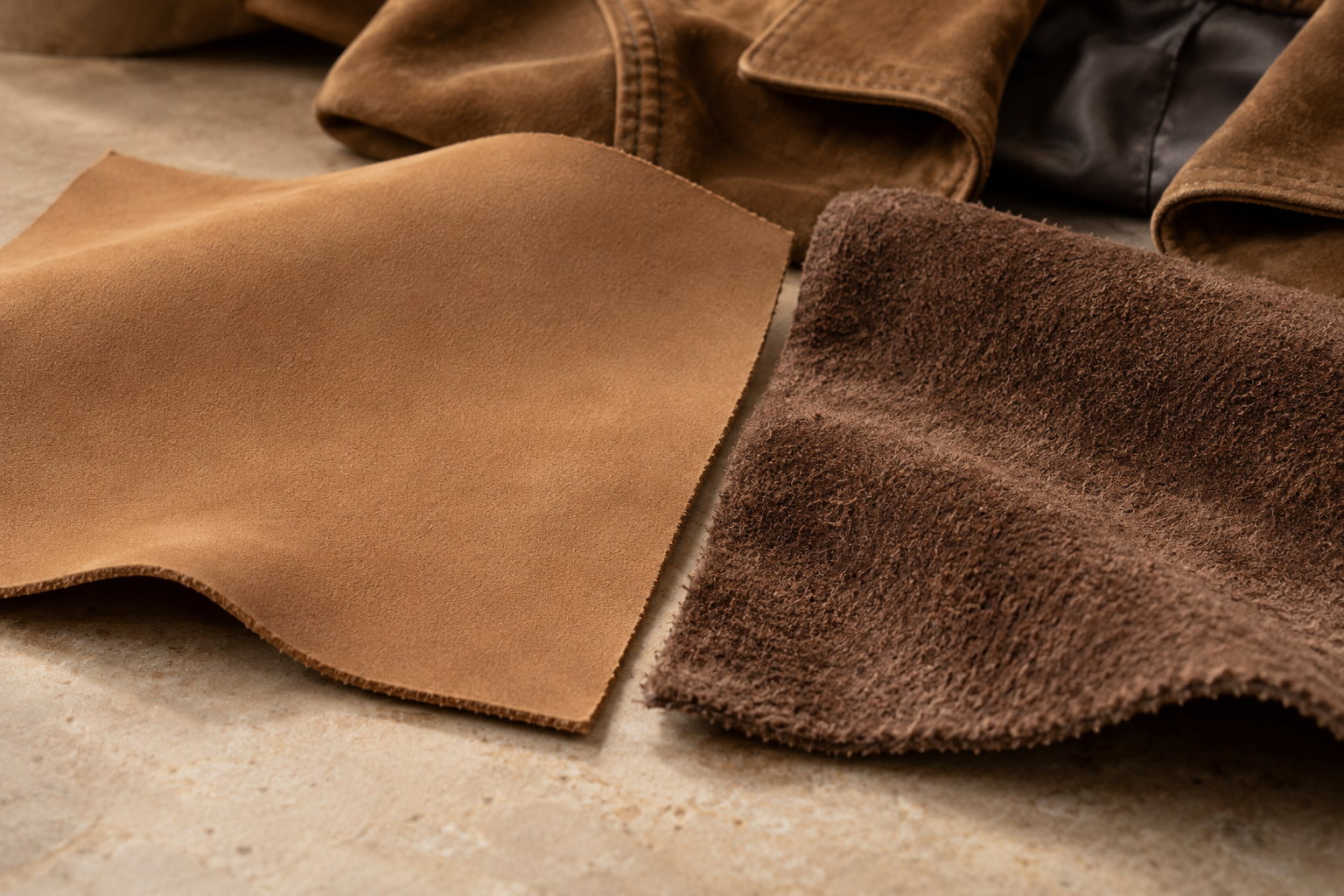
Nubuck commonly has a fine, short nap and a more even, velvet-like appearance. Suede often has a softer, more noticeable nap that can look slightly fuzzy. But the difference can be subtle, especially in dark colors or when a leather has been treated with a finish.
Run your hand lightly across the surface and look for changes in shade or nap direction. Then inspect the product photos in good light. These clues may help with the nubuck vs suede leather comparison, but they are not a guaranteed identification test. Ask the seller which side of the hide was finished if the listing does not say.
Does Nubuck Last Longer Than Suede?
Nubuck is made from the grain side, which is generally the denser outer layer of the hide. That does not mean every nubuck jacket will outlast every suede jacket. Leather thickness, the specific hide, construction, finish, and how often the jacket is worn all affect how it holds up.
Both surfaces can show marks, pick up dirt, and react to moisture. A jacket’s nap may become flattened or uneven in areas that rub against bags, seat belts, or furniture. Instead of choosing by a broad durability claim, check the garment’s material details and care instructions.
Care Differences to Keep in Mind
Because both nubuck and suede have a raised surface, cleaning them like smooth finished leather can change the nap or leave marks. Start with the care instructions from the jacket maker. For routine dust, a suitable soft brush may help lift debris and refresh the surface; test any brush, eraser, or cleaner on an inconspicuous area first.
Take extra care with water and oils. They can darken or mark a napped leather, and the result depends on its finish. Don’t apply a general leather conditioner or waterproofing spray unless the manufacturer confirms it is appropriate for that specific material. Our suede jacket care guide covers additional care considerations for suede garments.
Which One Should You Choose?
- Consider nubuck if you like a fine, short nap and want the grain-side surface to remain visible beneath the finish.
- Consider suede if you prefer a softer, more visibly napped texture.
- Compare the actual jacket if appearance and feel matter more than the label. Check close-up photos, ask about the hide layer, and follow the maker’s care guidance.
If you like the brushed look, you can also see an example of a suede jacket and compare its texture and construction with the nubuck styles you’re considering.
The essential point in nubuck vs suede leather is the surface being finished: nubuck is buffed on the grain side, while suede is generally made from the flesh side or a split. Use that distinction as a starting point, then choose based on the specific jacket’s appearance, fit, construction, and care requirements.