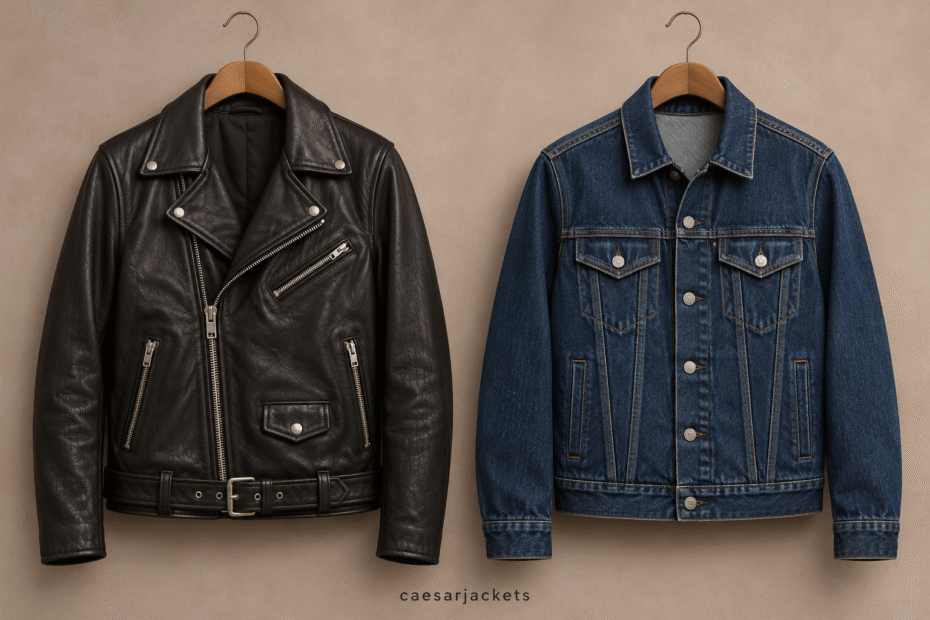
Choosing between a leather jacket vs denim jacket comes down to how you plan to wear it, the weather you face, and how much care you want to give an outer layer. Both can become wardrobe staples, but they behave differently: denim is a familiar cotton layer that softens with wear, while leather tends to block wind more effectively and develops a distinct surface character over time.
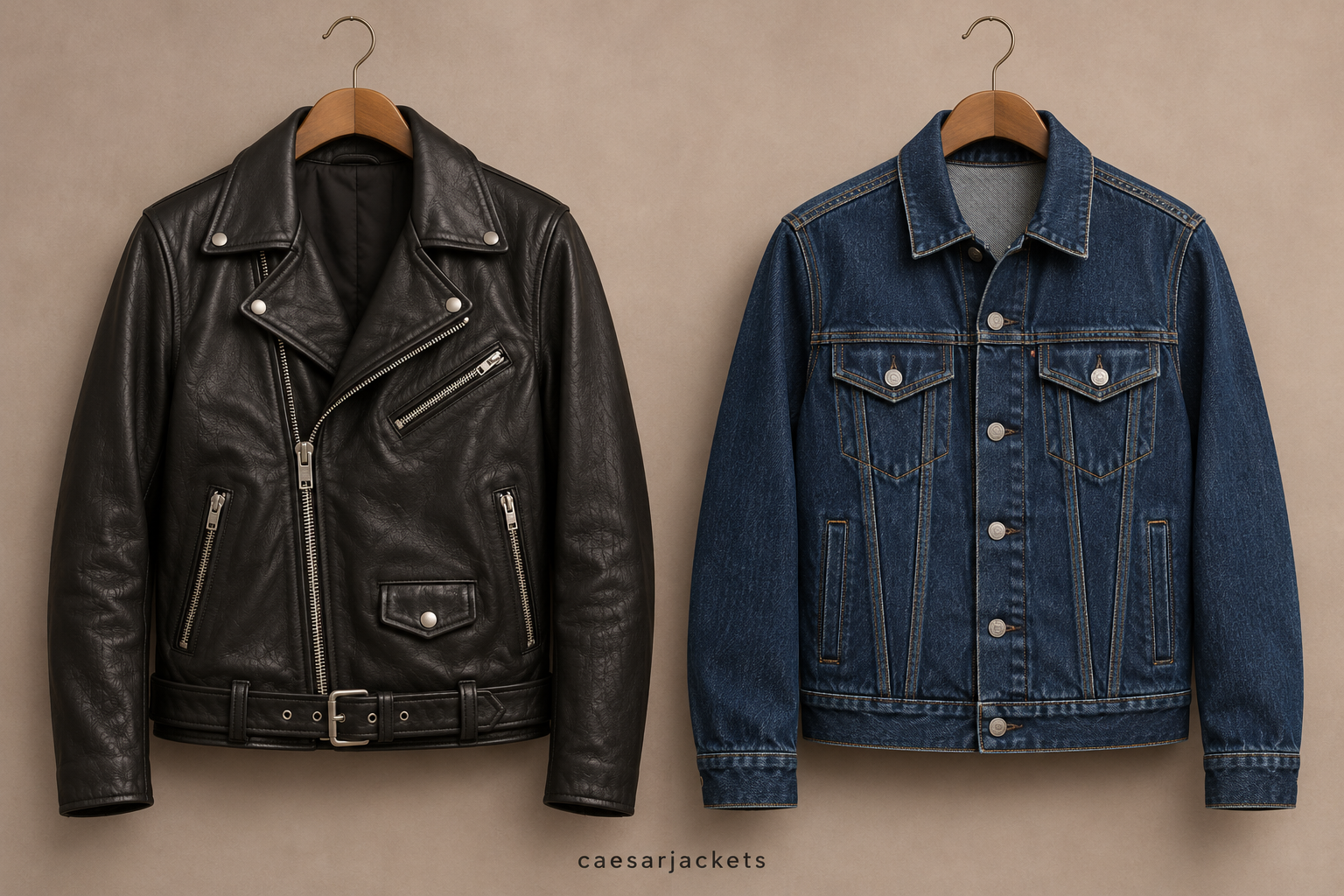
Neither is automatically the better buy. A lightweight denim trucker may be more useful than a heavy leather jacket in a mild climate, while a lined leather style can extend your outerwear options into cooler months. Compare the actual garment construction instead of relying on broad claims about either material.
Leather jacket vs denim jacket: the practical differences
| Consideration | Leather jacket | Denim jacket |
|---|---|---|
| Outer material | Animal hide or synthetic leather, depending on the product | Cotton denim woven in a durable twill |
| Wind resistance | Usually better, especially with a close fit and substantial shell | Moderate; wind can pass through the fabric and seams |
| Warmth | Varies widely with leather weight, lining, and fit | Usually a light-to-midweight layer; layering helps in cold weather |
| Break-in | May feel structured at first and soften with use | Often softens and molds with repeated wear and washing |
| Care | Spot care and material-specific products; avoid soaking | Often washable, but follow dye and care instructions |
| Typical cost | Frequently higher, especially for genuine leather | Available at a broad range of prices |
Material labels matter. “Leather” can mean full-grain, corrected-grain, suede, or a synthetic alternative, each with different performance and care needs. Denim weight, weave, dye, and garment lining also vary. The Leather Working Group offers information about leather supply-chain practices; Britannica’s leather overview explains how the material is made and used. For denim, the CottonWorks denim resource provides background on the fabric and its construction.
Warmth and weather
A leather jacket usually offers better wind protection than an unlined denim jacket, but that does not make every leather style a winter coat. A thin fashion jacket without insulation may feel cold in low temperatures. A shearling or quilted lining can add warmth, while a close fit helps reduce drafts. Consider the local temperature range and whether you will wear a sweater underneath.
Denim is breathable and comfortable in mild weather. It can work as a mid-layer beneath a coat or over a hoodie, but standard denim alone offers limited insulation against cold wind. If you often move between outdoors and heated indoor spaces, a lighter denim jacket may be more comfortable than a heavily lined leather option.
Durability, aging, and maintenance
A well-made leather jacket can last for years when stored and cared for properly. It is not maintenance-free: keep it away from prolonged moisture and heat, use products suited to its finish, and hang it on a broad hanger. Care needs differ between smooth leather and suede, so follow the maker’s instructions. Repairs can also be more specialized than ordinary clothing alterations.
Denim is generally easier to clean because many jackets can be washed, although washing frequency affects color and shape. Dark indigo denim may transfer dye, especially when new. Turn it inside out, check the care label, and wash separately if the garment instructions recommend it. Seams and hardware can wear out too, but everyday repairs are often more familiar to clothing repair shops.
When comparing the two, think about the kind of aging you enjoy. Leather can develop creases and finish variation that some owners value as patina. Denim fades at stress points and can show abrasion. Those changes are part of the material’s look, but they are not signs of quality by themselves.
Cost and value over time
Denim jackets are usually easier to buy on a smaller budget, and their lower maintenance can make them a practical first choice. Leather often requires a larger upfront investment. To compare value fairly, look at construction, lining, hardware, fit, and likely wear frequency rather than price alone. A costly jacket that stays in the closet is poor value; a dependable one worn weekly may earn its place.
For leather, confirm the stated material and return policy before buying. Genuine leather is not one uniform grade, and product photography can make different finishes look similar. Compare measurements and read the care directions. If the budget is tight, a quality denim jacket may be the more sensible purchase now, with leather as a later addition.
Styling: what each jacket does best
A denim jacket has an easy casual character. It pairs naturally with chinos, plain tees, casual shirts, and sneakers. Since denim-on-denim can look deliberate or overly matched, vary the washes: for example, a darker jacket with lighter jeans, or denim over neutral trousers.
A leather jacket makes an outfit feel more defined. A simple tee, knit, or button-down lets its silhouette and texture stand out. Biker jackets bring more hardware and visual weight; bomber and racer styles can look cleaner. Use the jacket as the strongest piece and keep other details restrained. Browse CaesarJackets men’s leather jackets or women’s leather jackets to compare silhouettes and lining details.
Which jacket should you choose?
Choose denim if you want an affordable, low-fuss layer for mild weather, frequent washing, and relaxed outfits. Choose leather if wind resistance, a more structured look, and long-term wear are priorities—and you are comfortable checking material-specific care instructions. For this purchase, the deciding questions are practical: What is the climate? What layers do you already own? How often will you wear it? And are you prepared for its upkeep?
If you can only buy one, choose the jacket that fills a gap in your wardrobe. A versatile denim layer is a sensible everyday starter; a well-fitting leather jacket is worth considering when you want more weather protection and a distinctive finish. Try it over your usual mid-layer, check shoulder movement, and make the choice based on real use rather than trend alone.