In today’s fashion market, high-quality leather products like jackets, boots, and bags are considered timeless investments. However, as synthetic materials like “vegan leather” and PU become more sophisticated, it has become increasingly difficult for the average consumer to know exactly what they are buying.
If you aren’t 100% sure how to tell the difference between real and fake leather, you run the risk of paying premium prices for plastic imitations that lack durability. This expert guide will walk you through five foolproof methods to identify genuine animal hides from chemical-based synthetics.
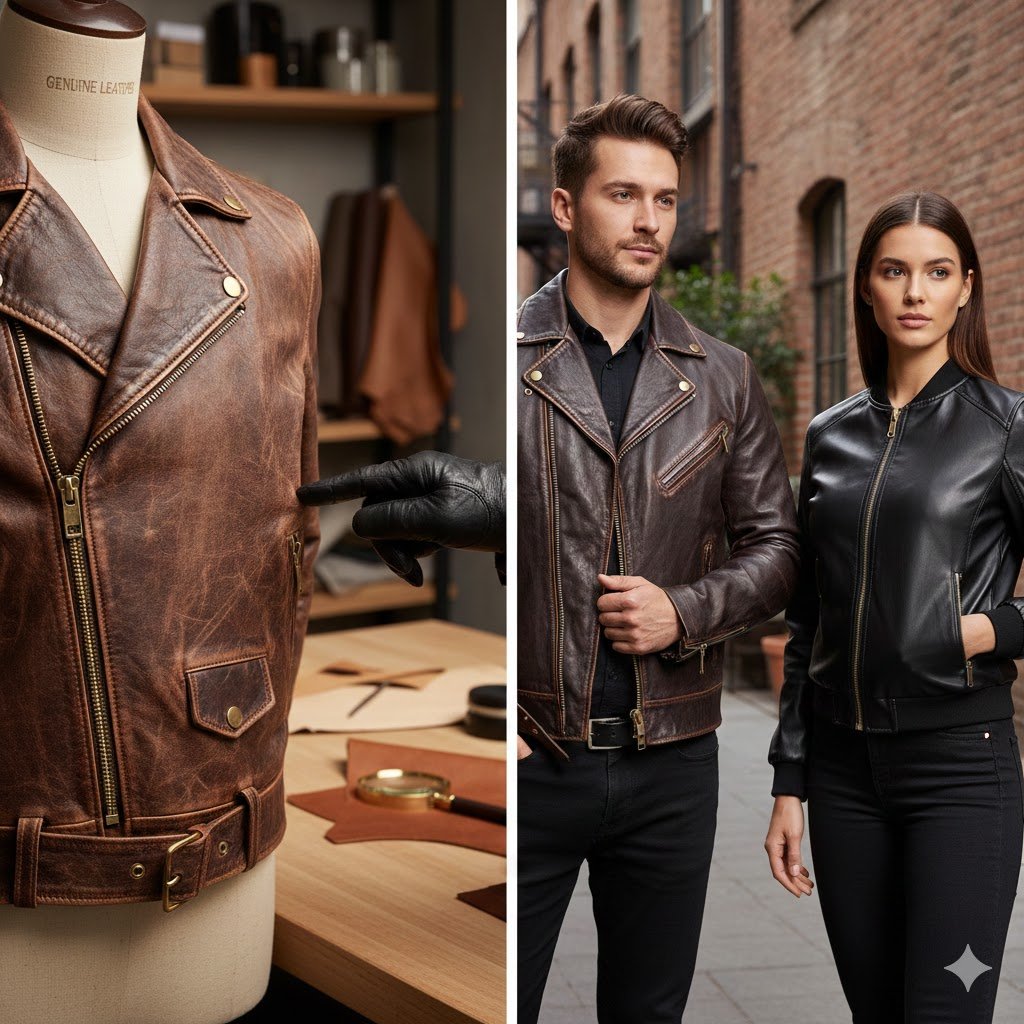
I. Real vs. Fake: The Fundamental Differences
Before we perform the tests, it is essential to understand the material science. According to the Britannica definition of leather, genuine leather is an organic product made from animal skins that have been preserved through tanning.
Synthetic leather, on the other hand, is a man-made fabric coated with a plastic polymer (usually PU or PVC). While fake leather might look good on the shelf, it cannot match the breathability and longevity of a high-quality genuine sheepskin leather jacket.
II. 5 Expert Methods: How to Tell the Difference Between Real and Fake Leather
1. The Visual Pore Inspection
Just like human skin, real animal hide has a unique and irregular surface. When learning how to tell the difference between real and fake leather, look for the “imperfections.”
Real Leather: Look for inconsistent pore patterns and small scars. These are natural marks of a real animal life.
Fake Leather: The grain is perfectly repeated because it is stamped by a machine. If the pattern looks “too perfect,” it is likely synthetic.
2. The Touch and Elasticity Test
Genuine leather is incredibly flexible and responsive.
The Test: Press your finger into the surface. Real leather will create small, radiating “stress wrinkles” around the point of pressure.
The Result: This natural elasticity is what makes it possible to safely stretch a leather jacket for a better fit. Fake leather will simply feel like pressing down on a plastic or rubber sheet, with no radiating wrinkles.
3. The Smell Test (The Most Reliable Sense)
This is the most direct way on how to tell the difference between real and fake leather.
Real Leather: Has a rich, earthy, and unmistakable “skin” scent that cannot be replicated by chemicals.
Fake Leather: Will always have a slight (or strong) smell of plastic, glue, or chemicals. Even high-end synthetics often fail the smell test upon close inspection.
4. The Water Absorption Test
Because leather is a porous organic material, it reacts with moisture.
The Test: Place a single drop of water on the jacket.
Real Leather: It will slowly absorb the water within a minute. This porous nature is also why you must learn how to stop leather from cracking by applying regular conditioners.
Fake Leather: The water will simply bead up and roll off the surface, as plastic is completely non-porous.
5. The Edge and Fiber Check
If you can see an unfinished seam or the back of the material:
Real Leather: The edges will be rough, fibrous, and slightly “fuzzy.”
Fake Leather: The edges are clean, smooth, and often reveal a fabric or mesh backing underneath the plastic coat. You can learn more about these technical standards from the Leather Working Group (LWG).
III. Why Real Leather is the Better Long-Term Investment
While synthetic options are cheaper, they are much harder to maintain. If a real leather garment gets dirty, you can follow a guide on how to clean a leather jacket at home to restore its beauty. If it becomes rigid over time, you can easily soften stiff leather using professional methods.
Fake leather, unfortunately, tends to peel in large flakes once it’s damaged. When that happens, even the best leather repair techniques for cracked surfaces often fail to provide a permanent fix.
IV. FAQ: Common Identification Questions
Does “Genuine Leather” mean it’s the best quality?
Not necessarily. According to the Wikipedia page on Leather grades, “Genuine Leather” is actually a technical term for the third-lowest grade. For the ultimate durability, look for “Full Grain.” This is a key detail to remember, much like how you would check the material weight when you break in a denim jacket.
Is a leather jacket with a hoodie outfit suitable for real leather?
Yes! In fact, the weight and drape of real leather are what make a leather jacket with a hoodie outfit look intentional and premium. Fake leather often looks too shiny or stiff for this relaxed style.
V. Conclusion: Quality You Can Trust
Mastering how to tell the difference between real and fake leather is the first step in building a high-quality wardrobe. At Caesar Jackets, we exclusively use 100% genuine animal hides to ensure your investment lasts a lifetime.