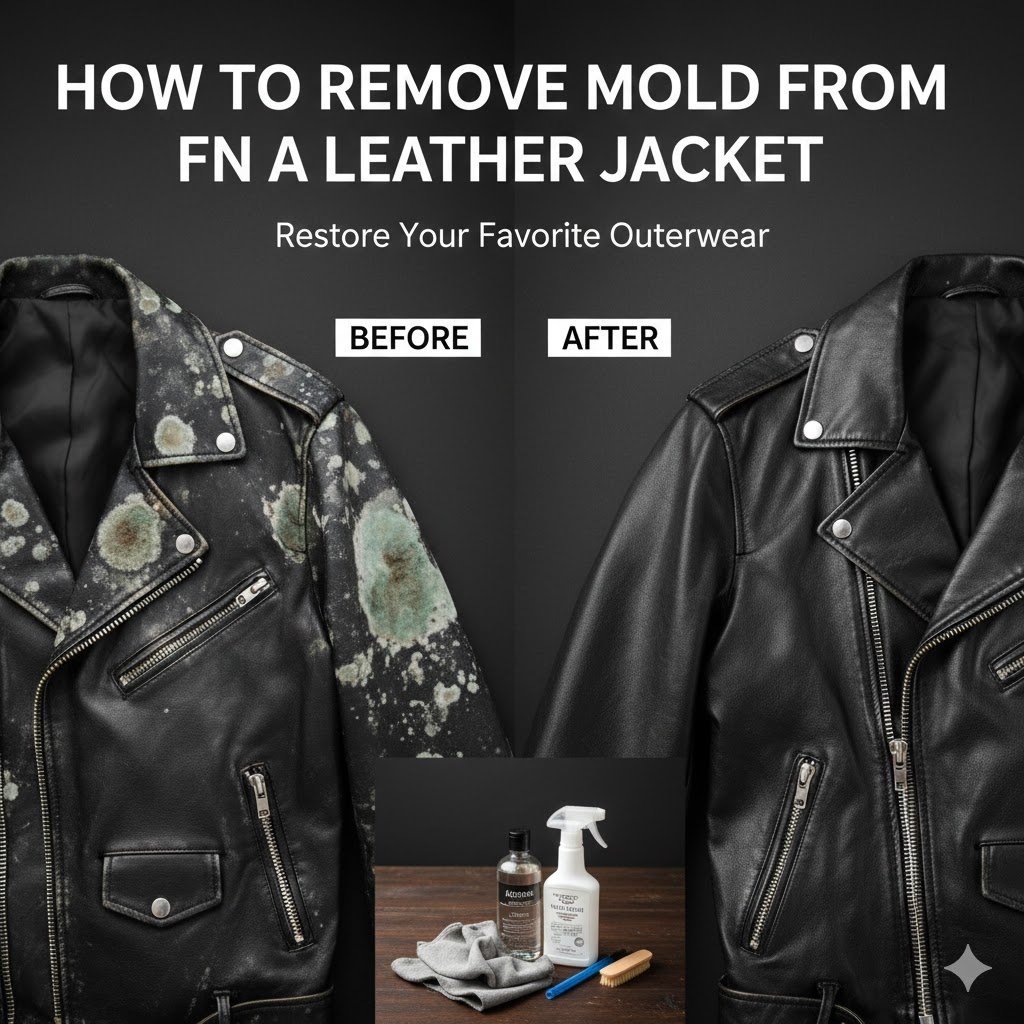
Finding mold on your favorite leather jacket can be alarming. Knowing how to remove mold from leather jacket properly is essential to preserve its durability and appearance. Leather, especially Full Grain or vegetable-tanned types, can absorb moisture, creating the perfect environment for mold if left unchecked.
In this guide, you’ll learn expert tips on safely cleaning mold, preventing future growth, and maintaining your leather jacket’s luxurious look.
Table of Contents
Why Mold Grows on Leather Jackets
Mold develops when leather is exposed to humidity or improper storage. Jackets made from Full Grain leather or vegetable-tanned leather are particularly susceptible due to their natural breathability. Mold not only damages the appearance but can also affect the structural integrity of the leather over time.
For further reading on leather types, see what is Full Grain leather.
Essential Materials Needed for Mold Removal
Before starting, gather:
Soft microfiber cloths
Mild leather cleaner or isopropyl alcohol solution (50/50)
Soft-bristled brush
Leather conditioner
Ensure proper ventilation during cleaning. Authorities like Leather Care Experts emphasize safety and gentle techniques.
Step-by-Step Process to Remove Mold
1. Dry the Leather
Place the jacket in a well-ventilated area. Avoid direct sunlight to prevent cracking.
2. Brush Off Surface Mold
Use a soft-bristled brush to remove visible mold spores. Brush gently along the grain.
3. Apply Cleaning Solution
Dampen a microfiber cloth with a 50/50 mix of water and isopropyl alcohol. Wipe the affected areas carefully. Test on a small patch first.
4. Dry Again
Air-dry in a shaded area. Do not use heat sources like hairdryers.
5. Condition the Leather
Apply a quality leather conditioner to restore oils and suppleness. See leather jacket care guide for recommended products.
6. Repeat if Necessary
Persistent mold may require a second gentle cleaning.
Preventing Mold in the Future
Store jackets in breathable garment bags
Keep jackets away from damp basements
Use silica gel packs in closets
Avoid plastic covers which trap moisture
For advice on leather storage, see leather jacket storage tips.
Tips for Different Leather Types
Lambskin: Extra delicate; use minimal liquid to avoid damage
Sheepskin: Slightly more robust but condition frequently
Cowhide/Full Grain: Stronger, can tolerate more thorough cleaning
Learn more about leather types here: sheepskin vs cowhide jackets.
Common Mistakes to Avoid
Using bleach or harsh chemicals
Drying in direct sunlight
Ignoring conditioning after cleaning
Rubbing too aggressively, which can scratch leather
Refer to how to soften stiff leather if the cleaning leaves leather slightly stiff.
FAQ: How to Remove Mold from Leather Jacket
Can I use vinegar to clean mold on leather?
Yes, a diluted solution can be used cautiously, but always test on a small area first.
How do I know if my leather is damaged by mold?
Discoloration, stiffness, or odor indicate potential damage. Early treatment is crucial.
Is it safe to wear a leather jacket with mold?
No, mold can trigger allergies. Clean immediately before wearing.
How often should I condition leather after mold removal?
Condition at least once after cleaning, and regularly every 3–4 months to maintain suppleness.
Can mold return on cleaned jackets?
Yes, proper storage and moisture control are essential to prevent recurrence.
Final Thoughts
Knowing how to remove mold from leather jacket is essential for preserving your investment. By following careful cleaning steps, conditioning regularly, and storing jackets properly, you can keep your leather looking luxurious and mold-free. Authorities like Leather Mag and Esquire emphasize prevention as the key to long-lasting leather.