How to Repair Cracked Leather: The Ultimate DIY Restoration Guide (2026)
Discovering a crack or peeling section on your favorite leather jacket can be heartbreaking. However, before you consider it a total loss, you should know that learning how to repair cracked leather is a skill that can save you hundreds of dollars.
Most minor to moderate damage can be fixed at home with the right tools and a bit of patience. This guide will walk you through professional DIY methods to restore your leather’s supple texture and premium look.
1. Why Does Leather Crack? (The Science of Damage)
To fix the problem, you must understand its root cause. Leather is a natural material filled with microscopic fibers and natural oils (like lanolin).
Over time, exposure to direct sunlight, high heat, and low humidity causes these oils to evaporate. When the fibers become dry and brittle, they snap under tension, resulting in visible cracks. According to the Wikipedia page on Leather, maintaining the moisture balance is key to its longevity.
2. Professional DIY Methods to Repair Cracked Leather
Method 1: The Rehydration Technique (For Surface Cracks)
If you only see fine, spider-web-like cracks, your leather is “thirsty.” You don’t need glue; you need deep conditioning.
Tools: High-quality leather conditioner (Mink oil or Lexol), microfiber cloth.
Step 1: Clean the surface with a specialized leather cleaner to remove dust.
Step 2: Apply a generous amount of conditioner to the cracked area.
Step 3: Use your fingers to massage the oil into the cracks in a circular motion.
Step 4: Let it sit for 24 hours. If the cracks are still visible, repeat the process.
Method 2: The Leather Filler Method (For Deep Cracks)
For cracks that have penetrated the surface, you need to “fill” the gap.
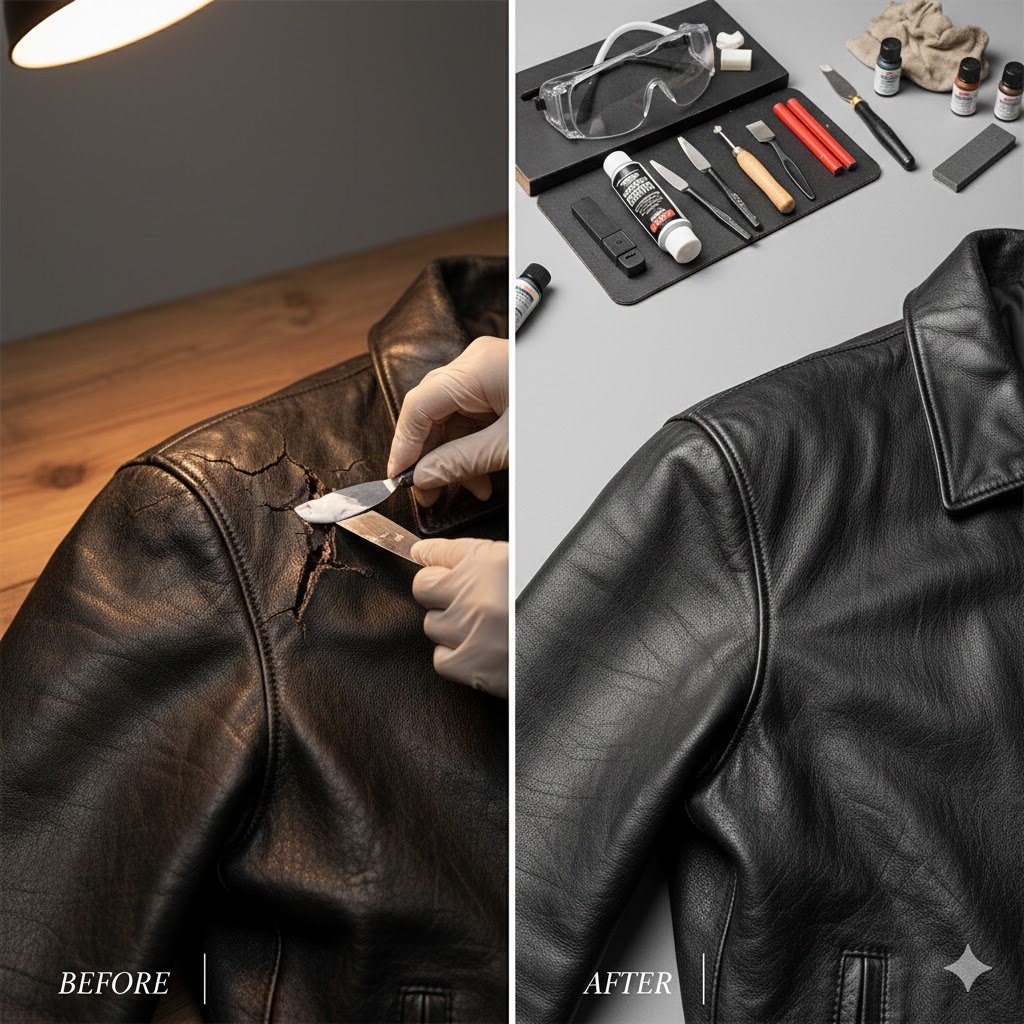
Tools: Leather repair kit (containing filler and colorant), a palette knife, and fine-grit sandpaper (600+ grit).
Step 1: Prep. Clean the crack with a tiny amount of rubbing alcohol to remove old oils.
Step 2: Fill. Apply the leather filler in thin layers using the palette knife. Let each layer dry for 30 minutes.
Step 3: Level. Once dry, lightly sand the area until it’s flush with the rest of the jacket.
Step 4: Color. Apply the matching leather dye from your kit to blend the repair perfectly.
Method 3: The “Egg White” Emergency Fix
If you are in a rush and need a temporary fix for a tiny snag, you can use the protein-binding properties of egg whites.
Step 1: Apply a tiny amount of egg white to a toothpick and bridge the crack.
Step 2: Press the sides together as it dries.
Note: This is an emergency measure only. Once you are home, you should apply a professional conditioner to prevent the area from becoming brittle again.
3. Dealing with Peeling Leather
Peeling usually occurs on lower-grade or bonded leathers where the top coating is failing.
Scrape: Gently remove the loose flakes that are ready to fall off.
Seal: Use a leather sealer or “leather finish” spray.
Refinish: Apply a leather touch-up pen to match the color.
Pro Tip: If your jacket is peeling excessively, it may be a sign of poor material quality. Genuine Sheepskin Leather rarely peels; it develops a beautiful patina instead.
4. When to DIY vs. When to Buy New
While these methods are effective for everyday wear and tear, you should consult a professional or consider a replacement if:
The crack is on a structural seam.
The leather feels “mushy” or is rotting.
The cost of a repair kit and your time exceeds the value of the jacket.
At Caesar Jackets, we believe in quality that lasts. Because we utilize a Direct-to-Consumer (DTC) model, we offer premium, factory-direct leather jackets that are often more affordable than a professional restoration service.
5. FAQ: Maintaining Your Leather Investment
Q: Can I use super glue (502) on leather?
A: No! Super glue dries hard and brittle. It will eventually snap and cause even more damage to the leather fibers. Always use flexible leather glue.
Q: How often should I condition my jacket?
A: For the best results, condition your leather every 6 to 12 months, especially if you live in a dry climate.
Q: Is cracked leather ruined forever?
A: Not necessarily. While deep cracks are permanent scars, they can be hidden and stabilized so the jacket remains wearable for years to come.